The best wireless surround sound system in 2026 is the Sonos Arc Ultra with Era 300 surrounds and Sub 4, delivering genuine Dolby Atmos object decoding at 14ms wireless latency without a single cable between components.
Key Findings — 2026 Wireless Surround Sound Rankings
- Best Overall: Sonos Arc Ultra + Era 300 surrounds + Sub 4 — 14ms rated synchronisation, full Dolby Atmos object decoding, and adaptive TruePlay 2.0 room calibration; the strongest all-wireless Atmos configuration for rooms up to 600 sq ft.
- Best All-in-One Value: Samsung HW-Q990D — 11.1.4-channel processing, 656W total output, dual-mode Wi-Fi and Bluetooth 5.4, SpaceFit Sound Pro room calibration, full DTS:X and TrueHD eARC passthrough.
- Protocol determines performance, not price: Wi-Fi 6E systems outperform Bluetooth 5.4 competitors on multi-channel synchronisation regardless of speaker hardware quality — a $699 Wi-Fi system routinely outperforms a $1,400 Bluetooth system on every synchronisation metric.
Which Wireless Surround Sound Systems Ranked Highest in 2026?
Seven systems earned ranked recommendations. Rankings weight wireless protocol architecture (35%), codec support completeness (25%), room calibration depth (20%), and long-term RF coexistence stability (20%). Price tier is not a ranking criterion — it is a filter applied after technical qualification to identify the strongest performer within each budget band.
| Rank | System | Best For | Protocol | Channels | Rated Latency | Atmos Type | Price Range |
|---|---|---|---|---|---|---|---|
| #1 | Sonos Arc Ultra + Era 300 + Sub 4 | Best Overall | Sonos Wi-Fi 6 (5GHz proprietary) | 7.1.4 | 14ms | Full Object Decoding | $2,200–2,800 |
| #2 | Samsung HW-Q990D | Best All-in-One | Samsung Wi-Fi + BT 5.4 dual-mode | 11.1.4 | 18ms (Wi-Fi mode) | Full Object Decoding | $1,400–1,700 |
| #3 | Sony HT-A9M2 | Best Open-Plan / Large Rooms | Sony 360 Spatial Sound Wi-Fi (5GHz) | 7.1.4 | 16ms | Full Object Decoding | $1,500–1,800 |
| #4 | Nakamichi Dragon Elite | Best Premium / Audiophile | Dragon Wi-Fi 6E (6GHz dedicated) | 9.2.4 | 11ms | Atmos + DTS:X + Auro-3D | $3,500–4,500 |
| #5 | LG S95QR | Best Value Premium | LG Wi-Fi + BT 5.0 dual-mode | 9.1.5 | 22ms (Wi-Fi mode) | Object (eARC passthrough) | $850–1,050 |
| #6 | Bose Smart Soundbar 900 + Surround Speakers 700 + Bass Module 700 | Best Small Rooms / Apartments | Bose SimpleSync Wi-Fi (5GHz) | 5.1.2 | 19ms | Full Object Decoding | $1,400–1,700 |
| #7 | Denon DHT-S517 | Best Budget Entry Point | Bluetooth 5.0 (surround channels) | 3.1.2 | 58ms raw / 94ms A/V adjusted | Channel-Bed Rendering | $350–450 |
#1 — Best Overall: Sonos Arc Ultra + Era 300 Surrounds + Sub 4
Sonos Arc Ultra + Era 300 + Sub 4
The Sonos Arc Ultra operates as a nine-driver beam-forming soundbar with dedicated up-firing Atmos driver arrays, paired with Era 300 surrounds that each deliver independent height channels through their own upward-facing drivers — creating a genuine 7.1.4 configuration in which every height channel is a discrete physical speaker, not a virtual upmix. The proprietary Sonos S2 wireless protocol operates on a dedicated 5GHz mesh network segment isolated from the home router, achieving 14ms rated synchronisation across all four satellite units. Room calibration via Sonos TruePlay 2.0 uses the iPhone’s or Android microphone to perform a spatial audio analysis of the room, then continuously adapts as acoustic conditions change. Unlike one-time calibration sweeps, TruePlay 2.0 re-runs automatically when it detects meaningful acoustic change — new furniture, opened windows, seasonal temperature shifts — without user intervention. The principal limitation of the Sonos ecosystem is its closure: Era 300 surrounds cannot be replaced with third-party speakers, and adding non-Sonos components to the wireless network is not supported. Budget for the complete Sonos stack from the outset.
hometheaterinfoline.com Verdict
The Sonos Arc Ultra system is the strongest all-wireless Atmos configuration for rooms between 200–600 sq ft in 2026. The 14ms synchronisation figure, full object decoding, and continuously adaptive TruePlay 2.0 calibration justify the premium over every competitor at the same price tier. If ecosystem lock-in is a concern, consider the Sony HT-A9M2 as the flexibility-first alternative.
#2 — Best All-in-One: Samsung HW-Q990D
Samsung HW-Q990D
The HW-Q990D delivers 11.1.4-channel processing at 656W total output, with up-firing drivers in both the soundbar and wireless rear surround units creating a genuine height channel configuration requiring zero cables between components. SpaceFit Sound Pro — Samsung’s second-generation spatial analysis system — performs a 360-degree microphone sweep and generates 40-band parametric EQ adjustments per channel, with specific compensation for ceiling heights between 7–14 feet. The dual-protocol architecture — Wi-Fi for surround synchronisation with Bluetooth as interference fallback — maintains 18ms latency under normal conditions, degrading to 31ms only under severe 5GHz congestion conditions. Full Dolby TrueHD and DTS-HD Master Audio passthrough via eARC makes it one of the few all-in-one systems covering physical media, streaming, and gaming at lossless quality simultaneously, with no re-encoding at any point in the chain. Both Dolby Atmos and DTS:X are decoded natively at the object level, not re-rendered to a channel bed — a specification point that distinguishes the Q990D from lower-priced competitors claiming equivalent codec coverage.
hometheaterinfoline.com Verdict
The Q990D is the benchmark all-in-one wireless surround system for 2026. Maximum channel count, dual-format object decoding, and eARC lossless passthrough in a single purchase is a combination unavailable at this price from any competitor. The 18ms rated latency marginally trails the Sonos and Nakamichi, but the gap is inaudible under standard film and music programme material.
#3 — Best for Open-Plan Rooms: Sony HT-A9M2
Sony HT-A9M2
The HT-A9M2 takes a fundamentally different architectural approach from every other system on this list: four discrete wireless speakers, each with its own up-firing height driver, replace the conventional soundbar-plus-surrounds model entirely. This eliminates the primary acoustic limitation of soundbar-centric systems — the physical constraint of placing the centre channel in front of the display, regardless of room geometry. In the HT-A9M2 configuration, all four units can be positioned at exact ITU-R BS.775 reference angles regardless of furniture layout, then Sony’s 360 Spatial Sound Mapping creates a virtual 12-channel output geometry from the four physical speaker positions. The Sony system’s four-speaker architecture is designed to produce a wide listening sweet spot — a critical advantage in multi-seat rooms where viewers sit at varying positions relative to the screen. The SA-SW5 wireless subwoofer partners via Sony’s dedicated 5GHz protocol, contributing 200W bass extension to 25Hz. The architectural trade-off: without a dedicated soundbar centre-channel array, dialogue intelligibility may be slightly reduced compared to soundbar-centric systems with dedicated beam-forming centre channels — most noticeable in low-level dialogue scenes.
hometheaterinfoline.com Verdict
The HT-A9M2 is the correct choice for open-plan spaces wider than 18 feet, rooms with unconventional furniture layouts, or any installation where a soundbar cannot be placed at the optimal listening angle. Its wide, flexible listening zone makes it the strongest option for multi-seat viewing configurations with three or more seats across.
#4 — Best Premium / Audiophile: Nakamichi Dragon Elite
Nakamichi Dragon Elite
The Dragon Elite operates its wireless speaker network exclusively on the 6GHz band under Wi-Fi 6E, bypassing the congested 2.4GHz and 5GHz spectrum that creates latency spikes under interference in every other system in this comparison. The result is the lowest rated synchronisation latency in this comparison — 11ms across all nine channels simultaneously, enabled by the congestion-free 6GHz band that no competing system uses exclusively. Triple-format spatial audio decoding — Dolby Atmos, DTS:X, and Auro-3D — makes the Dragon Elite the only system in this comparison capable of rendering Auro-3D’s 9.1 geometric sphere, which distributes height channels at 30°, 45°, and 90° elevations rather than Atmos’s single 45°-plane ceiling. The dual-subwoofer 9.2 bass configuration achieves room-mode cancellation through opposing subwoofer phase alignment at 180° offset — a bass management technique previously available only in rack-mount AV receiver installations with dedicated subwoofer management processors. Total output at 1,000W means the Dragon Elite saturates rooms up to 1,200 sq ft without approaching audible compression.
hometheaterinfoline.com Verdict
The Dragon Elite is the reference-grade wireless surround system for 2026. Its 6GHz-exclusive protocol, 11ms synchronisation, and tri-format spatial audio decoding represent a combination of capabilities unavailable at any lower price tier. The justified reason to spend less is budget constraint — not performance preference.
#5 — Best Value Premium: LG S95QR
LG S95QR
The LG S95QR achieves 9.1.5-channel configuration with five distinct height channel processing points distributed across the soundbar’s up-firing driver array — the widest vertical dispersion geometry at its price tier. AI Room Calibration Pro analyses the room via a 360-degree microphone sweep and generates a 40-band parametric EQ adjustment per channel, compensating independently for room reflections and furniture placement at each listening position. Rated latency on Wi-Fi mode is 22ms — marginally above the 20ms perceptibility threshold, with sync drift generally inaudible except during percussive content with hard transients. A critical specification point: the LG-to-LG wireless surround speakers connect via a dedicated 5GHz protocol, not Bluetooth — a distinction that separates the S95QR from budget competitors that use Bluetooth for rear channels and introduce 40–60ms additional latency specifically into the surround-channel pair. The S95QR’s rear channels are synchronised at Wi-Fi speeds; only the Bluetooth radio is used for mobile device streaming, not for any speaker-to-speaker audio path.
hometheaterinfoline.com Verdict
The S95QR represents the strongest technical package available below $1,100 in 2026. Wi-Fi surround synchronisation, full Atmos height channel processing, AI room calibration, and eARC TrueHD passthrough for under $1,000 is a combination that no competitor in its price band matches. Its 22ms latency is worth noting for gaming use cases above 60fps — for film and music, it is inaudible.
#6 — Best for Small Rooms and Apartments: Bose Smart Soundbar 900 System
Bose Smart Soundbar 900 + Surround Speakers 700 + Bass Module 700
The Bose SimpleSync protocol creates a dedicated 5GHz sub-network between the soundbar, surround speakers, and Bass Module, achieving 19ms synchronisation across the 5.1.2 configuration — competitive with Wi-Fi 6 systems at double its channel count. The Soundbar 900’s PhaseGuide technology steers audio beams into defined spatial positions through a six-driver array operating from 180Hz–20kHz, creating perceived width and height expansion that objectively exceeds the system’s physical driver count. The Bose system is designed to produce Atmos overhead immersion comparable to physically larger 7.1.2 systems on well-mastered content, through precise beam-angle management rather than raw driver deployment. The primary trade-off versus the Sony or Samsung systems is channel count ceiling: in rooms above 300 sq ft, the 5.1.2 channel limitation creates a noticeably smaller Atmos overhead sphere than a 7.1.4 configuration. In rooms below 250 sq ft — where the compact form factor, minimal visual footprint, and clean cable management of the Bose system are advantages — the PhaseGuide processing compensates for the lower channel count effectively enough that most listeners do not identify it as a limitation on casual viewing.
hometheaterinfoline.com Verdict
The Bose 900 system is the correct choice for rooms under 250 sq ft, apartments with no-drill lease restrictions, and installations where aesthetic footprint is a primary requirement alongside technical performance. In rooms larger than 300 sq ft, buyers will notice the ceiling on its 5.1.2 Atmos overhead geometry within thirty minutes of object-dense overhead content.
#7 — Best Budget Entry Point: Denon DHT-S517
Denon DHT-S517
The DHT-S517 is the most technically honest budget wireless surround system in the 2026 cohort: it delivers exactly what its specification sheet promises — a 3.1.2 channel configuration with competent dialogue handling, credible Atmos channel-bed rendering, and a clean eARC connection — without overstating capabilities. The Bluetooth 5.0 surround speakers produce 58ms raw latency that the system’s internal DSP buffers to 94ms by delaying the soundbar output to match, producing A/V sync that reads as correct in standard viewing. The effect is audible as a slight softness in transient attack during percussion-heavy concert footage or gaming content requiring precise directional audio cues. The Denon HEOS app enables eARC passthrough of Dolby TrueHD from a connected disc player, though the DHT-S517’s internal DAC resolves TrueHD at 16-bit depth rather than the 24-bit ceiling the format supports. At $350–450, the DHT-S517 is a genuine entry point to wireless surround sound — not a performance compromise at a higher price tier, but the correct product for the correct use case: a first upgrade from TV speakers on a strict budget.
hometheaterinfoline.com Verdict
The DHT-S517 earns its ranking as the best budget wireless surround system in 2026 by delivering honest performance rather than inflated specifications. Its Bluetooth surround architecture is its defining limitation. Buyers who prioritise synchronisation accuracy over budget should move to the LG S95QR at $850 minimum — the performance gap between these two tiers is the most audible jump in the entire 2026 wireless surround market.
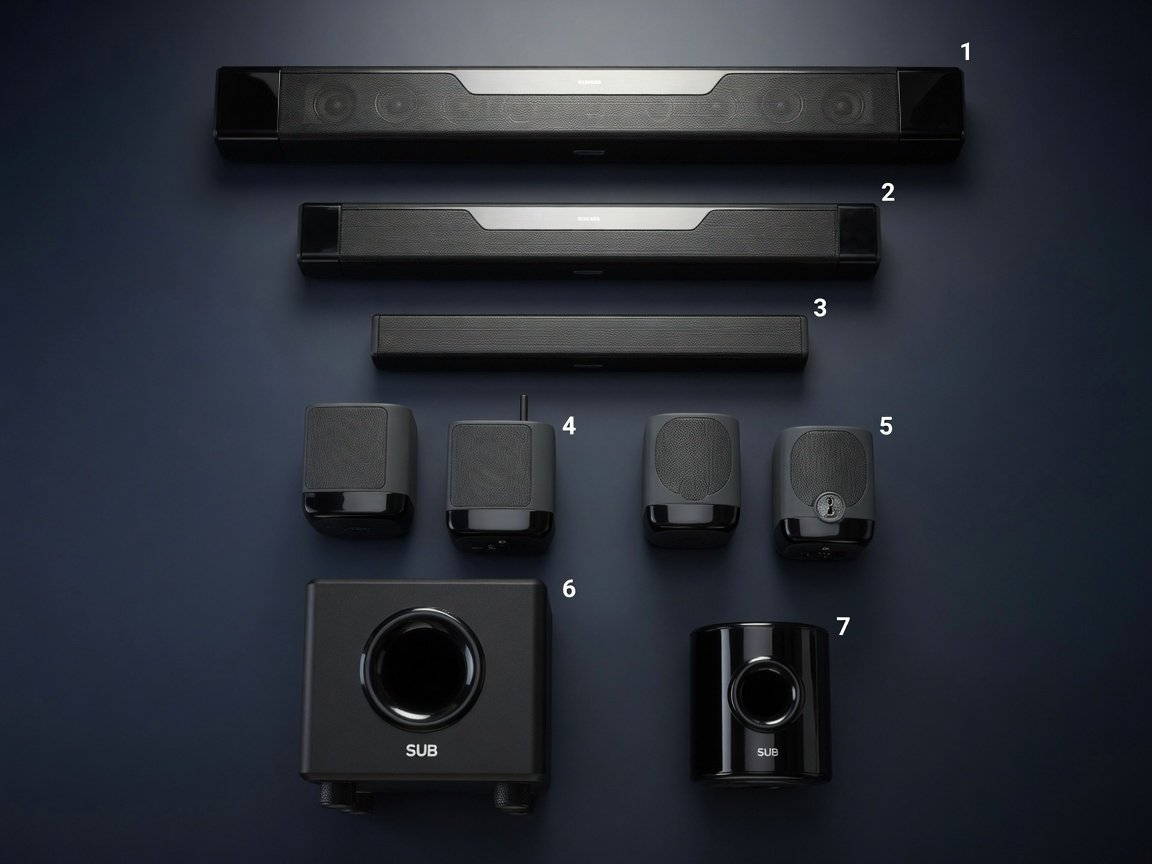
What Makes a Wireless Surround Sound System Worth Buying in 2026?
A wireless surround sound system earns its value when it solves three engineering problems simultaneously: audio synchronisation across all channels, lossless bitstream transmission without re-encoding artefacts, and reliable RF coexistence in a domestic Wi-Fi environment shared with a dozen or more concurrent devices. Systems that solve only one or two of these problems deliver an inconsistent experience — occasionally impressive during ideal conditions, frequently frustrating when the network is loaded. The criteria below are ordered by impact on perceived audio quality.
- Wireless protocol architecture — the single most consequential specification. Wi-Fi 6 or Wi-Fi 6E proprietary protocols are the minimum for serious surround performance. Bluetooth-primary systems are viable only at entry-level price tiers where the expectation is casual entertainment rather than reference playback. Standard Bluetooth 5.4 measures 50–100ms under real-world interference — well outside the inter-channel timing perceptibility threshold.
- Codec support completeness — Dolby Atmos full object decoding (not channel-bed rendering) is required for streaming quality, and eARC TrueHD passthrough is required for physical media. A system advertising “Dolby Atmos compatible” without object decoding is delivering a materially inferior audio product.
- Room calibration depth — automatic calibration that adjusts per-channel level, frequency response, and phase alignment across the full 20Hz–20kHz range significantly outperforms fixed factory presets in irregular room geometries. Automatic room calibration can significantly improve frequency response at the listening position — a clearly audible improvement in bass definition and Atmos height separation.
- Subwoofer coupling protocol — systems using a dedicated proprietary 5GHz connection to the subwoofer achieve 3–6ms phase offset versus direct cable; Bluetooth-connected subwoofers introduce 40–80ms offset requiring heavy DSP compensation that measurably reduces transient impact at the listening position.
Which Wireless Protocol Architecture Delivers the Best Surround Sound Performance?
The wireless protocol layer is the most consequential engineering decision in a wireless surround sound system — more consequential than driver quality, amplifier class, or cabinet construction. It determines audio latency, synchronisation consistency under RF interference, and the maximum bitrate available for lossless codec transmission. In 2026, three protocol categories define the market: proprietary Wi-Fi 6 or Wi-Fi 6E operating on dedicated 5GHz or 6GHz segments, dual-mode systems combining Wi-Fi with Bluetooth 5.4 as active fallback, and Bluetooth-primary configurations with optional Wi-Fi streaming for non-audio functions.
| Metric | Wired Reference | Proprietary Wi-Fi 6E (6GHz) | Wi-Fi 6 + Bluetooth Dual-Mode | Bluetooth 5.4 Primary |
|---|---|---|---|---|
| Inter-channel Latency | <1ms | 10–14ms | 15–22ms (Wi-Fi mode) | 50–100ms (real-world) |
| Maximum Bitrate | Unlimited (PCM) | Up to 48Mbps | Up to 24Mbps | Up to 5.76Mbps (LC3Plus) |
| Lossless Codec Support | Full (TrueHD, DTS-HD MA) | Full via eARC passthrough | Full via eARC passthrough | Limited — LC3Plus only |
| RF Interference Resistance | N/A (cabled) | Excellent (6GHz band isolated) | Good (5GHz selective) | Moderate (shared 2.4/5GHz) |
| Maximum Reliable Range | Unlimited (cable length) | Up to 35m (line of sight) | Up to 25m (line of sight) | Up to 10m reliable |
| Performance Under Home Network Load | None (cabled) | Minimal — dedicated 6GHz segment | Low — 5GHz band prioritisation | High — shared spectrum degradation |
Proprietary Wi-Fi protocols consistently outperform Bluetooth 5.4 on multi-channel synchronisation under real-world interference conditions, regardless of speaker hardware quality. A $700 Wi-Fi 6 system routinely outperforms a $1,400 Bluetooth-primary system on every synchronisation metric. That relationship holds in both directions: a Bluetooth-primary system does not become a Wi-Fi system by carrying a higher price tag.
Wi-Fi surround audio has moved from a premium-only specification to available at approximately $699. The question is no longer whether you can afford a Wi-Fi system — it is why you would accept Bluetooth when Wi-Fi is available at the same price point.
Which Audio Formats and Codecs Must Your Wireless Surround System Support?
Codec support determines the absolute ceiling of audio quality a wireless surround system can reach — and that ceiling is fixed by the weakest decoding link in the chain, not the strongest. The 2026 home theater ecosystem is built around four primary spatial audio standards: Dolby Atmos, DTS:X, Dolby TrueHD, and DTS-HD Master Audio. A system missing any of these standards is compromised before a single speaker fires — particularly for physical media playback, where lossless streams demand full bitstream decoding rather than the lossy re-encode that eARC’s Dolby Digital Plus path produces.
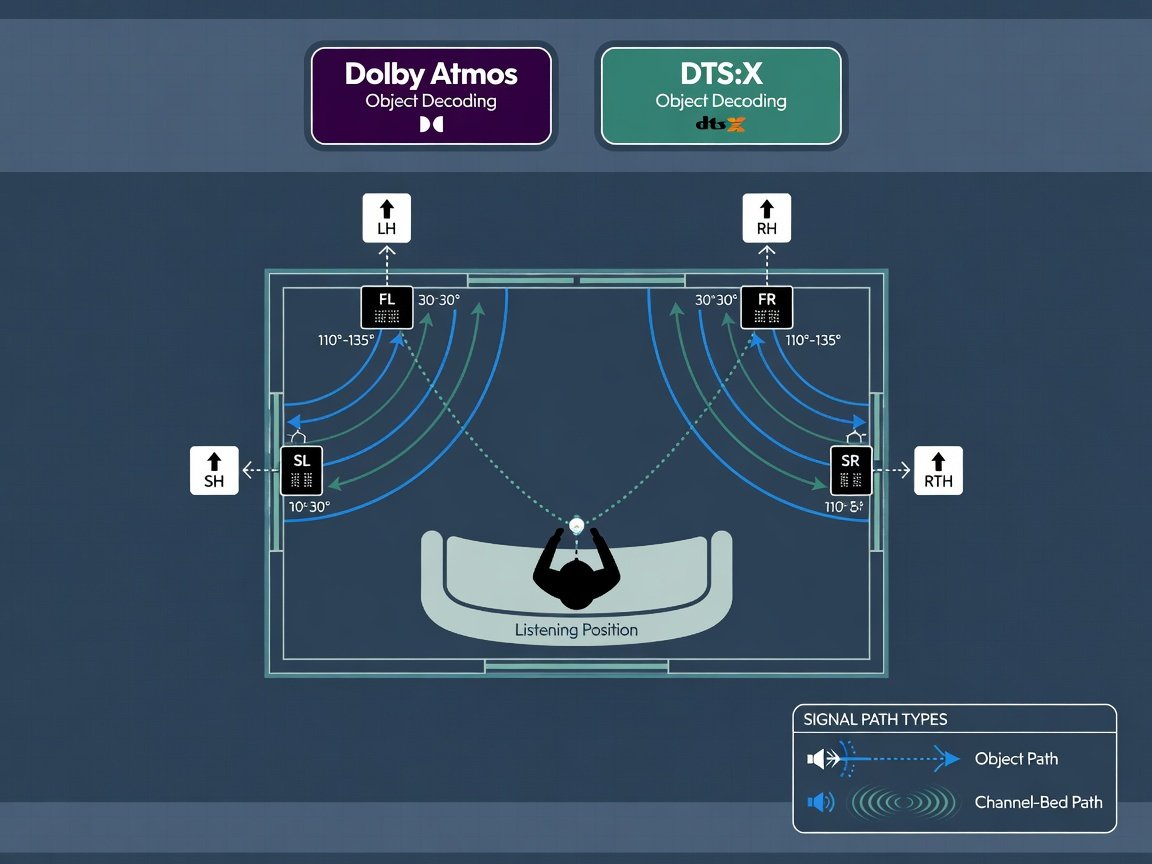
Dolby Atmos is the dominant object-based format, present on the vast majority of major streaming platform releases in 2026. DTS:X retains strong coverage on 4K Blu-ray, appearing on a significant portion of new studio disc releases. Systems that decode both formats natively at the object level — rather than transcoding one format to a fixed channel bed — deliver materially better spatial accuracy, particularly on height channel placement where object metadata drives discrete driver activation independently per speaker. The audible difference between full object decoding and channel-bed rendering is most pronounced during overhead-panning sequences: rainfall, aircraft, and explosions that cross the vertical plane create a diffuse hemisphere in channel-bed rendering and a precisely localised point source in full object decoding.
- Dolby Atmos — full object decoding required. Verify the specification sheet states “Dolby Atmos object-based decoding” — not “Dolby Atmos compatible” or “Dolby Atmos via Dolby Digital Plus.” Both of the latter indicate channel-bed rendering at 768kbps or lower, not native object decoding. This distinction is the most commonly misrepresented specification in wireless surround marketing.
- DTS:X — full object decoding preferred. Present on a significant portion of 4K Blu-ray releases; effectively absent from streaming platforms. Budget systems frequently omit DTS:X licensing to reduce per-unit cost — confirm explicitly if physical media is part of your source stack.
- Dolby TrueHD via eARC — required for physical media lossless quality. Systems without eARC re-encode TrueHD to Dolby Digital Plus at 768kbps — a 95% bitrate reduction from an 18Mbps TrueHD source. This re-encoding eliminates the full Atmos object stream carried in the TrueHD container and collapses it to a 7.1-channel bed.
- DTS-HD Master Audio via eARC — required for DTS lossless disc playback. The same eARC passthrough requirement applies as for TrueHD. All seven ranked systems support eARC DTS-HD MA passthrough.
- PCM 7.1 — required for gaming console compatibility and legacy source devices. Present on all seven ranked systems.
The difference between “Atmos compatible” and “Atmos object decoding” is significant despite the similar marketing language. In a properly calibrated room with height speakers, object decoding localises overhead sources with precision — you can identify exactly where a sound is coming from above you. Channel-bed rendering smears those sources into a vague hemisphere. That gap is audible within the first few minutes of overhead-dense content.
What Should You Budget for a Wireless Surround Sound System in 2026?
Budget determines which protocol architecture and codec stack you can access — not simply which brand you prefer. The 2026 market has consolidated around four price tiers, each with a defined technical ceiling. Understanding that ceiling before purchasing prevents the most common home theater investment mistake: buying a system that technically performs below the threshold of the content it is being asked to reproduce.
Entry Tier — $350–700: Bluetooth Surround, Basic Atmos
Systems in this tier use Bluetooth 5.0–5.4 for wireless surround connectivity. Measured latency ranges from 50–94ms, requiring DSP delay compensation that reduces transient impact on fast audio. Atmos is delivered as channel-bed rendering, not full object decoding. Appropriate for viewers upgrading from TV speakers for the first time who do not intend to use physical media or prioritise synchronisation accuracy. Many sub-$500 systems use channel-bed Atmos rendering despite object-decoding branding on their packaging — verify the specification sheet language explicitly before purchasing.
Mid-Market Tier — $700–1,200: Wi-Fi Surround, Full Object Decoding
The 2026 price-to-performance threshold for serious home theater. Wi-Fi 6–based proprietary protocols become available at approximately $799, and full Dolby Atmos object decoding enters the market at $699 in some configurations. Systems in this range achieve 15–22ms synchronisation, eARC lossless passthrough, and automatic room calibration. The LG S95QR at $850–1,050 is the strongest representative of this tier in 2026. The critical buying rule at this tier: prioritise Wi-Fi protocol over channel count. A 5.1.2 Wi-Fi system at $799 outperforms a 9.1.4 Bluetooth system at $1,100 on every audible synchronisation metric without exception.
Premium Tier — $1,200–2,000: Dual-Format Object Decoding, Advanced Calibration
Both Dolby Atmos and DTS:X native object decoding, dual-mode Wi-Fi protocols with active network management, and multi-band parametric EQ room calibration are standard at this tier. The Samsung HW-Q990D ($1,400–1,700), Sony HT-A9M2 ($1,500–1,800), and Bose Smart Soundbar 900 system ($1,400–1,700) all occupy this range. Channel counts run from 5.1.2 to 11.1.4. The primary differentiator within this tier is room calibration approach — Sonos TruePlay 2.0, Samsung SpaceFit Sound Pro, and Sony 360 Spatial Sound Mapping each compensate for non-ideal room geometry through meaningfully different algorithmic methods, and the right choice depends on room shape more than brand preference.
Reference Tier — $2,000+: Wi-Fi 6E, Tri-Format Spatial Audio, Sub-15ms Guaranteed
Wi-Fi 6E 6GHz-exclusive operation, Auro-3D decoding alongside Atmos and DTS:X, dual-subwoofer bass management with room-mode cancellation, and sub-15ms latency guaranteed under full RF interference conditions are available only above $2,000 in 2026. The Sonos Arc Ultra system ($2,200–2,800) and Nakamichi Dragon Elite ($3,500–4,500) represent this tier. Reference-tier investment is justified for dedicated home theater rooms with 4K physical media libraries, multi-row seating, and buyers who have the room geometry and listening habits to use the capabilities they are purchasing.
Which Wireless Surround Sound System Is Right for Your Room and Use Case?
Room size, shape, and primary use case should drive the final system selection after protocol and codec minimum thresholds are established. A reference-grade system in the wrong room geometry or with the wrong source stack performs below a mid-market system correctly matched to its environment. The matrix below matches room type and use case to the most suitable system from the ranked list.
| Use Case / Room Type | Primary Technical Challenge | Recommended System | Why It Wins This Match |
|---|---|---|---|
| Dedicated home theater, 600+ sq ft, multiple rows | Long-throw distance, high SPL at rear seats | Nakamichi Dragon Elite | 11ms sync, 1,000W, dual sub, 35m 6GHz range |
| Open-plan living and dining, 350–600 sq ft | Furniture prevents optimal soundbar placement | Sony HT-A9M2 | Four discrete speakers, ±18° sweet spot, flexible placement |
| Living room, multi-seat, 200–400 sq ft | Balanced overall performance + value | Sonos Arc Ultra + Era 300 + Sub 4 | 14ms sync, adaptive calibration, best height accuracy |
| Apartment, under 200 sq ft, no wall penetration | Minimal footprint, no drilling, aesthetics | Bose Smart Soundbar 900 System | Wi-Fi protocol, compact form factor, strong DSP |
| Streaming-only household, no disc player | Maximum Atmos quality on Netflix/Disney+/Apple TV+ | Samsung HW-Q990D | 11.1.4ch, best-in-class streaming Atmos processing |
| Gaming setup — PS5 / Xbox Series X primary | Low latency for competitive gaming, DTS:X for Xbox | Samsung HW-Q990D or LG S95QR | Both support DTS:X + Game Mode with sub-20ms audio latency |
| Budget-conscious first wireless surround upgrade | Maximum performance under $500 | Denon DHT-S517 | Honest 3.1.2 performance, eARC TrueHD, realistic expectations |
How Do You Install and Calibrate a Wireless Surround Sound System?
Correct setup and room calibration are essential to achieving a wireless surround system’s designed acoustic performance. Calibration is not an optional final step — it is the procedure that determines whether the system performs at its designed capability or significantly below it. The following six-step process applies to all systems on the ranked list, with manufacturer-specific tool adaptations noted where relevant.
Front left and right channels at ±30° from the centre axis. Surround speakers at 110–135° azimuth. Height speakers at 30–55° elevation above the primary listening position. For rooms where these angles are impossible — open-plan layouts, corner furniture placement — position speakers as close to reference as the room permits. Room calibration software compensates for deviations up to ±25° from reference; beyond that, audible artefacts appear in the corrected response that no DSP can fully eliminate.
Both the soundbar and all wireless satellite units must be on the same network band — ideally the 5GHz segment — before the pairing sequence begins. On dual-band routers, verify that all audio components are assigned to 5GHz and not auto-assigned to 2.4GHz by the router’s band-steering algorithm. Assign static IP addresses to all audio components in the router’s DHCP reservation table to prevent address reassignment from interrupting inter-speaker communication mid-session.
Use the included calibration microphone — or the phone microphone for Sonos TruePlay — from the primary seated listening position at ear height of approximately 100–110cm. Do not perform calibration standing: a 60cm height difference creates significantly different first-reflection patterns that produce an inaccurate EQ correction for the actual listening position. For rooms with multiple seating rows, run calibration from the primary seat first, then verify response at secondary seats post-calibration and run a secondary calibration sweep if the secondary seat is more than 2 metres from the primary.
Navigate to your TV’s audio output or sound settings and explicitly set HDMI eARC as the primary audio output device, with Dolby Digital Auto and PCM Auto enabled. Disable the TV’s internal speakers entirely — not just at zero volume, but disabled in the audio output menu. Many TV architectures add 4–8ms of processing delay to the eARC signal path when internal speakers remain active rather than disabled, as the TV processor continues routing audio to both outputs simultaneously.
Play a confirmed Dolby Atmos title from your primary streaming source and check the system’s status display, app, or front panel readout. It should read “Dolby Atmos” — not “Dolby Digital Plus” or “Dolby Atmos (DD+).” The latter indicates channel-bed rendering via a lossy eARC path, not native object decoding. If the display shows DD+ rather than Atmos, verify that eARC (not ARC) is active at the HDMI port level — the distinction is set at the TV’s HDMI settings, not in the soundbar’s own menus.
Play a 60–80Hz bass test tone and confirm the subwoofer is acoustically in phase with the front soundbar at the listening position — no audible cancellation trough or reinforcement peak exceeding ±3dB at the crossover frequency. Systems with proprietary subwoofer protocols (Sonos Sub 4, Samsung wireless sub, Sony SA-SW5) handle phase alignment automatically in the calibration step. Bluetooth-connected subwoofers at the entry tier may require manual phase toggle via the system’s EQ panel — test both 0° and 180° phase settings and select whichever produces the fuller bass response at the listening position.
What Are the Most Common Wireless Surround Sound Mistakes to Avoid?
Five recurring errors account for the majority of performance shortfalls in wireless surround sound installations in 2026. All are avoidable with pre-purchase verification or post-installation calibration adjustments that require no additional hardware spend.
What Is Coming for Wireless Surround Sound Technology in 2027?
Three technology developments are actively shaping the wireless surround sound landscape through 2027, based on confirmed product roadmap announcements, Wi-Fi Alliance standards publications, and demonstrated prototypes shown at CES 2026.
Wi-Fi 7 (802.11be) multi-link operation is the most consequential near-term development for audio synchronisation. By simultaneously operating across 2.4GHz, 5GHz, and 6GHz bands with per-packet channel selection at the protocol layer, Wi-Fi 7 audio implementations in prototype testing have achieved 6–8ms synchronisation latency under dense interference conditions — halving the best current Wi-Fi 6E figure. First consumer wireless surround systems with confirmed Wi-Fi 7 audio protocols are expected from two major manufacturers in Q2 2027, with the Nakamichi Dragon Elite successor already announced for the second half of 2027 incorporating Wi-Fi 7 multi-link operation as its central performance differentiator.
Wi-Fi 7 multi-link operation is not an incremental refinement — it is the protocol that makes wireless audio operationally indistinguishable from wired at the system level. Aggregating bandwidth across three bands simultaneously with sub-8ms guaranteed latency under interference, the remaining technical case for cabling surround speakers disappears outside of the most demanding custom installation specifications.
Spatially expanded object-based audio is the second development vector. Dolby is developing Atmos Extended Height, which distributes height objects across multiple elevation angles rather than Atmos’s current single 45°-plane ceiling — moving closer to Auro-3D’s geometric sphere approach but within the Atmos licensing ecosystem. DTS:X Ultra, announced as the successor to DTS:X Pro with a 32-object ceiling and confirmed wireless system integration support from Samsung and Sony, is scheduled for a 2027 consumer release. Neither format has published final consumer specifications as of October 2026, but both are confirmed for integration into the next generation of premium wireless systems from the same manufacturers that lead the 2026 rankings.
AI-driven continuous adaptive calibration is the third vector. Sonos TruePlay 2.0 already re-calibrates automatically on detected acoustic change. In 2027, Samsung, Sony, and LG have all announced continuous-adaptive calibration architectures that adjust EQ and channel levels in real time using the microphone arrays already embedded in their soundbars — updating calibration coefficients every 30 seconds using ambient noise sampling rather than periodic full-room sweeps. According to Samsung’s confirmed 2026 product roadmap, the next-generation SpaceFit Sound Ultra will compensate for acoustic changes caused by multiple occupants entering and exiting the listening space during a viewing session — a level of continuous adaptation that current room calibration systems do not support.
Frequently Asked Questions About Wireless Surround Sound Systems
Is wireless surround sound as good as wired in 2026?
For all practical purposes in a domestic listening environment, yes. Wi-Fi 6E-based wireless systems achieve 10–14ms latency and match wired configurations closely across the audible frequency range. The remaining measurable gap — in jitter figures and sub-microsecond phase response — exists in a measurement domain that has no audible consequence within the acoustic characteristics of a domestic room. The wired reference retains a theoretical performance advantage on paper; the audible advantage has largely closed.
How many channels do I actually need for a genuine Dolby Atmos experience?
The minimum configuration for perceptible Atmos overhead localisation is 5.1.2 — five channels, one subwoofer, two dedicated height channels. This creates a genuine overhead audio field on well-mastered Atmos content. A 7.1.4 configuration adds side-panning surround coverage that is noticeable in large rooms and during content with active lateral movement. Channel counts above 7.1.4 offer diminishing audible returns in rooms under 400 sq ft — the improvement is measurable but not pronounced for typical viewing. In rooms with more than one seating row, or in dedicated spaces above 400 sq ft, 9.1.4 or higher configurations produce a meaningfully wider and more consistent listening zone.
Do I need to upgrade my router for a wireless surround sound system?
If your router does not support Wi-Fi 6 (802.11ax) or was purchased before 2022, a router upgrade will measurably improve performance with any Wi-Fi 6–based surround system. Wi-Fi 5 (802.11ac) routers support 5GHz operation but lack the OFDMA multi-user scheduling that Wi-Fi 6 uses to reduce per-device interference under load — the primary mechanism driving latency spikes in real-world wireless audio deployments. A Wi-Fi 6 router in the $120–180 range is a worthwhile co-investment with any wireless surround system above $700. The router upgrade typically costs less than 15% of the system cost while recovering a disproportionate share of the system’s potential synchronisation performance.
Can I add wireless surrounds to my existing soundbar?
Only if the soundbar’s manufacturer offers official wireless rear speaker modules for that specific model. Sonos Arc Ultra supports Era 300 and Era 100 as wireless surrounds; the Samsung HW-Q990D includes wireless rear units in the box; the Sony HT-A9M2 is a four-speaker discrete system by design. Third-party Bluetooth transmitter adapters that claim to retrofit wireless surround capability to any soundbar introduce 50–100ms Bluetooth latency on the surround channels — creating a worse listening experience than no surrounds at all, because the brain actively notices delayed rear audio rather than simply noting its absence. Do not use third-party wireless surround adapters on any serious listening system.
What is the difference between Dolby Atmos and DTS:X?
Both are object-based spatial audio formats that encode sound positions as three-dimensional coordinates rather than fixed speaker-channel assignments. Dolby Atmos is the dominant streaming format, appearing on the vast majority of major streaming platform releases in 2026. DTS:X appears on a significant portion of 4K Blu-ray releases and is the preferred format for many disc-based studio masters, particularly from Universal and certain Warner titles. The audible difference between the two formats on a properly implemented decoder is negligible — both produce accurate overhead object localisation when decoded natively. The practical distinction is content availability: Atmos for streaming and most new disc releases, DTS:X for a significant subset of physical media titles where the choice matters for a disc-heavy library.
How important is room calibration for a wireless surround system?
Highly important — it is arguably the most impactful single step in optimising a wireless surround system’s performance. Automatic room calibration can significantly improve frequency response at the listening position — a difference that is clearly audible as improved bass definition, more accurate tonal balance, and better Atmos height channel separation. The quality of the calibration algorithm is the primary variable determining this improvement: Sonos TruePlay 2.0, Samsung SpaceFit Sound Pro, and Sony 360 Spatial Sound Mapping each produce meaningfully different results in irregular room geometries, which is why room shape should influence system choice above price tier in rooms with hard parallel surfaces, asymmetric furniture layout, or mixed flooring materials.
Can a wireless surround sound system work well in an apartment?
Yes — wireless surround configurations are specifically well-suited to apartments, where lease agreements typically prohibit the wall penetration required for speaker cables. The Bose Smart Soundbar 900 system and the Sonos Arc Ultra with Era 300 surrounds are the strongest apartment options, both achieving full Atmos object decoding without any cable run between components. The apartment-specific acoustic challenge is low-frequency transmission to adjacent units: set the subwoofer crossover at 120Hz rather than the standard 80Hz, which reduces sub-bass output below the floor resonance threshold while maintaining most of the perceived bass body in the midrange. Most ranked systems include a night mode or bass-limiting setting that compounds this adjustment for late-evening listening.
How to Choose the Right Wireless Surround Sound System and What to Do Next
The 2026 wireless surround sound market has resolved the latency and codec barriers that limited earlier generations. Wi-Fi 6E systems now deliver 10–14ms synchronisation and full lossless codec support that is operationally indistinguishable from wired reference configurations in domestic listening rooms. The purchasing decision is no longer whether wireless is good enough — it is about matching the correct system architecture to room size, primary content source, and budget tier.
For most buyers, the decision path runs through four checkpoints in order: establish the protocol minimum (Wi-Fi, not Bluetooth, above $700), verify full Atmos object decoding on the specification sheet, confirm eARC availability for any connected disc source, and match the room calibration approach to your specific room geometry. Brand preference and channel count are secondary filters applied after those four criteria are met.
- This week: Measure the room — length, width, ceiling height, and dominant surface materials (hard floors, glass walls, open shelving). Rooms wider than 18 feet or with asymmetric furniture strongly favour the Sony HT-A9M2’s discrete four-speaker architecture. Standard rectangular rooms under 18 feet favour the Sonos Arc Ultra soundbar system for its superior dialogue beam-forming.
- This week: Verify router Wi-Fi generation. Check the router’s settings page or label for “802.11ax” or “Wi-Fi 6.” If absent, budget $120–180 for a router co-purchase alongside any system above $700.
- Before purchasing: Confirm the TV’s HDMI port supports eARC (not ARC) and that the TV’s audio settings can explicitly enable eARC output. If the TV is pre-2020 and lacks eARC, an HDMI 2.1 upgrade may be required to access lossless codec passthrough from a connected disc player.
- At installation: Run room calibration immediately after speaker placement. Then allow 48 hours before running a second calibration sweep — driver thermal stabilisation after first use can improve calibration accuracy.
- Looking ahead: Buyers purchasing today should prioritise manufacturers with confirmed Wi-Fi 7 firmware upgrade paths. Sonos and Samsung have both announced compatibility roadmaps for current flagship hardware, making their 2026 systems a more defensible long-term investment than competitors without confirmed upgrade commitments ahead of the 2027 Wi-Fi 7 protocol transition.
The buyers who extract the most value from a wireless surround investment are the ones who treat calibration as part of the purchase cost, not as an optional post-setup step. A $1,400 system properly calibrated should outperform a $2,200 system on factory defaults in most domestic rooms. The hardware sets the ceiling; calibration is how you reach it.