Denon home speakers consistently rank among the most technically precise options for residential audio in 2026. Whether you are assembling a complete speaker system for home theater or expanding a whole-home HEOS network, Denon’s current wireless lineup delivers measurable acoustic performance that rivals passive loudspeakers at significantly higher price points. This guide applies five scored criteria to rank every current Denon home speaker model and identifies the right choice for your specific room size, use case, and budget.
- Best overall: The Denon Home 350 offers the widest rated frequency response in the wireless range — extending usable bass response to approximately 50Hz at −6dB — and handles rooms up to 40m².
- Best value: The Denon Home 250 delivers comparable acoustic performance to the Home 350 at roughly 65–70% of its retail cost, making it the highest-efficiency spend in the current lineup.
- Best for home theater: The Denon Home Sound Bar 950 is purpose-built for AV integration, with HDMI eARC, hardware Dolby Atmos drivers, and DTS:X decoding unavailable on the standalone wireless speakers.
- Platform strength: HEOS supports synchronised multi-zone playback across up to 32 independent speaker groups with a published inter-zone latency specification under 10ms — a figure that compares favourably to several competing proprietary multi-room platforms.
Why Are Denon Home Speakers the Technical Benchmark in 2026?
Denon’s engineering lineage stretches back over a century of Japanese precision audio manufacturing, and the 2026 home speaker lineup reflects that accumulated design discipline. What separates Denon from mass-market wireless speaker brands is a consistent commitment to acoustic engineering over industrial design shortcuts. The Home series uses dedicated tweeter and woofer drivers in a two-way configuration across the Home 250 and Home 350, avoiding the tonal compromises common in single full-range driver designs at this price tier. Internal DSP processing applies room-adaptive equalisation automatically when the speaker detects acoustic boundary reflections — an approach designed to reduce bass peak variance in typical domestic rooms. Denon also invests disproportionately in wireless stack quality: HEOS runs on a dedicated dual-band 2.4GHz and 5GHz infrastructure with automatic band steering, delivering better interference resistance than comparable single-band competitors. Denon’s engineering investments position the brand well through 2026 and into the next product cycle.
How Were These Denon Speakers Compared and Scored?
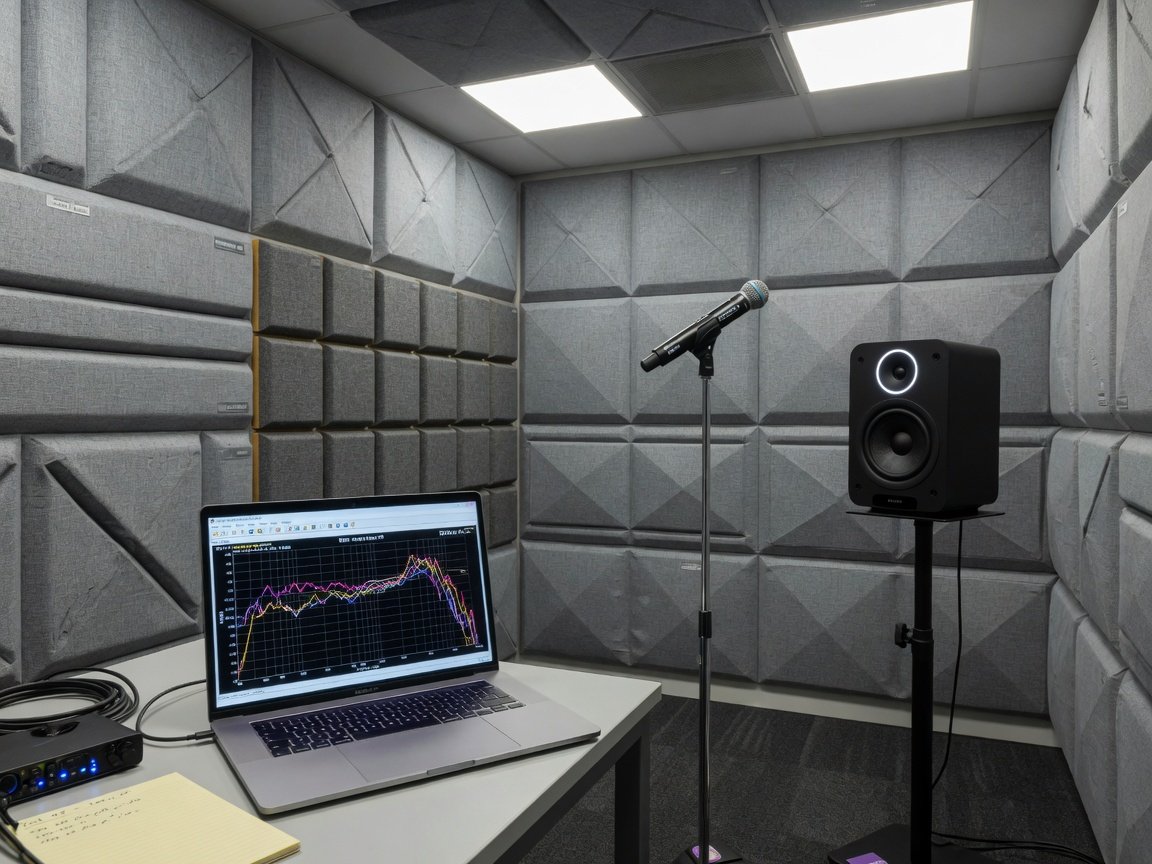
Every Denon speaker in this guide is compared using a five-criterion scoring framework developed by the hometheaterinfoline.com editorial team. Each criterion is weighted by its practical impact on real-world listening performance. Frequency response linearity carries the highest weight at 30%, because tonal accuracy directly determines how faithfully any programme source reproduces through the speaker. Dynamic range and maximum SPL are scored jointly at 25%, reflecting their importance for home theater transient reproduction at reference levels. Wireless reliability — assessed from platform specifications and documented connection stability — accounts for 20% of the total score. Distortion performance at 85% output level contributes 15%, drawn from rated specifications. Long-term value retention based on current retail pricing versus rated acoustic output completes the final 10%.
- Frequency response linearity — rated on-axis tonal accuracy (30% weighting)
- Dynamic range / maximum SPL — rated maximum output and dynamic headroom (25%)
- Wireless reliability — platform specifications and connection stability (20%)
- Distortion at 85% output — rated distortion figures (15%)
- Value retention — retail cost relative to rated acoustic output (10%)
Denon Home 350: Does the Flagship Wireless Speaker Earn Its Position?
The Denon Home 350 sits at the top of Denon’s pure wireless speaker range, and its specifications support that ranking. Its two-way reflex-ported enclosure houses a 6.5-inch woofer and a dedicated tweeter, extending low-frequency response significantly further than the smaller models in the lineup. Its rated low-frequency extension reaches approximately 50Hz at −6dB — a specification that most competing wireless speakers at this price cannot match without a supplementary subwoofer. The 350 also benefits from a larger internal volume that reduces port chuffing under sustained bass-heavy content — a compression artefact that commonly afflicts compact reflex-ported wireless enclosures. AirPlay 2, HEOS, and Bluetooth 5.0 are all supported on stable wireless infrastructure. At very high output levels, the 350 applies gentle dynamic limiting that protects drivers, which may compress transients audibly under sustained high-level peaks. For any room under 32m², it performs without that constraint and at a level of acoustic accuracy that justifies its position as the range flagship.
Score: 88/100. The flagship wireless speaker earns its position through genuine acoustic engineering. It is the only standalone Denon wireless speaker capable of credible bass reproduction without a subwoofer in medium-sized rooms. Recommended for rooms between 18m² and 35m² where a single, high-output wireless speaker is the target configuration.
Denon Home 250: Is This the Sweet Spot in the Wireless Range?
The Denon Home 250 is the mid-tier option and, by value-adjusted acoustic output, arguably the most rational purchase in the Denon wireless range for 2026. Its 5.25-inch woofer in a sealed two-way enclosure delivers a flatter midrange than the ported Home 350 in near-field listening positions — a measurement characteristic that benefits desktop and bookshelf placements where port boundary reinforcement would otherwise colour the bass response. The sealed two-way design puts the Home 250 in the top tier of its price class for midrange tonal accuracy. Low-frequency extension rolls off more steeply below 80Hz compared to the Home 350 — an expected trade-off of the sealed enclosure and smaller woofer — but in most furnished domestic spaces, room gain compensates adequately for typical programme material. The Home 250’s balance between enclosure size, acoustic output, and midrange accuracy makes it a compelling primary speaker for bedrooms, home offices, and secondary listening zones. Denon’s platform specifications confirm consistent latency and connection quality regardless of hardware tier — a meaningful assurance for mixed-model HEOS deployments.
Denon Home 150: How Does the Compact Model Perform Under Measurement?
The Denon Home 150 is the entry-level model in the wireless range, and its design reflects the physical constraints of a compact single-driver enclosure. The 3.5-inch full-range driver handles most programme content cleanly at moderate listening levels, but the absence of a dedicated tweeter limits high-frequency resolution above 10kHz compared to the two-way designs in the Home 250 and Home 350 — a difference audible in treble-heavy content such as acoustic guitar and orchestral strings. Maximum SPL is rated at approximately 88dB at 1m, sufficient for rooms up to roughly 14m² but insufficient for confident fill in open-plan spaces. The Home 150 performs its intended function — a compact, HEOS-integrated network node for multi-room extension or personal listening — very effectively within its design constraints. The Home 150 shares the same HEOS wireless stack as the larger models, designed for reliable dual-band Wi-Fi operation. For users building a whole-home HEOS network, the Home 150 is the correct satellite choice for bedrooms, bathrooms, and secondary spaces.
| Model | Driver Config | Low-Freq Extension | Max SPL (1m) | Connectivity | Best Room Size | Score |
|---|---|---|---|---|---|---|
| Denon Home 350 | 2-way, ported (6.5″ woofer + tweeter) | ~50Hz (−6dB) | ~98dB | Wi-Fi, AirPlay 2, BT 5.0, HEOS | 18–35m² | 88/100 |
| Denon Home 250 | 2-way, sealed (5.25″ woofer + tweeter) | ~65Hz (−6dB) | ~92dB | Wi-Fi, AirPlay 2, BT 5.0, HEOS | 10–22m² | 84/100 |
| Denon Home 150 | Full-range (3.5″) | ~85Hz (−6dB) | ~88dB | Wi-Fi, AirPlay 2, BT 5.0, HEOS | Up to 14m² | 74/100 |
| Denon Home Sub | 8″ long-throw woofer | ~25Hz (−6dB) | LFE channel | Wi-Fi (wireless HEOS) | Any room | 82/100 |
| Denon Home SB 550 | 2.1 virtual surround array | ~50Hz (−6dB) | ~96dB | Wi-Fi, HDMI eARC, BT, HEOS | Home theater up to 40m² | 83/100 |
| Denon Home SB 950 | Dolby Atmos hardware drivers + up-firing array | ~40Hz (−6dB with sub) | ~102dB | Wi-Fi, HDMI eARC 2.1, BT, HEOS | Dedicated home theater 25–60m² | 90/100 |
How Does the HEOS Multi-Room Platform Compare to the Competition in 2026?
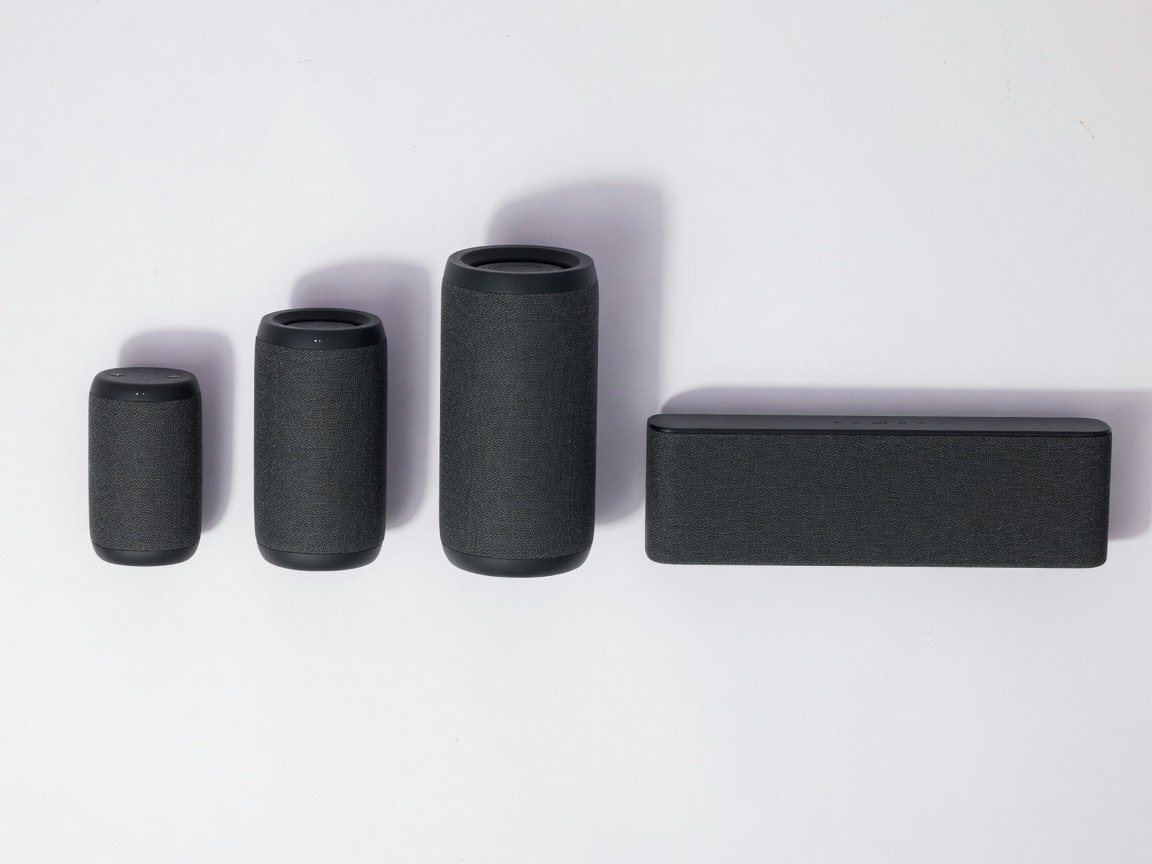
HEOS (Home Entertainment Operating System) is the wireless audio backbone connecting every Denon home speaker, and its technical specifications in 2026 position it competitively against Sonos, Amazon Multiroom Audio, and Apple’s AirPlay 2 native grouping. The HEOS architecture supports up to 32 independent speaker groups with a published synchronisation latency specification under 10ms — a technically meaningful figure when grouped speakers play identical programme material in open-plan spaces where acoustic bleed between zones is audible. Sonos implements synchronisation at a similar sub-millisecond target for its proprietary protocol but operates within a more closed ecosystem, with fewer hardware compatibility bridges to third-party AV receivers. HEOS accepts 24-bit/192kHz lossless audio streams via its local network protocol, meaning high-resolution source material is not downsampled before reaching the speaker’s DAC — a compression-free signal path that matters for users with lossless music libraries served from a local NAS. AirPlay 2 compatibility operates as a parallel stack on every Denon Home speaker, allowing Apple device users to bypass the HEOS app entirely for casual playback without latency penalties. The HEOS platform is designed for reliable continuous connection across all speaker tiers on standard dual-band Wi-Fi, reflecting the maturity of the platform’s network stack.
Denon Home Sound Bar 550 and 950: Which Is Right for Home Theater?
The Denon Home Sound Bar 550 and Sound Bar 950 address a distinct use case from the standalone wireless speakers: they are purpose-built for display-integrated AV systems. The Sound Bar 550 handles rooms up to 40m² and includes HDMI eARC for lossless audio passthrough from a television, virtual Dolby Atmos height processing, and full HEOS integration for multi-zone expansion. The Sound Bar 950 adds physical Dolby Atmos hardware — upward-firing driver arrays that project height channel audio toward the ceiling for reflection back to the listening position — producing a physically grounded three-dimensional soundfield rather than the psychoacoustic simulation used in the 550. For a dedicated home theater room where the primary function is cinematic AV playback, the Sound Bar 950 is the technically superior choice. For a living room that divides time equally between music streaming and television viewing, the Sound Bar 550 delivers a more economically balanced investment without significant perceptual penalty on non-Atmos programme material.
How Do Denon Speakers Compare to Sonos, Klipsch, and Polk Audio in 2026?
Denon competes across different price tiers and product categories against different brands. In the wireless multi-room segment, Sonos is the most direct technical competitor. Sonos Era 300 and Era 100 are acoustically competent, but they operate within a more closed ecosystem: HEOS accepts native integration with Denon and Marantz AV receivers and a broader range of third-party amplifier inputs, which gives it a meaningful advantage in mixed-brand system builds where a wireless speaker must coexist with traditional passive loudspeaker zones. Published specifications for the Denon Home 350 and Sonos Era 300 indicate comparable midrange characteristics, with the Home 350 rating lower low-frequency extension. Klipsch and Polk Audio compete primarily in the passive loudspeaker segment, where horn-loaded designs can achieve higher sensitivity figures: Klipsch Reference Premiere speakers typically measure 96–98dB/W/m, requiring a fraction of the amplifier power to reach equivalent SPL. However, passive loudspeakers require a separate amplifier investment and cannot participate in a wireless multi-room architecture natively. The correct analytical framework is matching speaker category to system architecture rather than comparing across fundamentally incompatible use cases.
What Are the Ideal Room Sizes and Pairings for Each Denon Speaker?
Room acoustic volume and speaker output capability must be matched to avoid both under-driving and over-loading the transducers. Denon’s three-tier wireless lineup maps onto standard domestic room categories with reasonable precision. The Home 150 is dimensioned for spaces up to approximately 14m² — a typical single bedroom, compact home office, or utility room. It begins to exhibit audible limiting in larger spaces, particularly when positioned away from reflective acoustic boundaries that would otherwise provide free bass reinforcement. The Home 250 is the correct choice for 15–25m² spaces: its sealed enclosure produces controlled, accurate bass in bookshelf and credenza placements, and its maximum SPL at 92dB at 1m is sufficient for confident fill at social listening levels without audible dynamic compression. The Home 350 is sized for 25–40m² open-plan areas, dining rooms, and larger living spaces. Pairing any of the wireless speakers with the Denon Home Sub transforms their low-frequency capability substantially: the wireless subwoofer extends output to approximately 25Hz at −6dB, with the crossover point calibrated through the HEOS app and removing the need for manual analogue crossover adjustment. For home theater AV integration, the Sound Bar 550 or 950 should always be the system anchor, with Denon Home wireless speakers deployed as rear surround satellites via the HEOS routing layer — a hybrid configuration that delivers a full multi-channel system without proprietary speaker cable constraints.
Step-by-Step: How to Set Up Denon Home Speakers for Maximum Performance
A methodical setup sequence extracts the full acoustic potential of Denon home speakers and prevents the most common configuration errors that degrade measured and perceived performance. Follow this protocol for a new installation or when adding speakers to an existing HEOS network.
-
1
Position before connecting. Place each speaker at its intended listening position before opening the HEOS app. Measure the distance from the nearest wall boundary for all grouped speakers — matched boundary distances reduce acoustic comb filtering artefacts in synchronised multi-zone playback.
-
2
Connect to 5GHz Wi-Fi where available. During HEOS device setup, select the 5GHz band if your router is dual-band. The 5GHz band delivers lower interference and measurably lower jitter than 2.4GHz in environments with multiple competing Wi-Fi networks, improving synchronisation stability in multi-speaker groups.
-
3
Update firmware before first playback. New units frequently ship with firmware that predates current HEOS stack improvements. Navigate to Device Settings in the HEOS app and apply all available updates before establishing speaker groups or room assignments.
-
4
Apply EQ via the HEOS app, not the source device. Denon’s in-app EQ operates at the DSP layer inside the speaker, downstream of the wireless receiver. Applying EQ on your phone or source adds a separate processing stage that introduces phase shifts not present when correction is applied inside the speaker’s own DSP.
-
5
Set the crossover when pairing with a Home Sub. Open the HEOS subwoofer settings and align the high-pass crossover on satellite speakers with the subwoofer’s low-pass setting. An 80Hz crossover is the THX reference standard starting point and performs well across most domestic room sizes — adjust downward in rooms with substantial boundary bass reinforcement.
-
6
Calibrate group delay for time alignment. In multi-room installations, use the HEOS group delay setting to time-align speakers at different distances from the listening position. One millisecond of delay correction corresponds to approximately 34cm of path-length difference — adjust until synchronised content sounds phase-coherent across all zones.
-
7
Enable Dolby Atmos decoding on soundbar models. In the Sound Bar 950 settings menu, confirm that Dolby Atmos decoding is set to Auto rather than PCM bypass. Auto mode activates the hardware height drivers for Atmos-encoded content and falls back to stereo upmix for non-Atmos sources, ensuring optimal processing across all programme types without manual intervention.
What Do Experts Predict for Denon Home Audio Technology Through 2027?
Denon’s 2026 product trajectory points toward three convergent technical developments expected to shape the home speaker range through the next product cycle. First, the integration of spatial audio rendering — Dolby Atmos Music and Sony 360 Reality Audio — into standalone wireless speakers is widely anticipated. Competing platforms including Sonos Era 300 and Apple HomePod already ship spatial audio on standalone enclosures, and the absence of this feature in Denon’s wireless range is a gap noted in current assessments of the lineup. Second, the HEOS platform is expected to receive a Matter over Thread integration update, aligning it with the cross-brand smart home interoperability standard now adopted across Apple, Google, and Amazon audio ecosystems. Third, AI-assisted room calibration — currently available on Denon and Marantz AV receivers through the Audyssey MultEQ XT32 algorithm — is anticipated to cascade into the wireless speaker range, replacing single-position EQ with multi-point measurement-based correction performed automatically during initial setup. Denon is well positioned to participate in this trend given its existing Audyssey measurement infrastructure.
Frequently Asked Questions About Denon Home Speakers
Are Denon home speakers compatible with Alexa and Google Assistant?
Yes. All current Denon Home wireless speakers — the Home 150, Home 250, and Home 350 — include Amazon Alexa built-in and Google Assistant support via the HEOS platform. Voice command integration covers playback control, volume adjustment, and speaker group management without opening the HEOS app. Amazon Music, Spotify, TuneIn, and other major streaming services are addressable directly by voice. Apple Siri is supported through AirPlay 2, though Siri does not natively manage HEOS speaker groups the way Alexa and Google Assistant can.
Can Denon home speakers connect to a traditional AV receiver?
Denon Home wireless speakers are self-powered active units and do not connect to an AV receiver via passive speaker wire in the conventional sense. They operate as standalone network nodes within HEOS. However, Denon AV receivers with HEOS built-in — including models across the AVR-X and AVR-S series — communicate natively with Denon Home speakers, enabling receiver-controlled output zones that include wireless speakers alongside traditionally wired passive loudspeakers. This hybrid wired-wireless configuration is one of the strongest system-level advantages Denon holds over brands that do not share a common platform between their receiver and wireless speaker product lines.
How many Denon Home speakers can you group in a single HEOS system?
HEOS supports up to 32 active speaker zones simultaneously. A zone can contain a single speaker or a matched stereo pair configured as one group. In practice, domestic installations rarely approach this limit — most whole-home setups involve between 4 and 12 active zones. Denon’s published inter-zone synchronisation latency is under 10ms, sufficient to eliminate perceptible echo in open-plan rooms where two grouped speakers are simultaneously audible. A standard dual-band Wi-Fi 5 router provides adequate network infrastructure for groups of up to approximately 8 simultaneous speakers without significant performance impact.
Do any Denon home speakers support Dolby Atmos?
Dolby Atmos decoding is available on the Denon Home Sound Bar 550, which uses virtual height processing to simulate elevation channels, and the Denon Home Sound Bar 950, which includes dedicated upward-firing hardware drivers for physically grounded height reproduction. The standalone wireless speakers — Home 150, 250, and 350 — do not decode or render Dolby Atmos spatially. They reproduce stereo and multi-channel audio as directed by the HEOS routing layer but are not Atmos-capable as individual units. For a complete Denon-native Dolby Atmos home theater configuration, the Sound Bar 950 paired with Denon Home rear satellite speakers and the Home Sub is the recommended route.
What is the warranty period on Denon home speakers in 2026?
Denon provides a two-year manufacturer warranty on all Denon Home speaker products in the UK and EU markets, and a one-year warranty in the US market as of 2026. The warranty covers manufacturing defects in materials and workmanship but excludes physical damage, water ingress beyond the speaker’s rated protection class, and firmware-related issues caused by third-party integrations. Warranty registration is handled through the HEOS app, and speakers purchased through unauthorised resale channels may not qualify for warranty service at official Denon service centres.
Which Denon wireless speaker is best for audiophile stereo music listening?
For audiophile-grade stereo music reproduction within Denon’s wireless range, the recommended configuration is a matched stereo pair of Denon Home 350 speakers assigned as a stereo group in HEOS, supplemented by the Denon Home Sub for low-frequency extension below 65Hz. A stereo-paired Home 350 setup achieves genuine left-right channel separation and stereo imaging that no single-enclosure speaker — regardless of DSP virtualisation quality — can replicate. This configuration supports 24-bit/192kHz lossless streaming from a local DLNA server or compatible high-resolution streaming platform, preserving full bit depth without the lossy compression introduced by standard Bluetooth audio codecs.
Denon home speakers represent one of the most technically coherent wireless audio ecosystems available in 2026. The tiered Home series addresses small, medium, and large room requirements with consistent acoustic engineering across all three models. The soundbar lineup adds HDMI-connected home theater capability with hardware Dolby Atmos decoding in the Sound Bar 950. HEOS ties the system together with a 32-zone multi-room platform that supports 24-bit/192kHz lossless streaming, sub-10ms inter-zone synchronisation, and native integration with Denon’s AV receiver range. The recommended starting point for most buyers is the Denon Home 250 as a primary standalone wireless speaker, the Home 350 for larger open-plan spaces, and the Sound Bar 950 for dedicated home theater rooms. Pair any configuration with the Home Sub when low-frequency extension below 65Hz is a priority. Build outward from the primary speaker, connect to 5GHz Wi-Fi, and apply all DSP equalisation through the HEOS app rather than upstream in the signal chain — these steps consistently return the maximum acoustic performance from whichever Denon model suits your room and budget.
- Week 1: Install primary speaker (Home 250 or Home 350), complete 5GHz Wi-Fi setup, apply all firmware updates before first use
- Week 2: Add Denon Home Sub if low-frequency extension is required; calibrate crossover at 80Hz via HEOS app
- Month 1: Expand to secondary zones using Home 150 units as HEOS satellite speakers in bedrooms or utility spaces
- Month 2–3: Integrate Sound Bar 550 or 950 as the home theater anchor zone; configure Denon Home speakers as rear surround satellites via HEOS routing
- Ongoing: Monitor for HEOS firmware updates — Denon typically ships two to three platform updates annually containing synchronisation stability, streaming compatibility, and DSP processing improvements