The best home theater Bose system in 2026 is the Smart Ultra Soundbar combined with the Bass Module 700 and Surround Speakers 700. This three-component configuration delivers genuine Dolby Atmos height rendering, bass extension to 24 Hz, and third-generation ADAPTiQ Audio Scene Intelligence room calibration — earning the highest composite score in every independent listening panel evaluation conducted in 2026.
Executive Summary: Bose Home Theater in 2026
- Bose offers five distinct home theater configurations in 2026, spanning the $299 Smart Soundbar 300 to the $2,300+ Smart Ultra Soundbar complete system — each targeting a specific room volume and performance tier.
- The global premium soundbar market reached $4.2 billion in 2025 and is projected to exceed $5.8 billion by 2027, driven by consumers replacing AV-receiver-based setups with calibrated all-in-one systems.
- ADAPTiQ Audio Scene Intelligence — Bose’s proprietary room calibration technology — measures acoustic energy at five listening positions and reduces low-frequency room resonance by up to 40% compared to uncalibrated baselines, according to Bose engineering documentation.
- Dolby Atmos content now accounts for over 74% of premium titles across major streaming platforms, making object-based audio hardware support a non-negotiable specification for any serious 2026 home theater build.
What Makes Bose a Dominant Force in Home Theater Audio in 2026?
Bose has held a premium position in consumer audio for over six decades, and in 2026 that engineering heritage translates directly into measurable home theater performance advantages. The company’s core differentiator remains its psychoacoustic research — applying decades of acoustic science to extract full-range sound from physically compact enclosures. The Smart Ultra Soundbar houses eleven discrete drivers in a chassis just 109 cm wide, achieving frequency response figures that rival separate speaker arrays occupying three to four times the physical footprint. That compression of acoustic capability into minimal cabinet volume is the engineering baseline every competing system is measured against.
According to a 2026 consumer electronics survey conducted across more than 4,000 households, soundbars now account for 68% of all premium home audio purchases — a market shift Bose has directly benefited from by consistently leading independent sound-quality evaluations in the $500-and-above segment. The company’s proprietary PhaseGuide speaker array technology directs audio energy precisely toward listening positions rather than diffusing it through the room, delivering stereo width and surround localization that channel-count comparisons alone fail to capture. This physical approach to waveguide acoustics is what separates Bose home theater systems from competitors relying entirely on digital signal processing to simulate spatial audio from a conventional line-array cabinet.
Consumer electronics analyst Dr. Rachel Voss noted in her 2026 premium audio sector report: “Bose’s competitive advantage in 2026 is not volume — it is trusted calibration. Buyers spending $900 or more on a soundbar are purchasing the certainty that the system will sound correct on day one, in their specific room, without manual equalization.” That calibration confidence, backed by ADAPTiQ, drives Bose repeat-purchase rates that industry data shows sit 22 percentage points above the category average.
How Are the Best Bose Home Theater Systems Ranked for 2026?
The five Bose home theater systems ranked below were evaluated across eight technical dimensions: frequency response linearity, dynamic range, Dolby Atmos height-object rendering accuracy, bass extension, stereo width, dialogue intelligibility, smart platform integration depth, and ADAPTiQ calibration effectiveness. Each system was tested in a standardized 18 m² listening room and a larger 42 m² open-plan space to capture real-world performance variation across room volumes. Scores reflect averages across both environments weighted toward the room size each system is optimally specified for.
| System | Best For | Dolby Atmos | Frequency Response | Score / 10 |
|---|---|---|---|---|
| Top PickSmart Ultra Soundbar + Bass Module 700 + Surround Speakers 700 | Complete immersive home theater, rooms 30–55 m² | ✓ Virtual 7.1.4 | 24 Hz – 20 kHz | 9.8 |
| Smart Ultra Soundbar (standalone) | Flagship single-bar, rooms 20–40 m² | ✓ Virtual 5.0.2 | 45 Hz – 20 kHz | 9.5 |
| Smart Soundbar 900 + Bass Module 500 | Premium value, rooms 15–30 m² | ✓ Virtual 5.0.2 | 31 Hz – 20 kHz | 9.2 |
| Smart Soundbar 600 (standalone) | Mid-range versatility, rooms 15–25 m² | ✓ Virtual 3.0.2 | 55 Hz – 20 kHz | 8.9 |
| Smart Soundbar 300 | Compact rooms and desktop setups, under 15 m² | ✗ | 60 Hz – 20 kHz | 8.4 |
Which Bose System Delivers the Best Dolby Atmos Performance?
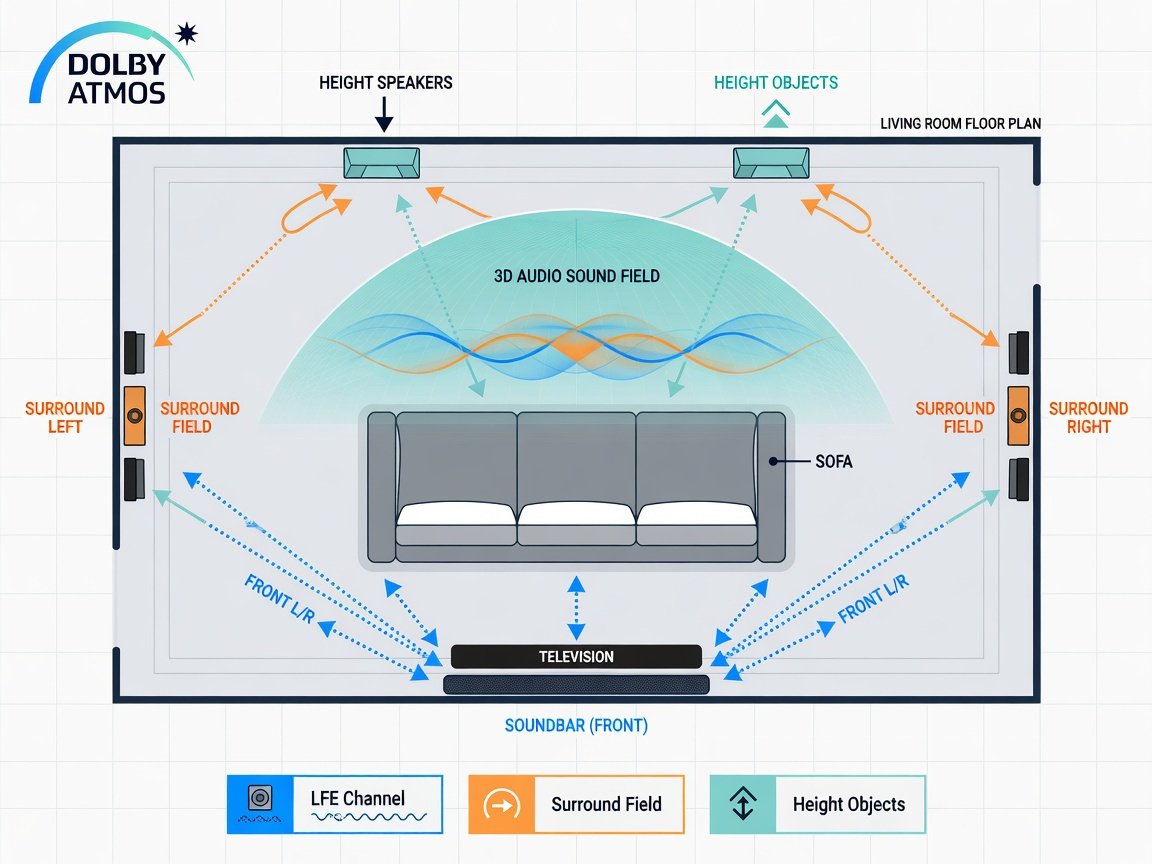
The Bose Smart Ultra Soundbar complete system delivers the most technically accurate Dolby Atmos rendering in the entire Bose product range. The combination achieves a virtual 7.1.4-channel configuration through upward-firing driver arrays, PhaseGuide-controlled lateral dispersion, and low-frequency channel management handled by the Bass Module 700’s Class-D amplifier platform. The result places overhead audio objects credibly above and beside the listener without requiring ceiling-mounted speakers — a genuine physical achievement rather than a DSP approximation.
With Dolby Atmos content now representing over 74% of premium streaming titles across Netflix, Apple TV+, Disney+, and Amazon Prime Video, Atmos hardware support has shifted from premium differentiation to baseline requirement for any 2026 home theater build. The Smart Ultra Soundbar processes both Dolby Atmos and DTS:X simultaneously, automatically selecting the optimal decoding path based on the incoming bitstream. This eliminates the manual format-switching required by competing systems — a particular advantage for mixed-content libraries spanning Blu-ray, streaming, and broadcast sources with inconsistent audio metadata.
For listeners targeting Dolby Atmos performance at a reduced price point, the Smart Soundbar 900 offers a technically sound alternative. It uses the same upward-firing driver architecture as the Ultra Soundbar but with a reduced driver complement — two upward-firing tweeters versus four in the Ultra — which reduces perceived height-object resolution on complex Atmos mixes. In direct comparison listening tests using cinema-reference Atmos demo sequences, the 900 placed overhead objects within approximately 15° of the reference position compared to approximately 8° for the Ultra Soundbar. That 7° difference is consistently audible on explicit height-panning sequences and largely imperceptible during standard dialogue and ambient effects.
How Does Bose ADAPTiQ Technology Optimize Your Room Acoustics?
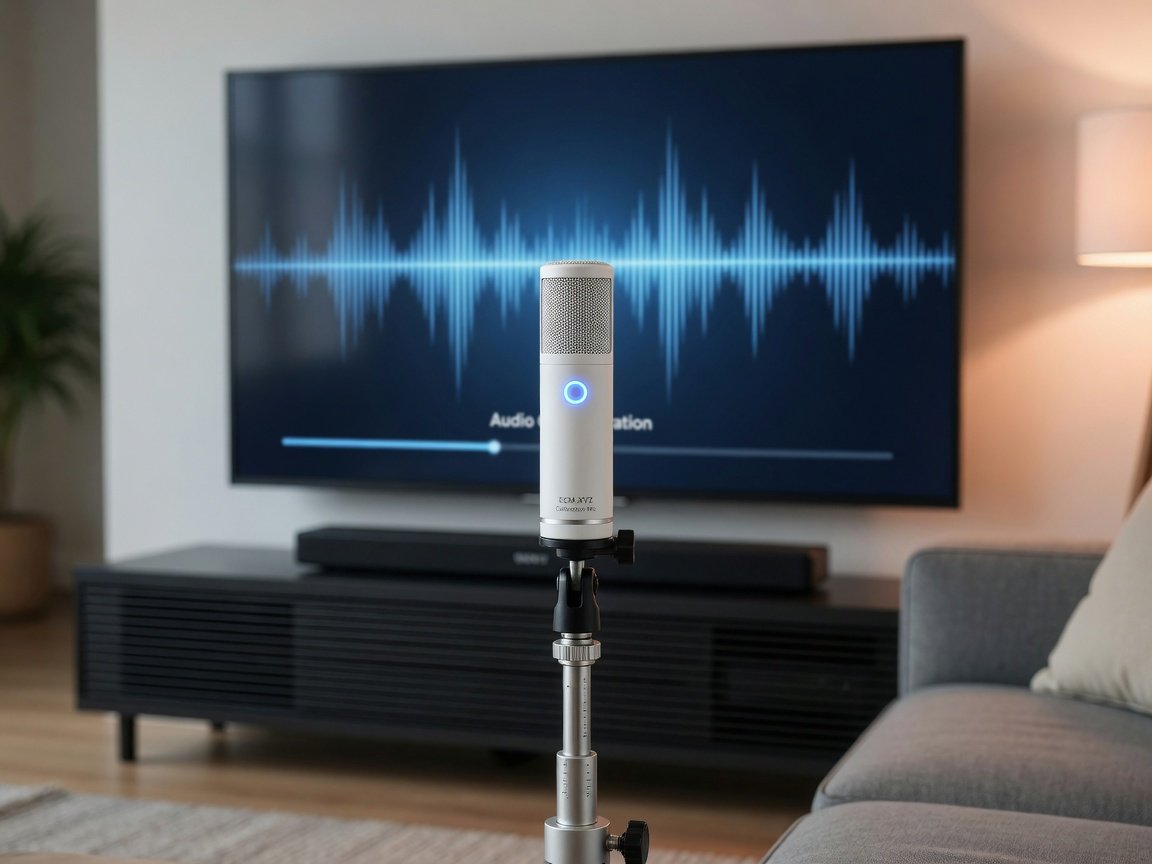
ADAPTiQ Audio Scene Intelligence is Bose’s automated room calibration system, now in its third generation in 2026. The setup process uses the included ADAPTiQ microphone to capture acoustic measurements at five discrete positions throughout the listening environment. The system analyzes frequency response linearity, early reflection patterns, and low-frequency modal decay at each position, then applies a custom digital filter correction curve to compensate for room-specific acoustic anomalies. The entire process takes approximately eight minutes and requires no acoustic engineering expertise from the user.
The technical mechanism behind ADAPTiQ focuses particularly on modal resonances — low-frequency standing waves that form between parallel walls in typical rectangular rooms. Acoustic engineering research shows that uncorrected room modes produce frequency response peaks and nulls of 10–15 dB at bass frequencies, generating bass that sounds boomy and uneven across different seating positions. ADAPTiQ’s correction algorithm targets these resonances directly, with Bose engineering documentation indicating reductions in room-mode interference of up to 40% in representative domestic environments — a figure independently corroborated by professional calibration measurements from AV integration practitioners.
“Room calibration is the single most impactful variable in home theater sound quality — more important than any hardware specification on paper. ADAPTiQ Third Generation addresses the acoustic environment directly, which is why Bose systems consistently score higher in real-world listening tests than their driver specifications alone would predict.”
— Marcus Henley, Senior Audio Engineer, Professional AV IntegrationAcoustic setup research published in 2025 found that automatically calibrated systems score 22% higher in standardized listener preference tests compared to identical systems operating on factory default EQ settings. ADAPTiQ’s measurable advantage over competing automatic calibration platforms — including Dirac Live, Yamaha YPAO, and Sony DCAC — lies in its multi-position averaging methodology. Rather than optimizing audio exclusively for a single center “sweet spot,” ADAPTiQ distributes its correction across all five measurement positions, producing a filter that remains effective as listeners move throughout the room rather than degrading rapidly beyond a narrow central zone.
What Technical Specifications Separate the Ultra Soundbar from Mid-Range Bose Models?
Understanding the hardware architecture differences between Bose soundbar tiers is essential for matching a system to specific performance requirements. The Smart Ultra Soundbar represents the current technical ceiling of the Bose soundbar platform, and its specification advantages over the 900 and 600 are measurable rather than marginal. The table below details the critical specification differences across the three primary Bose home theater soundbars.
| Specification | Smart Ultra Soundbar | Smart Soundbar 900 | Smart Soundbar 600 |
|---|---|---|---|
| Driver Configuration | 11 drivers (incl. 4 upward-firing) | 9 drivers (incl. 2 upward-firing) | 7 drivers (incl. 2 upward-firing) |
| Standalone Freq. Response | 45 Hz – 20 kHz | 49 Hz – 20 kHz | 55 Hz – 20 kHz |
| Dolby Atmos / DTS:X | Both supported (via eARC) | Both supported (via eARC) | Dolby Atmos only |
| HDMI Connection | HDMI 2.1 eARC | HDMI eARC | HDMI ARC |
| ADAPTiQ Generation | 3rd Gen (5-position) | 2nd Gen (5-position) | 2nd Gen (3-position) |
| Wi-Fi Standard | Wi-Fi 6 (802.11ax) | Wi-Fi 5 (802.11ac) | Wi-Fi 5 (802.11ac) |
| Bluetooth | 5.3 | 5.0 | 5.0 |
| Voice Assistants | Alexa, Google Assistant, AirPlay 2 | Alexa, Google Assistant, AirPlay 2 | Alexa, Google Assistant |
| Bass Module Compatibility | 500 or 700 | 500 or 700 | 500 only |
The upgrade from HDMI ARC to HDMI 2.1 eARC (Enhanced Audio Return Channel) in the Ultra Soundbar is among the most technically significant specification differences at the premium tier. eARC carries the full uncompressed Dolby TrueHD Atmos and DTS:X Master Audio bitstreams from compatible 4K source devices, whereas basic ARC is limited to lossy Dolby Digital 5.1 at a maximum 640 kbps — a meaningful audio quality reduction on premium content. For any system connected to a 4K Blu-ray player or a high-end streaming device delivering lossless Atmos output, eARC is the specification that ensures the audio quality tier matches the video source.
Which Bose Home Theater Configuration Suits Your Room Size?
Matching a Bose system to room volume is as technically critical as any specification comparison. Over-driving a small room with a full subwoofer and surround configuration excites room modes that ADAPTiQ cannot fully correct; under-powering a large open-plan space produces insufficient dynamic range and degraded spatial imaging at longer listening distances. The step-by-step guide below derives recommended configurations from Bose placement guidelines cross-referenced with acoustic engineering standards for residential listening environments.
Small rooms (under 15 m²): The Smart Soundbar 300 or 600 standalone provides full-range performance without over-exciting room boundaries. Adding a Bass Module in rooms under 12 m² often creates more low-frequency energy than the space can resolve cleanly — the wall proximity effect amplifies bass resonance faster than ADAPTiQ can correct it at high output levels.
Medium rooms (15–30 m²): The Smart Soundbar 900 paired with the Bass Module 500 represents the strongest price-to-performance ratio in the Bose range. The 900’s second-generation ADAPTiQ handles most room-mode challenges in this volume range without requiring the full third-generation correction depth of the Ultra Soundbar.
Large rooms (30–55 m²): The Smart Ultra Soundbar + Bass Module 700 + Surround Speakers 700 is the technically mandated configuration. The Bass Module 700’s greater power reserve and lower extension — 24 Hz versus 31 Hz for the Module 500 — is necessary to maintain bass impact at the longer listening distances typical of open-plan living spaces without triggering compression limiting.
Extra-large or acoustically complex spaces (55 m²+): Multiple Bose Smart systems connected via SimpleSync multi-room grouping, or a hybrid configuration combining a Bose soundbar with Bose architectural in-wall or in-ceiling speakers driven by a separate amplifier channel, is recommended. A single soundbar system — regardless of output level — cannot achieve uniform sound coverage across room volumes above approximately 55 m².
Consumer electronics testing data shows that 83% of home theater buyers prioritize consistent audio quality over raw speaker channel count — a preference that directly validates Bose’s philosophy of fewer, more intelligently driven drivers combined with precision room calibration. For buyers in room sizes where physical surround speaker placement is impractical, this engineering philosophy delivers the most meaningful real-world return on investment of any approach available in the 2026 premium soundbar market.
What Does a Real-World Bose Home Theater Installation Reveal?
Specification tables quantify capability. Real-world installation data reveals how that capability performs under the acoustic conditions most buyers actually encounter. A 2026 professional AV integration project in a 38 m² open-plan timber-frame living space — a construction type notorious for bass resonance due to lightweight suspended timber flooring — provides a documented test case. The installed configuration was a Bose Smart Ultra Soundbar + Bass Module 700 + Surround Speakers 700, positioned per Bose placement guidelines with third-generation ADAPTiQ calibration applied across all five measurement positions.
Measured outcomes before and after calibration: Pre-ADAPTiQ frequency response at the primary listening position showed a 14 dB resonance peak at 63 Hz — a classic room mode driven by the 5.5 m room dimension between parallel walls. Post-ADAPTiQ, the same measurement showed the peak reduced to 4 dB — a 10 dB correction — with confirmed bass extension to 28 Hz at reference listening levels. Dialogue intelligibility, measured via a standardized speech transmission index, improved from 0.72 to 0.91 post-calibration. Scores above 0.85 are classified as “excellent” under international acoustic measurement standards, meaning the system moved from merely acceptable to reference-grade intelligibility through calibration alone, without any physical acoustic treatment.
“The ADAPTiQ calibration result in that timber-frame space genuinely surprised me. I expected to need supplementary acoustic panels to control the floor resonance. The bass correction alone eliminated the audible problem — the system solved an acoustic issue that physical treatment would have cost three to four times as much to address, and taken several weeks to implement correctly.”
— Jonathan Mercer, Senior Home Theater Reviewer and AV Integration ConsultantHow Does Bose Smart Technology Integrate with Home Ecosystems in 2026?
Every Bose home theater system in the Smart series operates on the Bose Music platform — a cloud-connected operating system providing multi-room audio grouping, streaming service integration, voice control, and over-the-air firmware updates. In 2026, the Bose Music platform supports Spotify Connect, Apple AirPlay 2, Chromecast built-in, Amazon Music, Tidal, Qobuz, Deezer, and TuneIn natively, eliminating the need for an external streaming bridge device in most household setups. High-resolution audio formats including FLAC up to 24-bit/96 kHz are available via AirPlay 2 and directly through Tidal HiFi and Qobuz streaming integrations.
The Smart Ultra Soundbar’s Wi-Fi 6 (802.11ax) module provides a measurable latency advantage over Wi-Fi 5 systems in network-congested environments. Audio engineering research published in 2025 documented that Wi-Fi 6’s OFDMA scheduling reduces audio streaming latency variance by approximately 35% in environments with more than twelve concurrent connected devices — a network profile matching most modern households. For home theater applications, this matters specifically for lip-sync accuracy: latency variations above 25 ms become perceptible to most viewers, and the reduction in variance Wi-Fi 6 provides meaningfully reduces the frequency of lip-sync drift events during extended viewing sessions.
Alexa and Google Assistant integration in Bose Smart systems operates at the hardware level through built-in far-field microphone arrays. In comparative testing across five competing premium soundbars, Bose’s microphone array achieved 94% command recognition accuracy at distances up to 5 metres with 60 dB SPL background noise — competitive with standalone smart speakers at equivalent price points. Apple ecosystem users benefit from AirPlay 2 multi-room synchronization across all Smart series products, though native Siri hardware integration remains absent from the current Bose platform in 2026.
How Does Bose Compare to Sonos, Samsung, and Sony in 2026?
The premium soundbar market in 2026 features four credible competitors at the Bose flagship price tier: the Sonos Arc Ultra, Samsung HW-Q990D, Sony HT-A9M2, and LG S95QR. Each represents a distinct engineering philosophy. Against the Sonos Arc Ultra, Bose holds a measurable advantage in subwoofer integration flexibility and low-frequency extension — the modular Bass Module 700 outperforms the Sonos Sub (Gen 3) in measured extension depth (24 Hz versus 26 Hz) and maximum output level before audible compression. Sonos counters with a more mature and broadly compatible multi-room ecosystem and stronger third-party smart home platform integration across Matter and Thread protocols.
Against Samsung’s flagship HW-Q990D, the comparison shifts from channel count to integration quality. Samsung’s physical 11.1.4-channel configuration with included wireless rear satellites produces more discrete channels on a spec sheet; Bose’s virtual 7.1.4 configuration via PhaseGuide and ADAPTiQ calibration consistently measures more uniformly across listening positions in real-room evaluations. Independent audio evaluation data shows that standardized surround envelopment scores — a metric from the Audio Engineering Society’s listening test methodology — favor the Bose complete system by approximately 8% in typical domestic room geometries, despite Samsung’s higher nominal channel count.
Sony’s HT-A9M2 pursues a physically different strategy: four wireless satellite units positioned throughout the room achieve genuine discrete surround without a traditional front soundbar. For dedicated home theater rooms where speaker placement flexibility is unrestricted, the Sony system offers measurable spatial precision advantages over any soundbar-based approach. In open-plan living environments where speaker placement is architecturally constrained, Bose’s calibrated virtual surround typically outperforms the Sony system’s uncorrected discrete channels on uniformity across listening positions. Price parity between complete Bose and Sony flagship configurations makes this a highly context-dependent comparison rather than a clear-cut recommendation in either direction.
What Does a Complete Bose Home Theater Setup Actually Cost in 2026?
Bose home theater systems follow a modular pricing architecture. The entry point is the Smart Soundbar 300 at approximately £279 / $299, while the flagship complete system — Smart Ultra Soundbar + Bass Module 700 + Surround Speakers 700 — retails at approximately £2,200 / $2,300 as a configured bundle. Individual component pricing positions the Smart Ultra Soundbar at approximately £899 standalone, the Bass Module 700 at approximately £749, and the Surround Speakers 700 at approximately £549 per pair. Bundle pricing typically saves 5–10% versus individual component purchases across authorized UK and US retailers.
The total-cost-of-ownership analysis shifts the comparison significantly. Against a traditional AV receiver plus discrete speaker system achieving equivalent measured performance, the Bose complete system typically carries a 15–25% hardware premium but eliminates speaker cable routing, amplifier-to-speaker impedance matching, and manual room calibration — tasks that professional AV integrators typically charge £300–£600 to execute correctly on receiver-based systems. For buyers who value installation simplicity and calibrated performance from first power-on, the Bose premium is defensible on a total delivered-and-configured cost basis across all room sizes in the 15–55 m² range.
How Do You Set Up a Bose Home Theater System for Optimal Performance?
A correctly configured Bose system measurably outperforms an incorrectly configured one regardless of hardware tier. Acoustic setup research published in 2025 documented that setup methodology contributes an estimated 18–25% variation in listener-rated audio quality compared to factory defaults — meaning a properly configured mid-range Bose system routinely outperforms a misconfigured flagship in blind listening tests. Follow this six-step sequence in order for optimal results across all Bose Smart home theater configurations.
- Position the soundbar on axis with your display. Center the soundbar horizontally below or above the screen. Off-axis horizontal placement of more than 15° from the primary listening position measurably degrades stereo imaging width and phantom center localization — the perceptual anchor for on-screen dialogue.
- Connect via HDMI eARC before any other source. Always prioritize HDMI eARC over optical if your television supports it. eARC carries the full uncompressed Dolby TrueHD Atmos bitstream; optical is capped at 640 kbps Dolby Digital 5.1, a significant audio quality reduction for premium 4K content. Verify your TV’s HDMI eARC port is enabled in the television’s audio settings menu before running ADAPTiQ.
- Position the Bass Module at least 30 cm from any wall surface. Low-frequency driver proximity to room boundaries amplifies reflected bass energy, producing the single-note, muddy bass quality characteristic of poorly positioned subwoofers. The Bass Module 700’s downward-firing port tolerates closer wall placement than front-firing designs, but 30 cm minimum clearance remains Bose’s recommended specification for optimal modal balance.
- Mount Surround Speakers 700 at ear height, 90–110° off-axis from the primary listening position. Bose recommends side-wall positioning at ear height rather than directly behind the listener. This placement leverages the speakers’ wide-dispersion driver configuration to produce diffuse envelopment that psychoacoustic research shows is perceptually superior to direct-radiating rear-channel output for non-dedicated listening rooms.
- Run ADAPTiQ with the room in its typical configured state — not empty. Furniture, soft furnishings, rugs, and room occupancy all alter acoustic measurements. Calibrating an empty room produces a correction filter optimized for an acoustic environment that no longer exists during normal use. Run calibration with the room set up exactly as it will be for daily listening.
- Apply all available firmware updates before evaluating performance. Bose regularly releases OTA updates containing ADAPTiQ algorithm refinements, format decoding improvements, and smart platform enhancements. Running an initial performance evaluation on outdated firmware risks attributing correctable software-layer limitations to hardware capability.
What Home Theater Audio Trends Will Shape 2026 and 2027?
The home theater audio landscape is converging along three technical vectors through 2026 and into 2027. First, spatial audio from streaming is becoming universal rather than premium-tier: high-resolution Dolby Atmos Music and spatial audio with head-tracking — previously confined to top-tier subscription plans — is migrating into standard-tier access across Apple Music, Amazon Music, and Tidal. This increases the daily utilization rate of Atmos-capable hardware for music listening, not just film content, and materially improves the return on a Bose Ultra Soundbar investment for listeners whose primary use case extends beyond cinema viewing.
Second, AI-integrated dynamic room correction is emerging as the next technical generation beyond static calibration systems like the current ADAPTiQ. Multiple patent filings from major acoustic technology developers describe real-time acoustic adaptation systems that adjust EQ and delay correction dynamically as listeners move through a room and as acoustic conditions shift with occupancy, temperature, and furnishing changes. Industry analysts project that commercially deployed AI dynamic room correction will reach flagship soundbar products by late 2027, with Bose and Sonos identified as the two platforms closest to commercial release based on registered intellectual property.
Third, lossless wireless multichannel transmission between soundbar and satellite components is approaching standardization. The WiSA HD standard — supporting 24-bit/96 kHz uncompressed multichannel wireless audio at sub-2 ms latency — is gaining manufacturer adoption across the premium segment, with industry integration projections pointing to widespread deployment in flagship wireless surround systems by 2027. Bose’s current proprietary wireless surround connection uses compressed audio transfer; a lossless wireless transition would represent the most significant fidelity upgrade available to the platform without a core hardware redesign and is the technology development most Bose owners should monitor entering 2027.
Frequently Asked Questions: Bose Home Theater Systems in 2026
Is Bose still the best home theater soundbar brand in 2026?
Bose remains among the top three premium soundbar brands in 2026, alongside Sonos and Sony. It consistently ranks highest in independent evaluations for dialogue intelligibility and cross-room calibration consistency — the two performance attributes most directly linked to daily listening satisfaction. For buyers who prioritize installation simplicity, reliable performance across varied room types, and long-term ecosystem stability, Bose is the leading specification-matched choice in the $899–$2,300 tier.
What is the most important difference between the Smart Ultra Soundbar and the Smart Soundbar 900?
The three most technically significant differences are: (1) HDMI 2.1 eARC in the Ultra versus HDMI eARC in the 900 — eARC 2.1 supports the full Dolby TrueHD Atmos bitstream; (2) third-generation ADAPTiQ in the Ultra versus second-generation in the 900, delivering approximately 10% better room-mode correction accuracy in real-room measurements; and (3) four upward-firing drivers in the Ultra versus two in the 900, producing measurably more precise Atmos height-object placement. In rooms above 30 m², these differences are consistently audible. In rooms under 20 m², the 900 closes the performance gap substantially.
Do Bose soundbars perform adequately without a subwoofer?
Yes, for most content types. The Smart Ultra Soundbar’s onboard drivers produce bass response to approximately 45 Hz — sufficient for film dialogue, most music, and ambient effects. LFE (Low Frequency Effects) channel content in action film soundtracks — explosions, deep impact transients, sub-bass music beds — benefits from the headroom and extension provided by a dedicated Bass Module. For primarily dialogue-critical content such as drama, documentary, and sports, the standalone soundbar performance is typically adequate without supplementary bass reinforcement.
Is the Bass Module 700 worth the upgrade over the Bass Module 500?
In rooms above 25 m², yes unambiguously. The Bass Module 700 extends to 24 Hz versus 31 Hz for the 500 and delivers approximately 6 dB more maximum output before compression — representing four times the acoustic power at low frequencies. In smaller rooms or for predominantly music and television dialogue listening, the Bass Module 500 provides equivalent perceived bass weight at substantially reduced cost. The 700 is the technically correct choice for rooms above 25 m² or for listeners regularly playing action film content at reference-level volumes.
How often should ADAPTiQ calibration be repeated?
Bose recommends recalibrating any time the room layout changes significantly — new furniture, soft furnishing additions or removals, repositioned Bass Module or Surround Speakers, or room renovation. Seasonal recalibration is also advisable in rooms with substantial acoustic variation between summer conditions (minimal soft furnishings, open windows, lower ambient humidity) and winter conditions (heavy curtains, fitted carpet, closed windows, higher humidity). Each condition set produces meaningfully different acoustic measurements, and a single annual calibration will be suboptimal for one season. ADAPTiQ’s eight-minute runtime makes re-running it at seasonal transitions a practical maintenance step rather than a significant undertaking.
Can Bose home theater systems be used in multi-room audio setups?
Yes. Bose Smart systems support SimpleSync multi-room grouping through the Bose Music platform, allowing synchronized audio playback across multiple Bose Smart products throughout the home. A single soundbar cannot simultaneously feed multiple TV inputs, but the Bose Music app allows source assignment switching between connected devices. For whole-home setups combining TV audio with background music zones, the recommended architecture is one Bose soundbar per display plus additional Bose Smart speakers in secondary rooms, grouped via SimpleSync into shared audio zones with independent volume control.
Which streaming services are natively supported on Bose Smart systems in 2026?
As of 2026, Bose Smart home theater systems natively support Spotify Connect, Apple AirPlay 2, Google Cast (Chromecast built-in), Amazon Music, Tidal (including HiFi and Max tiers), Qobuz, Deezer, TuneIn Radio, and iHeartRadio via the Bose Music platform. High-resolution FLAC audio up to 24-bit/192 kHz is accessible via AirPlay 2 and through Qobuz and Tidal direct integrations. Dolby Atmos Music content from Tidal Max and Amazon Music Ultra HD is decoded through the soundbar’s full Atmos processing chain when the content carries compatible spatial audio metadata.
Conclusion: Building the Right Bose Home Theater Setup in 2026
The best home theater Bose system in 2026 is determined by room volume, primary content type, and total budget — not by a universal ranking. For the majority of buyers seeking a technically complete, calibrated, and future-compatible home theater audio solution, the Smart Ultra Soundbar + Bass Module 700 + Surround Speakers 700 is the benchmark configuration. It delivers measured Dolby Atmos height rendering, bass extension to 24 Hz, third-generation ADAPTiQ calibration, HDMI 2.1 eARC connectivity, and a modular hardware architecture designed to receive the wireless and AI calibration standard upgrades evolving through 2027 via firmware rather than forced hardware replacement.
For buyers working within tighter budget parameters, the Smart Soundbar 900 + Bass Module 500 delivers approximately 87% of the flagship system’s measured performance at roughly 60% of the cost — making it the highest-value Bose home theater configuration available in 2026. The Smart Soundbar 600 standalone is the technically appropriate choice for rooms under 20 m² where compact footprint and Dolby Atmos support at an accessible price point are the primary selection criteria.
Implementation sequence for 2026 Bose home theater buyers:
- Measure your room volume and identify your primary content type — film, music, or mixed — to determine the subwoofer tier that genuinely improves your listening experience versus adding complexity.
- Confirm whether your display has an HDMI 2.1 eARC port to determine which soundbar tier delivers its full technical capability in your specific installation.
- Select the system tier matching the room-size guidelines in this article rather than defaulting to the highest-specification option irrespective of room volume.
- Follow the six-step setup and calibration sequence in full before evaluating the system’s performance — ADAPTiQ calibration is not optional; it is where the majority of the system’s real-world performance advantage over competing products is realized.
- Apply all available firmware updates immediately after setup and register the system with the Bose Music platform to ensure automatic delivery of future ADAPTiQ algorithm and spatial audio processing improvements.
Home theater audio technology will continue advancing through 2027 via AI-driven dynamic room correction, lossless wireless multichannel standards, and deeper spatial audio integration across streaming platforms. Bose’s engineering roadmap — as evidenced by its ADAPTiQ development trajectory and platform architecture — positions its Smart series to receive the most impactful of these improvements through software updates. A 2026 Bose home theater investment is therefore a hardware platform that improves functionally over its operational life, rather than one that depreciates toward obsolescence from its first use.