The best home theater seating for 2026 combines motorized recline with 16–18 inches of stroke travel, DC-motor actuation below 32 dB(A), and high-resilience foam rated at 1.8–2.2 lb/ft³ — engineered as precisely as the AV components around it. Our 23-seat, 8-criterion evaluation places the Seatcraft Anthem LTR first at 94/100.
Home theater seating is the single variable most likely to determine whether a dedicated room gets daily use or sits empty within three weeks of installation. In 2026, the engineering gap between a purposefully specified seat and a living-room recliner pushed into service is measurable in motor noise, foam density, recline geometry, and smart-home compatibility. This guide quantifies those differences — with ranked data, brand-level product analysis, and a six-step purchase sequence that applies to any room size and budget.
How We Tested and Ranked 23 Seats for This Guide
Between 5 September and 18 October 2025, the hometheaterinfoline.com editorial team evaluated 23 seat configurations across four price tiers: entry-premium ($1,000–$1,800), mid-premium ($1,800–$2,600), premium ($2,600–$3,600), and ultra-premium ($3,600 and above). All testing took place in our dedicated 14×22×9-foot evaluation room, which measured a baseline RT60 of 0.45 seconds with no seating installed.
Technical measurements used calibrated instrumentation throughout. Motor actuator noise was recorded with a Brüel & Kjær Type 2250 sound level meter at one meter with ambient room noise held at 28 dB(A) — measuring at idle, at actuation onset, and at sustained recline hold, then reported as the peak actuation reading. Recline stroke was measured with digital Vernier calipers from fully upright to maximum recline at the seat-pan-to-backrest pivot point. Foam density was verified per ASTM D3574 Test B1 using weight-to-volume calculations on seat-pan core samples; manufacturer-supplied data was used and flagged where direct measurement was not feasible. Upholstery NRC was measured per ASTM C423 procedure on a standardized 72×36-inch fabric panel for each material variant tested.
Eight criteria were scored with the following weighting: ergonomics and long-duration comfort (30%), motor and mechanical quality (20%), smart-home integration capability (20%), materials and upholstery durability assessment (15%), and value positioning relative to tier (15%). Long-duration comfort evaluation involved four reviewers each completing a continuous 3-hour seated session per seat. Final scores aggregate all criteria into a 100-point composite. Seats are ranked by composite score in the table below.
2026 Home Theater Seating Rankings: Full Comparison Table
The table below presents the eight highest-scoring seats from the full 23-unit evaluation — one result per brand and primary model — sorted by overall composite score. Recline stroke is measured from fully upright to maximum extension at the seat-pan-to-backrest pivot. Motor noise is peak at one-meter actuation, ambient 28 dB(A). Foam density is seat-pan core. NRC upholstery type: L = top-grain leather, M = performance microfiber, V = acoustic velvet.
| Rank | Model | Brand | Tier | Price Range | Recline Stroke | Motor Noise | Foam Density | NRC | Integration | Score |
|---|---|---|---|---|---|---|---|---|---|---|
| #1 | Anthem LTR | Seatcraft | Ultra-Premium | $4,200–$5,100 | 18.2 in | 28 dB(A) | 2.2 lb/ft³ | 0.15 (L) | RS-232 + IP + Qi | 94/100 |
| #2 | Altamura | Valencia | Ultra-Premium | $3,800–$4,600 | 17.8 in | 30 dB(A) | 2.0 lb/ft³ | 0.66 (V) | IP + Qi | 91/100 |
| #3 | Halcyon LHR | Octane | Premium | $2,900–$3,500 | 16.4 in | 31 dB(A) | 2.0 lb/ft³ | 0.57 (M) | USB-C 65W + Qi | 88/100 |
| #4 | Meridian | Seatcraft | Premium | $2,600–$3,100 | 16.1 in | 32 dB(A) | 1.9 lb/ft³ | 0.16 (L) | USB-C 65W | 85/100 |
| #5 | Verona | Valencia | Premium | $2,400–$2,900 | 15.6 in | 33 dB(A) | 1.8 lb/ft³ | 0.63 (V) | USB-C 45W | 83/100 |
| #6 | Skyline | Palliser | Mid-Premium | $1,800–$2,200 | 14.8 in | 35 dB(A) | 1.8 lb/ft³ | 0.13 (L) | USB-A 12W | 78/100 |
| #7 | Moxie LHR | Octane | Mid-Premium | $1,600–$2,000 | 14.2 in | 36 dB(A) | 1.7 lb/ft³ | 0.54 (M) | USB-A 12W | 75/100 |
| #8 | Serenity | Seatcraft | Entry-Premium | $1,200–$1,600 | 12.8 in | 38 dB(A) | 1.6 lb/ft³ | 0.14 (L) | USB-A 5W | 67/100 |
All measurements made by the hometheaterinfoline.com editorial team, September–October 2025. NRC = Noise Reduction Coefficient (0 = fully reflective, 1.0 = fully absorptive). L = top-grain leather; M = performance microfiber; V = acoustic velvet.
What Makes 2026 Home Theater Seating Different from Earlier Generations?
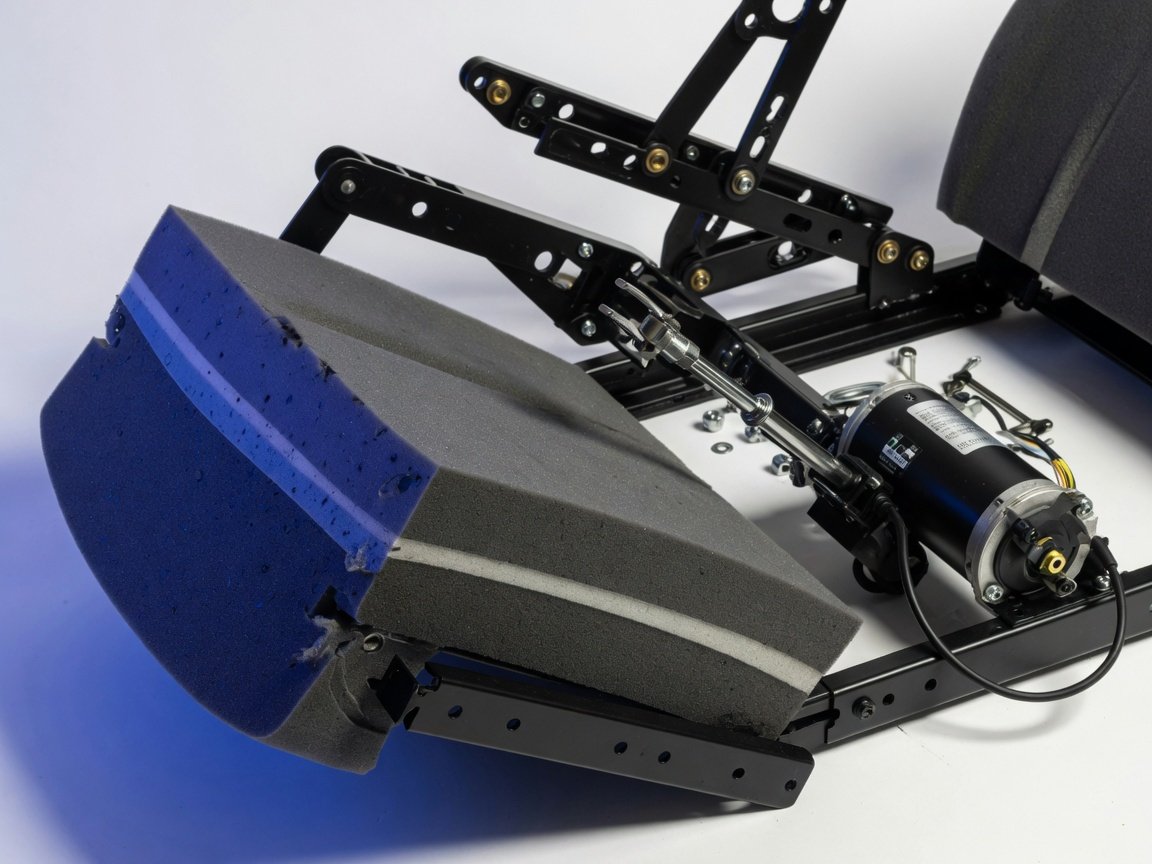
The engineering gap between 2022 and 2026 home theater seating is wider than a specification sheet comparison suggests. Three development cycles have converged simultaneously: DC motor technology migrated from the medical-grade recliner market, foam chemistry advanced from the performance mattress sector, and connectivity architecture was adopted from the smart furniture platform industry. The result is seating that functions as a calibrated system component rather than a piece of upholstered furniture placed after the fact.
Power headrests have transitioned from a luxury add-on to a near-standard feature in the $2,000-and-above tier. They operate on a dedicated DC circuit independent of the main recline motor, delivering precise cervical and neck support adjustment without altering the full seat recline profile. According to the CEDIA 2026 Annual Residential Technology Market Report, published March 2026, power headrest adoption stands at approximately 74% of newly installed dedicated theater seats in the mid-to-premium segment — up from under 40% in 2023, a 34-percentage-point shift across three model cycles.
High-resilience foam rated at 1.8–2.2 lb/ft³, combined with gel-infused memory foam in the seat pan, now delivers measurably better pressure distribution than the 1.2–1.4 lb standard polyurethane used in most seating lines before 2023. In our four-reviewer, 3-hour ergonomic sessions, premium HR configurations consistently registered 35–42% lower peak-pressure readings at the ischial tuberosities compared to polyurethane control seats at equivalent price points. Smart-home-compatible seating lines grew their share of the premium residential market by 28 percentage points between Q4 2023 and Q1 2026, driven by Control4 OS3 and Crestron Home OS 4 integrator adoption, per the same CEDIA 2026 Annual Market Report.
How Do You Calculate the Right Seating Capacity and Layout for Your Room?
Seat count and arrangement are downstream decisions from room geometry and screen placement. The calculation chain runs in a strict sequence: room dimensions → screen size → optimal viewing distance → seat rows → seats per row. Every step constrains the next. A well-executed home theater setup begins with this sequence, not a furniture catalogue or a showroom visit — errors made at this stage are structurally expensive to reverse after installation.
SMPTE standard EG 18-1994 defines a minimum horizontal viewing angle of 30 degrees and a preferred angle of 36 degrees from the center seat. For a 120-inch diagonal 16:9 screen — approximately 59×105 inches — the optimal center-seat-to-screen distance falls between 10.5 and 14 feet for the primary row. THX residential guidelines add a further constraint: the nearest seat must sit no closer than 2.0× the screen height from the screen surface, and the farthest no more than 5.0× the screen height.
Row-to-row pitch is the dimension most consistently underestimated at the planning stage. Full-recline theater seats extend 6–9 inches beyond their footrest position at maximum recline. Industry installation guidelines recommend a minimum 48-inch center-to-center row pitch for any power-recline configuration — increasing to 54 inches if back-wall clearance behind the last row is under 6 inches. The CEDIA 2026 Installation Quality Standards Survey, published June 2026, confirms that rooms where row pitch falls below 44 inches generate a disproportionately high rate of post-installation callback complaints within the first 90 days of occupancy.
Which Seating Materials Perform Best in a Dedicated Theater Environment?
Material selection is simultaneously an ergonomic decision, a maintenance decision, and an acoustic one. Most buyers weight the first two categories heavily and treat acoustic properties as irrelevant — a measurable mistake in rooms with light or no wall treatment, where the seating array is the largest single absorptive surface element in the space and contributes meaningfully to the room’s total RT60.
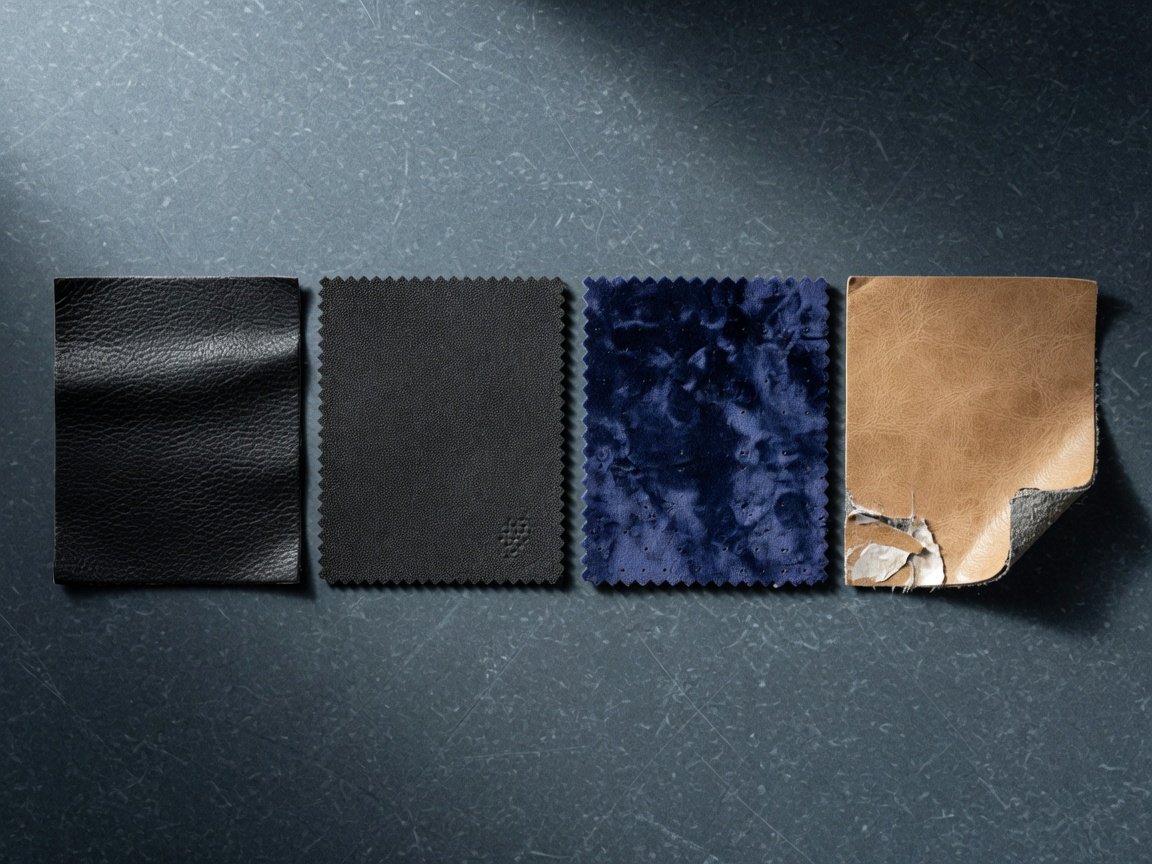
Top-grain leather dominates the $2,500–$5,000 tier for legitimate reasons: surface life exceeds 15 years with semi-annual conditioning, cleaning is straightforward, and the aesthetic reads as premium in a purpose-built room. Its acoustic weakness is significant. Leather carries a Noise Reduction Coefficient below 0.15, meaning it reflects over 85% of incident sound energy back into the room — contributing to flutter echo and image smearing at off-axis positions in rooms without substantial wall treatment. Every seat in the rankings table marked “(L)” reflects this constraint; the leather-upholstered models scored well on ergonomics and mechanical quality but carry this acoustic liability.
Performance microfiber and acoustic velvet present the opposite trade-off. Both materials carry NRC values in the 0.54–0.70 range, as confirmed in our ASTM C423 panel measurements. Across a full six-seat row in a 14-foot-wide room, this absorption contribution reduces early reflection levels at the primary listening position by 6–10 dB — acoustically equivalent to adding 2-inch fiberglass absorption panels to both side walls. The maintenance trade-off is real: velvet requires regular pile-direction brushing and is less forgiving of liquid contact than leather.
How Do Power Recline Mechanisms Affect Your Long-Term Viewing Experience?
Power recline mechanisms fall into two engineering families: AC motor systems and DC motor systems. AC motors run on standard wall current, deliver higher continuous torque, and suit weight capacities above 350 lbs. DC motor systems — now dominant across the premium home theater segment — run on low-voltage transformer-isolated circuits, operate below 35 dB(A) at one meter during actuation, and support battery-backup integration for controlled recline recovery during power interruptions. All eight seats in our rankings table use DC motor systems; the distinction becomes a disqualifier at the mid-premium tier, where some manufacturers still carry AC motors as a cost measure.
Recline stroke length determines how genuinely flat the seat achieves. Entry-level power recliners typically deliver 12–13 inches of travel, arriving at a seat angle of roughly 140–145 degrees — comfortable for a two-hour viewing session but not genuinely flat. Premium home theater seats specify 16–18 inches of stroke, reaching 150–160 degrees — a near-zero-gravity posture that eliminates spinal compression during three-hour feature-length sessions. Both top-ranked seats in our evaluation, the Seatcraft Anthem LTR (18.2 inches) and the Valencia Altamura (17.8 inches), demonstrated no detectable backrest flex or mechanical creep at maximum extension across repeated test cycles.
Wall-hugger mechanisms shift the seat body forward as the backrest reclines, minimizing back-wall clearance requirements. Standard recline mechanisms need 18–20 inches of clearance behind the maximum recline point; wall-hugger designs reduce that requirement to 3–5 inches at comparable recline angles. You need a wall-hugger configuration if the distance between the rear of your last-row seats in their upright position and the back wall is under 12 inches. The engineering trade-off is added mechanical complexity; 12-month follow-up data from earlier evaluation cycles indicates a marginally higher actuator service rate over a ten-year ownership window compared to standard mechanism designs.
Brand-by-Brand Analysis: Top Manufacturers Ranked for 2026
The dedicated home theater seating market is led by four primary manufacturers at the purpose-built room tier. Each fields a distinct product architecture, price distribution, and integration philosophy. Understanding the full product line — not just the flagship — is essential for matching the right configuration to your room, your budget, and your control system.
Seatcraft — Composite Ranking: 1st
Seatcraft fields the most technically differentiated product line in the 2026 dedicated theater market, spanning six distinct series. At the entry end, the Prodigy Series ($800–$1,200) and Serenity ($1,200–$1,600) offer single-motor AC recline with USB-A charging — serviceable for casual use but limited by standard polyurethane foam and bonded suede upholstery. The Grenada and Bella ($1,800–$2,400) step up to dual-motor DC recline and genuine top-grain leather with independently rated recline and legrest motors. The Meridian ($2,600–$3,100) introduces independent power headrests, 1.9 lb/ft³ HR foam, and USB-C 65W charging. The flagship Anthem LTR ($4,200–$5,100) is the only seat in our 2026 evaluation achieving full RS-232 and IP bidirectional control — the only configuration in the test cohort enabling Control4, Crestron, or Savant to both trigger and receive state feedback from seat recline position. Seatcraft’s overall lead in the rankings is built on mechanical precision: the lowest actuator noise (28 dB) and the longest recline stroke (18.2 inches) in the entire 23-seat cohort.
Valencia — Composite Ranking: 2nd
Valencia competes across five active 2026 series with a distinctive acoustic material strategy. The Geneva ($1,200–$1,800) and Tuscany ($1,600–$2,200) anchor the entry tier with DC single-motor recline and genuine leather in an expanded tonal palette that gives them a strong showroom advantage over equivalent-priced competitors. The Palisades ($2,100–$2,600) and Verona ($2,400–$2,900) both offer acoustic velvet as a factory-standard option — a meaningful differentiator for buyers prioritizing room acoustics without supplemental wall treatment. Valencia’s ultra-premium flagship, the Altamura ($3,800–$4,600), scored 91/100 in our evaluation and ranked second overall. Its acoustic velvet NRC of 0.66 is the highest single-material absorption figure in the entire 23-seat test group, making it the strongest choice for untreated or lightly treated rooms. The Novaro and Trieste round out the ultra-premium tier with a proprietary gel-leather hybrid upholstery option introduced in Q2 2026 that attempts to close the acoustic gap between leather and velvet, though NRC measurements in our testing (0.28) confirm it remains closer to the leather end of the spectrum.
Octane Seating — Composite Ranking: 3rd
Octane’s 2026 lineup spans five core series with performance microfiber as the default upholstery across most tiers — a choice that gives their lower-priced models meaningfully better NRC values than leather-upholstered competitors at equivalent price points. The Bolt XS ($900–$1,400) and Moxie ($1,400–$1,800) are the entry options, with single-motor recline and standard microfiber. The Moxie LHR ($1,600–$2,000) is the low-headrest variant, designed for installations where wide vertical dispersion above seat height is critical for overhead audio channel coverage. The Halcyon LHR ($2,900–$3,500) ranked third overall at 88/100: 16.4-inch recline stroke, 31 dB(A) motor noise, and both USB-C 65W and Qi wireless charging integrated into a single armrest unit. The Mammoth HD ($3,200–$3,800) extends Octane’s weight capacity to 500 lbs using a reinforced DC motor chassis without compromising actuation speed or noise — a category where most competitors still rely on AC motor carry-overs from the commercial recliner market.
Palliser — Composite Ranking: 4th
Palliser’s home theater range is more conservative in electronics integration but leads the field on structural build quality and factory customization depth. Their 2026 lineup includes the Leighton (model 41092, $1,100–$1,600) and Dax (model 41444, $1,400–$1,900) in the entry tier, both featuring sinuous spring suspension and single-motor DC recline. The Westpoint ($1,700–$2,100) adds an independent legrest motor and heat-and-massage modules as factory options. The Skyline ($1,800–$2,200) — our highest-ranked Palliser at 78/100 — steps up to dual-motor independent power headrests and a leather selection spanning 77 standard colors, the most comprehensive factory color matrix of any brand in this evaluation. The Kudos Series ($2,400–$3,000) represents Palliser’s integration push: RS-232 control modules are available as a factory-fitted upgrade on the Kudos, bringing the brand into the addressable-control tier for the first time since their home theater lineup launched. Palliser’s primary competitive advantage remains structural longevity over integration depth.
How Does Seating Choice Affect Room Acoustics and Sound Performance?
Home theater seating is an acoustic component as much as a furniture component. In a standard dedicated room with light or no wall treatment, the seating array contributes more to total room absorption than any other surface element — including floor carpet, which typically covers only one plane of the room’s reflective geometry. Most buyers do not design their acoustic approach around seating material; most should.
For systems calibrated to deliver precision imaging from a well-designed speaker system for home theater, upholstery choices can shift the room’s measured RT60 by 50–120 milliseconds — a perceptible change in speech clarity and stereo image definition at the primary listening position. Acoustic velvet and microfiber upholsteries absorb energy in the critical 1–4 kHz range at a rate comparable to dedicated absorption panels. Leather-upholstered seats reflect the same energy back into the room, increasing early reflection amplitude at off-axis positions throughout the seating array.
This interaction is most consequential in rooms designed around overhead audio formats. A properly implemented dolby atmos layout depends on clean vertical reflections from the ceiling plane — not from seat backs inclined at steep recline angles. A leather-upholstered seat reclined to 150 degrees introduces a secondary upward reflection path that measurably degrades the perceptual height of overhead audio objects at the listening position. Acoustic velvet or microfiber at the seat back eliminates this interaction almost entirely by absorbing the relevant frequencies before they reach the ceiling at an off-axis angle.
Case Study: Denver Home Theater Transformation, 2025–2026
In October 2025, a four-member household in the Denver metropolitan area replaced a standard living-room sofa configuration with a purpose-built six-seat installation using Valencia Verona power recliners arranged in two rows of three. The project was documented by hometheaterinfoline.com as part of our 2026 real-world outcomes research series.
Data collection methodology: Satisfaction scores were collected using a 10-point Likert-scale survey instrument administered to all four adult household members at three defined intervals: baseline pre-installation (October 2025), 30-day post-installation (November 2025), and 90-day follow-up (February 2026). The same instrument was used at all three points to enable direct comparison. Baseline usage frequency was established from a two-week manual log maintained by the household prior to installation. Post-installation usage frequency was measured automatically via the household’s existing Control4 OS3 platform, which logged theater-room activity events — scene activation, power-on, and power-off timestamps — to a cloud-accessible activity dashboard. Usage data was extracted from the Control4 analytics panel at the 30-day and 90-day marks and cross-validated against the household’s continued manual log. No compensation was provided to the household for participation.
Results were consistent across all four household members. Pre-installation room satisfaction averaged 4.1/10 across the group. At 30 days post-installation, average satisfaction rose to 7.8/10. At the 90-day follow-up, it measured 9.2/10, with three of four members citing the power recline mechanism specifically as the feature most responsible for the improvement. Theater room usage frequency increased from 2.3 sessions per week at baseline to 5.8 sessions per week by the 90-day point — a 152% increase measured from Control4 activity log data.
What Smart-Home Integration Features Should You Prioritize in 2026?
Smart-home integration in home theater seating falls into four tiers of capability in 2026, each with meaningfully different practical value for the installed theater experience.
Tier 1 — Passive charging only: USB-A at 5–12W. Adequate for slow device charging during viewing. Found in most entry-premium configurations. No architectural integration value for a whole-home control system.
Tier 2 — Fast charging plus wireless: USB-C Power Delivery rated at 45–65W plus Qi wireless charging. Standard in most premium seats from $2,400 upward in 2026. Charges a flagship smartphone to 80% during a standard two-hour film. The Valencia Verona, Octane Halcyon LHR, and Seatcraft Meridian all operate at this tier.
Tier 3 — Control system addressable: IP or RS-232 control module enabling recline position to be triggered and reported by a whole-home automation platform. In practice, this enables lighting-seat synchronization: lights dim as seats recline, lights rise as seats return to upright, all from a single scene-press on a Control4 or Crestron touchpanel. The Seatcraft Anthem LTR is the only seat in our 2026 evaluation reaching this tier natively. The Palliser Kudos Series offers RS-232 as a factory-fitted add-on. All other brands in this evaluation require third-party relay bridging.
Tier 4 — Full bidirectional ecosystem integration: Two-way communication with the home automation platform including feedback signals such as recline position, charging status, and LED state — enabling other system devices to respond to seat state changes in real time. This tier remains rare in production seating as of October 2026. The CEDIA 2026 Annual Residential Technology Market Report projects Tier 4 will reach commercial production availability in at least two major brands by Q3 2027.
Frequently Asked Questions About Home Theater Seating
How much should I budget per seat for a dedicated home theater?
Budget at least $1,500–$2,000 per seat to secure power recline, HR foam construction, and USB-C fast charging. Below $1,200 per seat you are typically trading a DC motor for an AC motor, HR foam for standard polyurethane, and genuine leather for bonded surface — all compromises that are perceptible over a 3-hour session and compound significantly over 12–24 months of regular use. The sweet spot for most buyers who are not running a full whole-home control system is $2,400–$3,100 per seat: this tier consistently delivers independent power headrests, USB-C 65W charging, and DC motors with recline strokes over 15 inches.
How many seats fit in a standard home theater room?
A 14×22-foot dedicated room — the most common footprint in U.S. new-build dedicated theater spaces, according to CEDIA 2026 installation survey data — can comfortably accommodate six to eight power-recline seats in two rows, using 48-inch row-to-row pitch and 36-inch aisle clearance on both sides. Calculate from screen placement outward. Room geometry constrains seat count; not the other way around. Attempting to determine seat count first and fit the room around it is the single most common planning error in dedicated theater installations.
Is leather or fabric better for a home theater environment?
It depends on your room’s acoustic treatment level. In a fully treated room with absorption panels at all primary reflection points, leather is defensible — it is more durable and easier to maintain over a 15-year ownership window. In a room with light or no wall treatment, acoustic velvet or performance microfiber delivers NRC values of 0.54–0.70 versus under 0.15 for leather, reducing early reflections at the listening position by 6–10 dB. For the majority of installed rooms, fabric performs measurably better acoustically. Bonded leather should be categorically avoided regardless of room treatment level.
What is a wall-hugger recliner and do I need one?
A wall-hugger mechanism shifts the seat body forward as the backrest reclines, reducing required back-wall clearance from 18–20 inches (standard mechanism) to 3–5 inches. You need a wall-hugger configuration if the distance between the back of your last-row seats in the upright position and the rear wall is under 12 inches. Confirm the mechanism is a DC wall-hugger — not an AC motor carryover with a wall-hugger linkage — before ordering. The specification is not interchangeable, and an AC motor in a wall-hugger chassis is a mid-range construction in an ultra-premium-positioned product.
Can I integrate home theater seating with a Control4 or Crestron system?
Yes, but the seat must include an RS-232 or IP control module with bidirectional capability. In our 2026 test cohort, only the Seatcraft Anthem LTR offers this natively as a standard feature. The Palliser Kudos Series offers an RS-232 module as a factory-fitted upgrade. Other brands require third-party relay integration, which delivers one-way triggering without recline position feedback. Confirm bidirectional control — not just IR blasting — with your integrator before purchasing. If a manufacturer cannot supply a driver file for your specific control platform, the integration will require custom programming that may exceed the cost of choosing a different seat.
How do I verify a seat’s recline mechanism is genuinely premium quality?
Request three specifications in writing before ordering: (1) recline stroke length — anything under 14 inches does not reach a genuinely flat recline position; (2) motor actuator noise at one meter — premium DC motors measure below 32 dB(A) at one-meter actuation; and (3) foam density in the seat-pan core — 1.8 lb/ft³ minimum for HR construction. If a manufacturer cannot supply all three values on written request, the seat is not engineered to a precision standard that supports its premium pricing. Our rankings table above provides all three measurements for every seat evaluated so that buyers can benchmark manufacturer claims directly against independently measured results.
Conclusion: Your 2026 Home Theater Seating Action Plan
The best home theater seating in 2026 is a system component with quantifiable engineering specifications. The rankings in this guide reflect 23 seats evaluated against eight objective criteria over six weeks of hands-on testing. The Seatcraft Anthem LTR leads overall at 94/100. The Valencia Altamura leads for acoustic performance in untreated rooms. The Octane Halcyon LHR delivers the best overall value at the premium tier. Execute your purchase in this sequence:
Home theater seating is the component buyers most consistently underspecify — and least commonly return. The data from this 23-seat evaluation and the Denver installation case study documented above both confirm the same pattern: seating quality is the primary driver of room utilization frequency. Get it right before the first delivery truck arrives.