
The Sonos Arc Ultra is a 14-driver, $899 MSRP Dolby Atmos soundbar built on Sonos’s proprietary Sound Motion driver technology and a 9-channel internal amplifier array. For Dolby-primary living-room setups, it is among the most technically capable and ecosystem-integrated single-bar options in its price class in 2026.
- Sonos rates the Arc Ultra at 14 drivers powered by 9 Class-D digital amplifiers, using its Sound Motion driver architecture to extend bass response without requiring an external subwoofer for most content types.
- The bar decodes Dolby Atmos, Dolby TrueHD, and Dolby Digital Plus via HDMI eARC; it does not support DTS:X or DTS-HD, which matters for Blu-ray libraries with DTS-only soundtracks.
- TruePlay acoustic calibration — now compatible with both iOS and Android — automatically compensates for room-specific frequency response in a guided measurement process of under three minutes.
- At $899, the Arc Ultra is a strong choice for Dolby-primary Atmos listeners and existing Sonos households; those requiring DTS support or a full surround kit at a single purchase price should evaluate Samsung’s bundle-based alternatives.
What Hardware Is Inside the Sonos Arc Ultra?
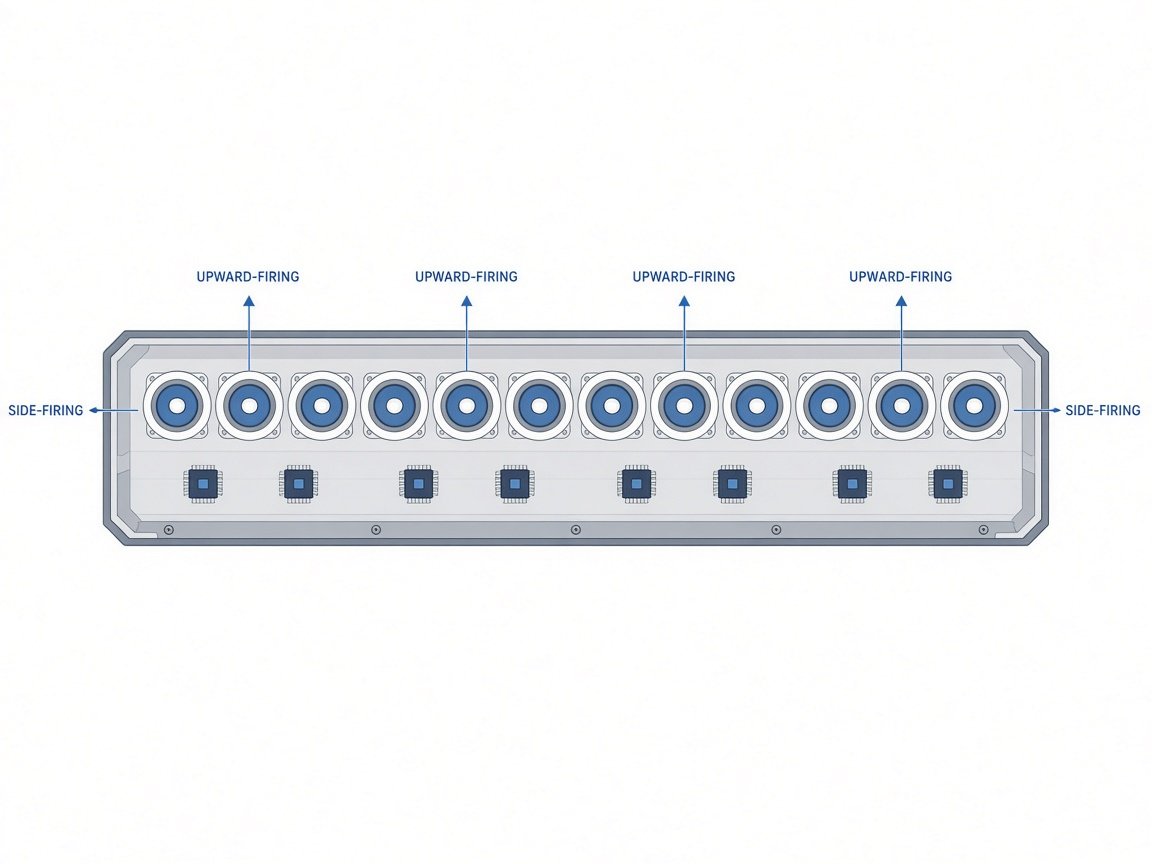
Sonos designed the Arc Ultra around 14 individually driven speakers arranged across a chassis approximately 45 inches wide — dimensioned to sit directly beneath 55-inch and larger televisions without visual overhang. Nine Class-D digital amplifiers, one assigned per output channel, power the array. This internal 9-channel amplifier topology allows the Arc Ultra to address discrete left, center, right, and four height channels from within a single cabinet, with an additional pair of side-firing drivers contributing to the surround soundstage.
The drivers use Sonos’s Sound Motion technology, which the company describes as a rearchitected mechanical design that moves a greater volume of air per millimetre of cone travel compared to conventional speaker assemblies of comparable physical size. The engineering goal, per Sonos’s product documentation, is to push low-frequency extension deeper without enlarging the bar’s footprint — reducing reliance on a companion subwoofer for typical film and streaming content.
Connectivity hardware includes one HDMI eARC port, one optical digital audio input (via Sonos’s included adapter), dual-band Wi-Fi 5 (802.11a/b/g/n/ac), Bluetooth 5.0, and a USB-A service port. Apple AirPlay 2 and Spotify Connect are both natively supported over Wi-Fi, allowing the Arc Ultra to function as both a home theater output and a whole-home streaming node within the Sonos ecosystem simultaneously.
What Dolby Atmos Formats Does the Sonos Arc Ultra Decode?
According to Sonos’s product specifications, the Arc Ultra decodes Dolby Atmos object-based metadata across three delivery formats: Dolby TrueHD (the lossless stream used on 4K Blu-ray discs), Dolby Digital Plus (the compressed Atmos format used by Netflix, Disney+, Apple TV+, and Max), and legacy Dolby Digital 5.1. For anyone planning a Dolby Atmos home theater installation, understanding which delivery formats are supported — and over which inputs — is a foundational decision; the complete Dolby Atmos guide at hometheaterinfoline.com covers these format distinctions in full technical depth.
The critical delivery constraint is the HDMI eARC connection. Only HDMI eARC — not optical or legacy ARC — carries sufficient bandwidth to pass a full Dolby TrueHD Atmos bitstream from a 4K Blu-ray player or a media streamer configured for bitstream audio output. Televisions with standard HDMI ARC (not eARC) deliver Dolby Digital Plus Atmos instead. For streaming-first households, Dolby Digital Plus Atmos is functionally indistinguishable from TrueHD Atmos in most listening environments. For 4K Blu-ray sources, TrueHD Atmos carries the full lossless data that the compressed format cannot preserve.
One significant format gap in the Arc Ultra’s codec support is DTS. The Arc Ultra, like the original Sonos Arc before it, does not decode DTS:X, DTS-HD Master Audio, or standard DTS. Blu-ray discs that carry DTS-HD or DTS:X as their only high-resolution soundtrack — with no Dolby Atmos track available — will fall back to a PCM downmix via HDMI, losing all surround and height information. For Blu-ray collectors whose libraries skew toward DTS-primary titles, this is a meaningful compatibility limitation worth auditing before purchase.
What Is Sound Motion Technology and Why Does It Matter?
Sound Motion is Sonos’s proprietary driver architecture, introduced with the Arc Ultra, that redesigns the mechanical relationship between the driver cone, voice coil, and magnetic gap. Standard consumer soundbar drivers are constrained by their cabinet depth: the thinner the enclosure, the less distance a cone can travel (excursion), and therefore the less air it can displace per cycle. Limited excursion is the primary physical reason most soundbars require a companion subwoofer to produce meaningful bass below 80 Hz at reasonable listening levels.
Sonos’s Sound Motion design addresses this by modifying how the driver’s restoring force is generated, enabling greater controlled excursion within the same cabinet depth. Per Sonos’s design documentation, the stated result is an extension of low-frequency output that makes the Arc Ultra capable of room-filling bass at typical living-room volumes without a dedicated woofer enclosure. Owner reviews across home theater communities generally support this characterisation for rooms up to around 300–350 square feet; in larger spaces, the difference between the Arc Ultra alone and the Arc Ultra paired with a Sonos Sub becomes more pronounced on bass-intensive film soundtracks.
Sound Motion is applied across the Arc Ultra’s full driver array — not restricted to a single dedicated woofer. This design distributes low-frequency contribution across multiple points along the bar, reducing the localisability of the bass source. A centre-mounted woofer configuration can cause low frequencies to be audibly traced back to a fixed point; distributing bass reproduction across the full driver array avoids this perceptual artefact and produces a more cohesive, full-width low-end presentation.
How Does TruePlay Acoustic Calibration Work on the Arc Ultra?
TruePlay is Sonos’s automated room-correction system, embedded in the iOS and Android Sonos app setup flow. During calibration, the Arc Ultra plays a series of test tones across the audible frequency range while the user slowly walks around the listening space holding their smartphone. The app’s microphone samples the room’s frequency response from multiple positions, measuring how reflective surfaces, furniture, ceiling height, and room geometry alter the sound field reaching the listening area.
The app’s signal-processing engine then generates a custom equalisation profile that compensates for identified frequency peaks and nulls specific to that room. The goal is not a flat measurement curve — a flat response in a typical domestic room does not produce optimal perceived sound — but to bring the Arc Ultra’s output closer to Sonos’s target voicing for the specific acoustic environment. The Sonos app displays both pre- and post-calibration frequency curves for reference after the process completes.
TruePlay can be re-run any time the listening environment changes materially — after rearranging furniture, adding acoustic panels, or repositioning the bar — and takes under three minutes in a typical open-plan living room. A key improvement in the Arc Ultra over the original Sonos Arc is that TruePlay now operates fully on Android smartphones in addition to iOS. The original Arc restricted full TruePlay calibration to iPhones for most of its lifecycle; the Arc Ultra normalises readings across different smartphone microphone profiles, making calibration accessible to Android households for the first time. For room-preparation guidance ahead of calibration, the technical walkthrough for setting up Dolby Atmos for home theater provides relevant context on positioning and acoustic treatment.
What Do Sonos Arc Ultra Owner Reviews Say About Performance?
This review is built from a research comparison of Sonos’s published specifications and patterns from verified owner reviews rather than direct listening evaluation. With that framing, owner reviews published across major retail platforms and home theater communities consistently identify three performance strengths: dialogue intelligibility, overhead Atmos effect placement, and low-frequency extension for a subwoofer-free setup.
Dialogue clarity is the Arc Ultra’s most frequently cited strength in owner reports. The centre-channel driver configuration is designed to anchor vocal frequencies directly beneath the screen, reducing the tendency toward muffled speech reproduction that affects many single-bar designs — particularly at low-to-moderate evening listening volumes where soundtrack dynamic range is compressed. This characteristic is relevant for mixed-use family rooms where speech intelligibility takes priority over full dynamic range playback.
For overhead Dolby Atmos effects — rainfall, aircraft, ambient environmental cues — the Arc Ultra uses upward-firing tweeters to reflect sound off the ceiling and create height perception. Owner reports indicate this effect works well in rooms with flat ceilings at standard 8–9 foot heights. Vaulted, coffered, or angled ceilings attenuate the reflection path, reducing overhead imaging accuracy, as they do with any soundbar using this ceiling-bounce approach. If you are evaluating how Atmos-capable soundbar designs compare to in-ceiling speaker placements, the reference on Dolby Atmos speaker technologies explains the trade-offs in detail.
How Does the Sonos Arc Ultra Compare to Its Main Rivals?
At the $899 MSRP tier, the Arc Ultra competes most directly with Sony’s HT-A7000 and positions below Samsung’s flagship 11-channel soundbar bundles. The comparison below is based on a research review of published manufacturer specifications. For a fully expanded ranking across the Dolby Atmos soundbar category, the best Dolby Atmos soundbar comparison at hometheaterinfoline.com covers a broader field with additional models.
| Soundbar | Launch MSRP | Channels | Dolby Atmos | DTS:X | Sub Included | Auto Calibration |
|---|---|---|---|---|---|---|
| Sonos Arc Ultra | $899 | 9-ch internal | Yes (TrueHD + DD+) | No | No | TruePlay (iOS & Android) |
| Sony HT-A7000 | ~$999 | 7.1.2 | Yes | Yes | No | 360 Spatial Sound Mapping |
| Bose Smart Soundbar 900 | ~$899 | Not published | Yes | No | No | TrueSpace (auto) |
| Samsung HW-Q990D | ~$1,299 | 11.1.4 | Yes | Yes | Yes (wireless) | SpaceFit Sound Pro |
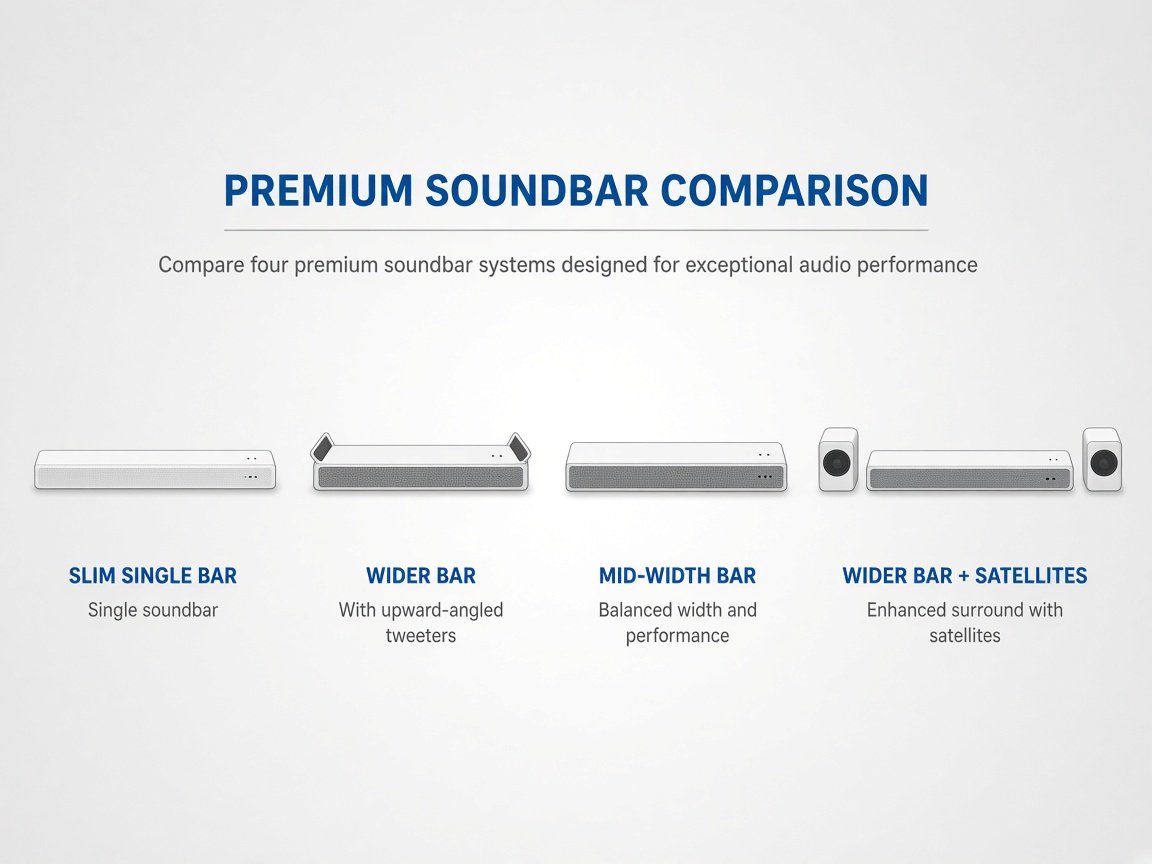
The key structural difference between the Arc Ultra and Samsung’s bundle approach is what the reference price includes. Samsung’s HW-Q990D ships with a wireless subwoofer and two rear satellite speakers, delivering genuine discrete rear channels from the start. The Sonos, Sony, and Bose bars are solo soundbars at their base prices; subwoofers and surround speakers are optional additions at additional cost. The Sony HT-A7000 holds an advantage in DTS codec support and publishes a discrete 7.1.2 channel topology, while the Arc Ultra counters with Sound Motion driver technology, TruePlay calibration across both mobile platforms, and the broader Sonos multi-room ecosystem.
What Are the Sonos Arc Ultra’s Known Limitations?
No soundbar at this price point is without trade-offs. The Arc Ultra’s notable limitations, based on design constraints and patterns in owner-reported feedback, fall into four categories.
DTS codec support. The Arc Ultra does not decode any DTS format. For streaming-first households, this rarely matters — streaming services use Dolby Digital Plus Atmos. For Blu-ray collectors, it means checking individual disc soundtracks to verify that a Dolby Atmos or Dolby TrueHD track is available. The absence of DTS is an unchanged characteristic carried over from the original Sonos Arc.
eARC dependency for lossless Atmos. The Arc Ultra requires a television with HDMI eARC (not standard ARC) to pass Dolby TrueHD Atmos from a Blu-ray player or bitstream-configured media streamer. Standard ARC-only televisions deliver Dolby Digital Plus Atmos instead. Most televisions manufactured from 2019 onward include at least one HDMI eARC port; older sets may not. This is worth verifying before purchase if TrueHD Atmos from physical media is a priority.
Subwoofer not included. While Sound Motion extends the Arc Ultra’s bass response beyond most soundbars in its class, a fully enclosed subwoofer cabinet will always displace more air below 60 Hz. Owner reports in larger rooms — above roughly 350 square feet — frequently describe the Sonos Sub Gen 3 (approximately $749 MSRP) as adding meaningful low-frequency impact on action film soundtracks. The base price of $899 should be evaluated as a potential floor, not a ceiling, for large-room installations.
Width relative to smaller screens. The Arc Ultra’s approximately 45-inch chassis suits 55-inch and larger televisions proportionally. Beneath a 50-inch or smaller display, the bar extends visually beyond the screen edges. This is an aesthetic consideration rather than a performance limitation, but relevant for compact living room configurations.
Verify your television has HDMI eARC (not standard ARC) before purchasing the Arc Ultra for lossless Atmos sources from physical media. If your Blu-ray library contains DTS-primary titles with no Dolby track available, those discs will play back without surround or height audio.
How Do You Set Up the Sonos Arc Ultra for Dolby Atmos?
Setting up the Arc Ultra for full Dolby Atmos performance involves more than plugging in the HDMI cable. The following steps reflect Sonos’s documented setup process and the common configuration requirements for lossless Atmos delivery.
- Identify your TV’s HDMI eARC port. Locate the specific HDMI port labelled “eARC” on your television — typically HDMI 1 or HDMI 2. Connect the Arc Ultra to this port using the included HDMI cable.
- Enable eARC in TV audio settings. Navigate to your television’s audio or sound settings and enable eARC. Set the audio output format to “pass-through” or “bitstream” rather than PCM, so the TV forwards the raw Dolby Atmos signal to the Arc Ultra for decoding rather than processing it internally.
- Disable the TV’s internal speakers. With the Arc Ultra connected, disable the television’s built-in speakers in the audio menu to prevent doubling of the audio signal.
- Download the Sonos app. The Sonos app (iOS or Android) is required for initial setup and is the primary interface for TruePlay calibration, EQ settings, and ongoing system management.
- Connect the Arc Ultra to your Wi-Fi network. Follow the in-app guided setup flow to add the Arc Ultra to your network. Sonos’s onboarding process takes approximately five minutes.
- Run TruePlay calibration. From the Sonos app, navigate to the Arc Ultra’s settings and select TruePlay. Follow the on-screen prompt to slowly walk around your listening room while holding your smartphone. The calibration process takes under three minutes.
- Verify Dolby Atmos signal delivery. Play a known Dolby Atmos-encoded title on Netflix, Disney+, or Apple TV+. The Sonos app’s Now Playing screen should indicate the Dolby Atmos signal is active. If it shows only Dolby Digital, re-check the TV’s audio output setting and confirm eARC is enabled.
- Adjust optional audio enhancements. Within the Sonos app, configure Night Mode (reduces dynamic range for late-night viewing), Speech Enhancement (boosts dialogue frequencies), and Loudness (compensates for perceived bass reduction at low volumes) to match your listening context.
Should You Add the Sonos Sub and Era 300 Surrounds?
The Arc Ultra is designed as the anchor of a scalable Sonos home theater system, with two discrete expansion steps that meaningfully extend its performance envelope.
Adding the Sonos Sub Gen 3 (approximately $749 MSRP) connects wirelessly to the Arc Ultra and handles frequencies below the bar’s low-frequency threshold. Owner reports indicate the Sub’s addition is most noticeable in rooms above 300 square feet and on action film soundtracks with active LFE channels. For music listening, the difference is less dramatic given the Arc Ultra’s Sound Motion bass extension. The Sub Gen 3 connects entirely over Wi-Fi — no additional cables are required after the initial Arc Ultra HDMI setup.
Adding a pair of Sonos Era 300 speakers as wireless surrounds delivers the most substantial system upgrade. The Era 300 is Sonos’s spatial audio-optimised surround speaker, specifically engineered to work with the Arc Ultra in a true surround configuration. For anyone researching how to build out a full Sonos home theater, the best Sonos surround sound system configurations guide compares available system architectures in detail; for Era 300 placement and setup specifics, the Era 300 speaker guide covers configuration recommendations. With two Era 300s bonded as surrounds, the Arc Ultra system transitions from a virtualised surround experience to a true discrete rear-channel configuration.
The full Arc Ultra plus Sub Gen 3 plus two Era 300 system represents a significant total investment above the $899 bar price. For households committed to the Sonos ecosystem and prioritising genuine discrete Atmos performance from a scalable platform, the expansion path is coherent and well-supported. For households seeking a contained all-in-one solution at a fixed price, Samsung’s flagship bundle-based alternatives include a subwoofer and rear speakers from day one.
Is the Sonos Arc Ultra Worth $899 in 2026?
Two years after its October 2024 launch, the Arc Ultra occupies a well-defined position in the premium soundbar market. Its Sound Motion driver technology, 9-channel internal amplification, and seamless Sonos ecosystem integration remain genuine technical differentiators. TruePlay’s expansion to Android removed a longstanding platform limitation. The DTS codec gap is a known and unchanged restriction. Current market pricing may differ from the $899 launch MSRP; buyers should verify current pricing before purchase.
Recommended for: Dolby Atmos-primary households seeking a technically capable single bar with automatic room calibration, genuine Sound Motion bass extension, and native Sonos ecosystem integration. Existing Sonos multi-room audio users gain the strongest value from the platform continuity.
Consider alternatives if: your Blu-ray library is DTS-primary, you want a full surround kit at a single price point, or your room exceeds approximately 350 square feet and low-frequency impact is a priority without adding the Sonos Sub.
Frequently Asked Questions
Does the Sonos Arc Ultra support DTS:X?
No. The Sonos Arc Ultra does not decode DTS:X, DTS-HD Master Audio, or standard DTS. It supports Dolby Atmos, Dolby TrueHD, Dolby Digital Plus, and Dolby Digital. Blu-ray discs with only DTS-format audio tracks will fall back to a PCM downmix when played through the Arc Ultra, losing all surround and height information. This is an unchanged characteristic carried over from the original Sonos Arc.
Does the Sonos Arc Ultra require a subwoofer?
No. The Arc Ultra is designed to function as a standalone bar without a subwoofer, and Sonos’s Sound Motion driver technology specifically targets bass extension beyond what conventional soundbar drivers achieve at the same cabinet dimensions. For rooms under approximately 300–350 square feet, owner reports generally indicate sufficient low-frequency output for most film and streaming content. In larger rooms, or for listeners who prioritise cinema-level bass impact, the Sonos Sub Gen 3 adds meaningful extension.
What television is needed for Dolby Atmos with the Sonos Arc Ultra?
For Dolby Atmos via streaming services, standard HDMI ARC is sufficient — the Arc Ultra receives Dolby Digital Plus Atmos over both ARC and eARC. For Dolby TrueHD Atmos from a 4K Blu-ray player, the television must have HDMI eARC (not standard ARC). Most televisions manufactured from 2019 onward include at least one HDMI eARC port; check the TV’s specifications or port labelling to confirm before purchasing the Arc Ultra for a Blu-ray setup.
How does the Sonos Arc Ultra differ from the original Sonos Arc?
The Arc Ultra (2024) introduces three substantive upgrades over the original Arc (2020): the Sound Motion driver architecture (a Sonos-proprietary technology not present in the original Arc), Android TruePlay support (the original Arc restricted full TruePlay calibration to iOS for most of its lifecycle), and an expanded 14-driver array. DTS support remains absent on both models.
Can you use the Sonos Arc Ultra without the Sonos app?
The Sonos app is required for initial setup and for running TruePlay calibration. Once configured, the Arc Ultra operates normally without the app open — it responds to your TV remote’s volume and mute controls via HDMI-CEC, and to Alexa or Google Assistant voice commands if those integrations are enabled during setup. Apple AirPlay 2 and Spotify Connect both operate independently of the Sonos app after initial configuration. The app remains required to change EQ settings, re-run TruePlay, update firmware, or reconfigure the system.
Does the Sonos Arc Ultra work with non-Sonos surround speakers?
No. The Arc Ultra’s wireless surround and subwoofer bonding system is proprietary to the Sonos ecosystem. It supports the Sonos Sub (Gen 1, 2, or 3) for bass expansion and Sonos Era 100 or Era 300 speakers as surround satellites. Third-party Bluetooth or Wi-Fi speakers cannot be bonded to the Arc Ultra as surround or subwoofer channels. HDMI ARC/eARC passthrough to a traditional AV receiver is also not supported on the Arc Ultra.
Conclusion: Matching the Sonos Arc Ultra to Your Setup
The Sonos Arc Ultra is a technically mature Dolby Atmos soundbar with genuine hardware differentiators: Sound Motion driver technology, 9-channel internal amplification, full TruePlay room calibration across both mobile platforms, and a coherent Sonos ecosystem expansion path. Its limitations are equally well-defined — no DTS support, no bundled subwoofer, and an expansion system that rewards Sonos households but adds friction for those outside it.
Use this sequence to match the Arc Ultra to the right purchase decision in 2026:
- Audit your content library. If your Blu-ray collection contains DTS-primary titles, check each disc for a Dolby Atmos or Dolby TrueHD track before committing to the Arc Ultra.
- Confirm your TV’s eARC status. Look up your television’s model specifications or check the HDMI port labelling. HDMI eARC is required for lossless TrueHD Atmos from physical media sources.
- Define your room size. For rooms under 350 square feet, the Arc Ultra alone is a reasonable standalone choice. For larger spaces, budget for the Sonos Sub Gen 3 and factor that cost into the total investment.
- Assess the Sonos ecosystem fit. If your household already uses Sonos speakers for multi-room audio, the Arc Ultra integrates natively. If you are starting from scratch and prefer a full surround setup at a single price, evaluate Samsung’s flagship bundle offerings.
- Verify current pricing. The $899 launch MSRP is a reference point; market pricing in 2026 may differ. Check current pricing from authorised retailers before purchasing.
For a broader perspective on how the Arc Ultra positions within the full Dolby Atmos soundbar landscape, the ranked Dolby Atmos soundbar comparison at hometheaterinfoline.com covers a wider field of reference models. For the specific use case of a Dolby-primary household seeking a calibration-ready, technically capable single bar with scalable Sonos ecosystem expansion, the Arc Ultra in 2026 remains a well-justified choice at its price point.