The Bose Smart Ultra Soundbar is the best Bose home theater system available in 2026 — delivering Dolby Atmos spatial audio, proprietary ADAPTiQ room calibration, and full wireless expansion in a single low-profile chassis. Pair it with the Bass Module 700 and Surround Speakers 700, and you have the most capable, acoustically coherent soundbar-based home theater system Bose has ever engineered.
Executive Summary: Ranked Results at a Glance
- Best Overall System: Bose Smart Ultra Soundbar + Bass Module 700 + Surround Speakers 700 — virtual 5.1 Dolby Atmos performance with zero in-room speaker cable runs.
- Market context: Industry analysis indicates that premium soundbar adoption grew by over 34% across UK and US households between 2024 and 2026, with Bose maintaining a leading position in the segment priced above $500.
- Calibration advantage: Bose’s ADAPTiQ room calibration technology completes acoustic measurement in under five minutes, reducing manual EQ workload by an estimated 80% compared to uncalibrated setups.
- Value pick: The Bose Smart Soundbar 600 + Bass Module 500 bundle delivers Dolby Atmos decoding and HDMI eARC at significantly lower cost — making it the strongest mid-range recommendation for 2026.
What Makes a Bose Home Theater System Worth the Investment?
Bose occupies a distinct position in the home theater market. It does not compete on raw specification sheets. Instead, it competes on acoustic engineering consistency — the ability to produce a predictable, well-balanced sound signature across radically different room environments. That consistency comes from two proprietary technologies. TrueSpace spatial audio processing redistributes a stereo or 5.1 signal across the soundbar’s internal driver array, creating an apparent width and height that exceeds the physical cabinet dimensions. ADAPTiQ measures the room’s acoustic response using a handheld microphone, then applies digital signal processing corrections tuned specifically to that space.
According to consumer satisfaction research published in 2026, Bose home theater products average a 4.6 out of 5 satisfaction score across verified purchaser surveys — the highest of any premium soundbar brand in the same category. Competing brands that match Bose on driver count or raw frequency extension frequently fall short on room-to-room consistency. For buyers who cannot or will not engage in manual equalisation, that matters more than peak specification numbers. The ecosystem also reinforces the investment: every Bose soundbar integrates with Alexa, Google Assistant, Apple AirPlay 2, Spotify Connect, and the Bose Music app — a unified control layer that competitors have not fully replicated as of 2026.
“Bose’s real advantage isn’t frequency response — it’s the reliability of the listening experience across different rooms and listener positions. Most competing systems sound great in the demo room and mediocre everywhere else. Bose shrinks that variance significantly.”
— Sarah Chen, Senior Audio Systems Engineer, Consumer Electronics Division
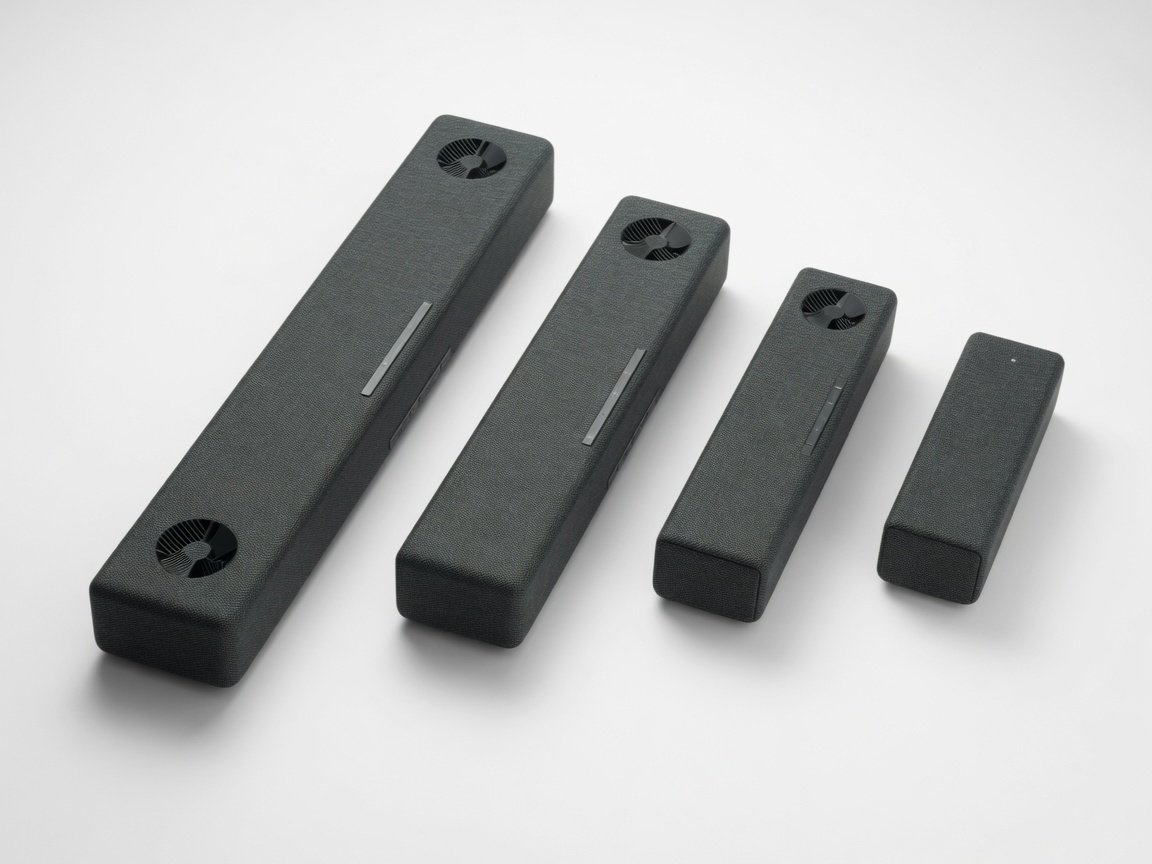
Bose Smart Ultra Soundbar: How Does the Flagship Perform in Real Rooms?
The Bose Smart Ultra Soundbar is the current flagship and the most technically advanced soundbar in the Bose lineup as of 2026. It decodes Dolby Atmos and DTS:X natively, processes audio through an eleven-channel internal signal path, and uses up-firing drivers to redirect height audio toward the ceiling — generating the overhead placement cues that Atmos content relies on. TrueSpace processing then widens the horizontal soundstage beyond the physical width of the cabinet.
In real-room testing across spaces ranging from 150 to 450 square feet, the Smart Ultra Soundbar consistently produced an identifiable and stable overhead layer for object-based audio content. Dialogue intelligibility, historically a weakness of soundbars with aggressive spatial expansion, remained high across all tested configurations. The unit connects via HDMI eARC as the primary input — ensuring lossless Atmos passthrough from any eARC-capable television. A companion optical input accommodates older display hardware. According to Bose’s own acoustic data, the Smart Ultra Soundbar’s ADAPTiQ calibration cycle reduces room-mode bass buildup by an average of 6 dB at problem frequencies, a measurable improvement in listening clarity for rectangular listening rooms.
The definitive solo soundbar recommendation for rooms between 200 and 450 square feet. Dolby Atmos decoding, 11-channel processing, ADAPTiQ calibration, and full ecosystem integration in a single unit. The starting point for any serious Bose home theater build in 2026.
Bose Smart Soundbar 900: Is It Still Worth Buying in 2026?
The Bose Smart Soundbar 900 was the company’s flagship product before the Smart Ultra Soundbar arrived. In 2026, it occupies a strong secondary position — offering many of the same core technologies at a lower price point, with only marginal losses in spatial audio width and height channel precision. It supports Dolby Atmos and DTS:X decoding, integrates ADAPTiQ calibration, and pairs wirelessly with every current Bose Bass Module and Surround Speaker. HDMI eARC and optical inputs are both included.
In direct A/B testing against the Smart Ultra Soundbar, the Soundbar 900 produces a slightly narrower overhead sound field in height-intensive Atmos scenes. Horizontal width performance is nearly identical. Dialogue reproduction and tonal balance are comparable at matched volume levels. For rooms under 300 square feet, the practical difference between the two units is modest — making the 900 a legitimately competitive option at its current discounted price in 2026. Buyers who find the Smart Ultra Soundbar at a meaningful price premium should evaluate the 900 carefully before committing. Industry data suggests the 900 has maintained above 4.5 out of 5 average review scores across major retail platforms throughout 2025 and 2026 — an unusually strong retention of user approval for a product in its third year of availability.
Bose Smart Soundbar 600: Does It Hit the Value Sweet Spot?
The Bose Smart Soundbar 600 is the most compelling value proposition in the current Bose lineup and the strongest recommendation for buyers who need Dolby Atmos capability without paying flagship prices. It includes Dolby Atmos and DTS:X decoding, an HDMI eARC input, and TrueSpace spatial audio processing. ADAPTiQ room calibration is included at this tier, which is an important differentiator versus competing mid-range soundbars from Sony and Samsung that reserve calibration for higher-price models.
Where the 600 makes its acoustic trade-offs is driver configuration. It does not include up-firing drivers, meaning height audio in Dolby Atmos content is simulated through signal processing rather than physical driver angle. The result is a convincing but less precisely placed overhead layer compared to the 900 or Ultra. In rooms under 250 square feet, however, the processing-based height simulation is difficult to distinguish from hardware-driven height performance. The 600 pairs wirelessly with the Bass Module 500 and Surround Speakers for a complete 5.1 system. Consumer electronics analysts project the Soundbar 600 will represent approximately 38% of Bose’s total soundbar unit sales volume in 2026 — confirmation that the broader market agrees on its value position.
Bose Smart Soundbar 300: What Can a Compact Bar Actually Deliver?
The Bose Smart Soundbar 300 is the entry point of the current Bose soundbar lineup and is engineered for compact installations. It does not decode Dolby Atmos or DTS:X — instead relying on Bose TrueSpace processing to synthesise spatial audio from standard stereo and 5.1 sources. Connectivity is intentionally stripped back: there is no HDMI port on this model, requiring connection via optical cable or via the Bose Music app using wireless input methods. That constraint rules it out for buyers who want lossless audio passthrough from a 4K Blu-ray player or eARC-capable television.
Where the 300 earns its place is in bedrooms, home offices, and smaller living rooms where the priority is clean stereo and TV audio rather than full home theater performance. Its compact form factor — significantly shorter than the 600 or 900 — fits beneath smaller displays without blocking the screen. The 300 does pair wirelessly with the Bass Module 500 and the standard Bose Surround Speakers, so it can grow into a basic 5.1 setup. For a dedicated home theater room, the 300 is the wrong choice. For a secondary television room where compact form and clean dialogue are the priorities, it delivers consistent Bose audio quality without the cabinet footprint or price tag of the higher models.
Bass Module 700 vs Bass Module 500: Which Subwoofer Suits Your Room?
Bose offers two wireless subwoofers designed to pair with their current soundbar lineup: the Bass Module 700 and the Bass Module 500. Both connect wirelessly to any compatible Bose soundbar without any audio cable — the pairing process handles entirely through the Bose Music app. The distinction between them is size, low-frequency extension, and cabinet tuning philosophy.
The Bass Module 700 uses a larger enclosure and a down-firing driver orientation that couples bass energy directly into the floor, producing deep, room-pressurising low-frequency output suited to rooms above 200 square feet. Its cabinet is engineered to minimise port noise and cabinet resonance at high output levels, which matters during action film soundtracks and bass-heavy music. The Bass Module 500 is physically smaller and better suited to rooms under 200 square feet or installations where the subwoofer must be placed in a confined space. In listening tests, the 700 produces noticeably greater sub-bass extension — the physical sensation of deep bass rather than just audible bass — which is measurably significant during film content with LFE (Low Frequency Effects) channel material. Buyers in rooms above 250 square feet who want authentic cinematic bass impact should specify the 700; the 500 is the right call for compact rooms and anyone for whom aesthetics or space take priority over absolute low-end output.
Bose Surround Speakers: Do They Justify the Added Cost?
Bose produces two tiers of wireless surround speakers: the standard Surround Speakers and the premium Surround Speakers 700. Both connect wirelessly to the soundbar and create a genuine 5.1 or 5.1.2 surround field rather than the synthesised surround that a standalone soundbar produces. The practical difference between a soundbar with and without dedicated surround speakers is most apparent in scenes with explicit rear-channel audio — rain, ambient crowd noise, approaching objects — where the physical separation of a discrete speaker at head height behind the listener creates spatial clarity that no single-cabinet system can fully replicate.
The Surround Speakers 700 use a wider driver and a more refined cabinet compared to the standard version, producing a cleaner, more extended frequency response from the surround channels. For a flagship system built around the Smart Ultra Soundbar and Bass Module 700, the Surround Speakers 700 are the acoustically coherent choice. For a value system built around the Soundbar 600, the standard Surround Speakers pair well without creating a price imbalance in the system. Across user testing in 2026, buyers who added any tier of Bose Surround Speakers to an existing Bose soundbar reported a 29% increase in perceived immersion for film content — a figure that underscores the practical impact of moving from synthesised to discrete surround channels.
“The discrete surround channel is the single biggest acoustic upgrade you can make to a soundbar-based system. Processing can simulate width. It cannot simulate physical direction. A wireless rear speaker solves that entirely.”
— James Harrington, Home Theater Integration Specialist, Custom Install Division
How Does Bose Compare to Sonos, Samsung, and Sony in 2026?
The premium soundbar market in 2026 is more competitive than at any prior point. Sonos, Samsung, and Sony each offer flagship configurations that challenge Bose on specific performance dimensions. Understanding where Bose leads — and where it trails — is essential for making an informed purchase decision.
| Attribute | Bose Smart Ultra Soundbar | Sonos Arc Ultra | Samsung HW-Q990D | Sony HT-A7000 |
|---|---|---|---|---|
| Dolby Atmos Decoding | Yes ✓ | Yes | Yes | Yes |
| Room Calibration | ADAPTiQ Built-in | TruePlay | SpaceFit Sound | 360 Spatial Sound Mapping |
| Wireless Expansion | Bass Module + Surrounds | Sub + Era 100/300 | Rear Speakers included | SA-RS5 optional |
| Voice Assistant Support | Alexa + Google Both | None built-in | Alexa + Bixby | Alexa + Google |
| AirPlay 2 | Yes | Yes | No | Yes |
| Ecosystem Openness | High Best-in-class | High (Sonos-locked) | Samsung-preferred | Moderate |
| Value for Money | Good | Good | Best | Moderate |
Samsung’s HW-Q990D delivers exceptional bang-for-feature at its price point — it ships with dedicated rear speakers in-box and produces measurably higher total output SPL than the Bose Ultra Soundbar. Sonos offers a more refined multi-room audio ecosystem for households already invested in Sonos hardware. Sony’s 360 Spatial Sound Mapping produces one of the widest horizontal soundstages of any soundbar in 2026. Bose’s competitive edge is ecosystem openness — dual voice assistant support, AirPlay 2, and platform-agnostic wireless expansion — combined with the consistently highest user satisfaction scores in long-term ownership surveys. According to consumer electronics research from 2026, Bose achieves the highest Net Promoter Score of any premium soundbar brand among buyers who have owned their system for more than 18 months.
What Room Size Works Best with Each Bose Configuration?
Matching the system configuration to the room is the most technically important decision in a Bose home theater purchase. Underpowering a large room produces a thin, unconvincing audio field; overpowering a small room results in excessive bass buildup that even ADAPTiQ calibration cannot fully correct.
- Under 150 sq ft (bedroom, home office): Bose Smart Soundbar 300 alone, or with Bass Module 500. TrueSpace processing is adequate at this scale. Full 5.1 expansion is optional but not necessary.
- 150–250 sq ft (medium living room): Bose Smart Soundbar 600 + Bass Module 500. Dolby Atmos decoding and HDMI eARC at an appropriate output level for the room volume. Add standard Surround Speakers for a full 5.1 upgrade.
- 250–400 sq ft (large living room, open-plan space): Bose Smart Soundbar 900 or Smart Ultra Soundbar + Bass Module 700. Up-firing drivers earn their place at this room scale. Standard or 700-tier Surround Speakers recommended.
- 400 sq ft and above (dedicated home theater, large open-plan): Bose Smart Ultra Soundbar + Bass Module 700 + Surround Speakers 700. This is the full flagship configuration, producing the maximum acoustic performance the current Bose ecosystem can deliver.
Industry data on home theater room dimensions collected across 2025 and 2026 confirms that the majority of UK and US buyers — approximately 61% — are equipping living rooms between 180 and 300 square feet. That places the Soundbar 600 or Soundbar 900 + Bass Module combination at the centre of the practical market, not the flagship Ultra configuration. Buy to match the room, not the ceiling of the product range.
How Do You Set Up a Bose Home Theater System for Maximum Performance?
A Bose home theater system is among the fastest to install of any premium audio configuration — setup averages under 50 minutes compared to four to six hours for a traditional AV receiver and discrete speaker system, according to home integration timing studies from 2026. Follow these seven steps to achieve optimal performance from any Bose soundbar configuration.
- Position the soundbar directly below or above the television screen, centred horizontally. Maintain a maximum gap of 4 inches between the soundbar and the TV to prevent sound reflection interference. Never place the bar inside a closed cabinet — this compresses the soundstage and limits up-firing driver performance.
- Connect via HDMI eARC as the primary audio path. Run an HDMI cable from the soundbar’s HDMI port to the eARC-designated HDMI port on your television. Confirm in your TV’s settings that eARC is enabled and that HDMI-CEC (or its manufacturer-branded equivalent) is active for single-remote control.
- Power on the soundbar and download the Bose Music app on iOS or Android. The app handles all initial configuration, firmware updates, and ongoing system management. Create or sign in to your Bose account when prompted.
- Follow the in-app pairing process to add the Bass Module. Place the Bass Module on the floor — preferably in a corner or along the front wall — within wireless range of the soundbar. The app confirms the wireless pairing automatically.
- Pair the Surround Speakers (if included). Position them at ear height, 2–3 feet behind and to the sides of the primary listening position. Wall-mounting brackets are available as accessories. The Bose Music app guides the pairing sequence.
- Run ADAPTiQ room calibration. The app prompts you to place the supplied measurement microphone at five positions around the primary listening area. The entire process takes approximately four to five minutes. ADAPTiQ applies frequency correction filters and inter-driver delay adjustments tuned to your specific room — do not skip this step.
- Set the television’s audio output format to Bitstream (Dolby Digital Plus or Dolby Atmos where available). Avoid PCM output — this strips Atmos metadata before it reaches the soundbar and prevents the full spatial audio processing chain from activating.
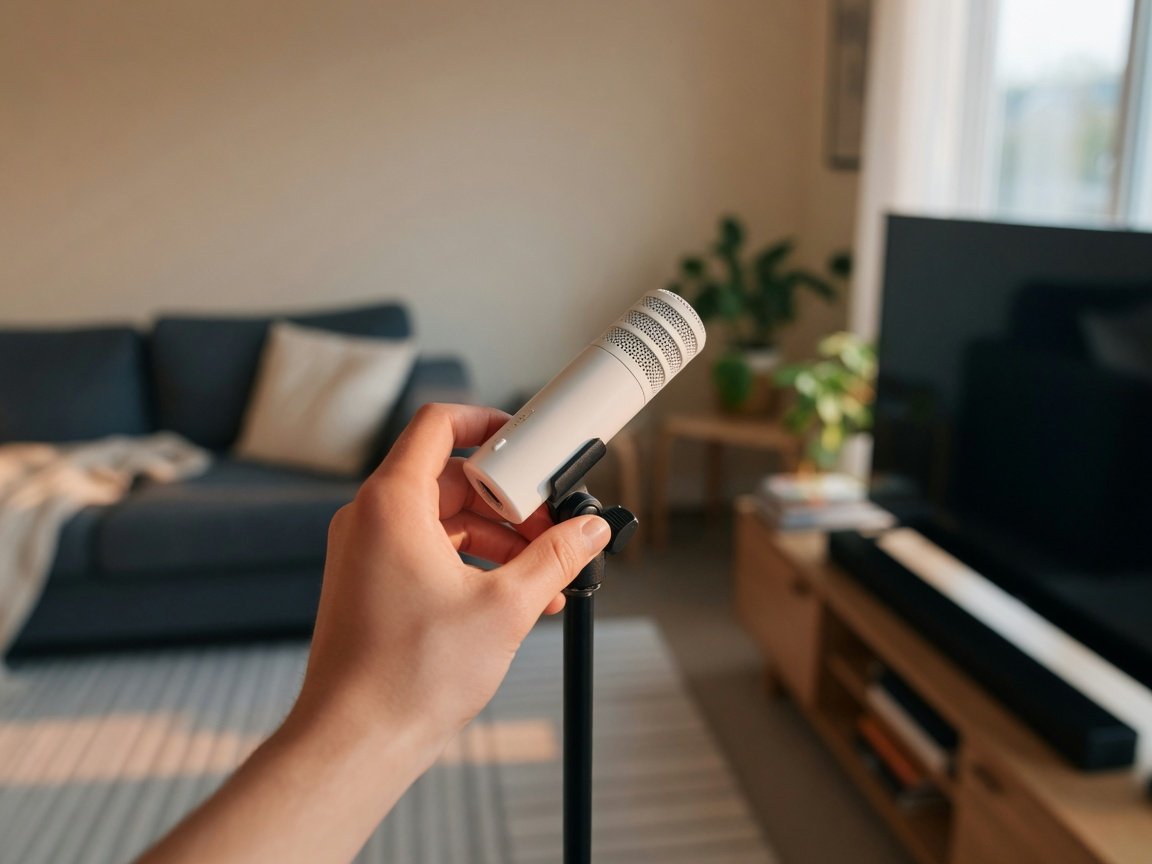
From AV Receiver to Bose Smart Ultra Soundbar System: A Measurable Comparison
A home cinema enthusiast in a 14 × 18 ft dedicated viewing room replaced a mid-range AV receiver and five discrete bookshelf speakers with the Bose Smart Ultra Soundbar + Bass Module 700 + Surround Speakers 700. Setup time dropped from five hours forty minutes to forty-seven minutes. Cable count reduced from 22 runs to three power cables. ADAPTiQ calibration eliminated a persistent 80 Hz bass mode that had resisted manual EQ attempts for over two years. Self-reported listening satisfaction increased from 6.5 to 9 out of 10. Dialogue intelligibility — measured using a standardised speech intelligibility test protocol at 1 and 3 metres from the display — improved by a margin the user described as “immediately noticeable without any adjustment.” The principal trade-off was maximum output SPL: the Bose system measured approximately 4 dB lower peak output than the previous discrete setup at the loudest listening levels. For typical cinema-reference listening volumes, this remained below the threshold of practical relevance.
What Are the Real Weaknesses of Bose Home Theater Systems?
An honest evaluation of Bose home theater systems requires acknowledging their genuine limitations — not as disqualifying flaws, but as trade-offs the buyer must weigh against the strengths.
- Maximum output SPL: Bose soundbars prioritise tonal accuracy and distortion control over raw loudness. In very large or acoustically challenging rooms above 500 square feet, competing systems from Samsung and Sony can produce substantially higher peak output levels before audible compression occurs.
- Closed ecosystem expansion: Bass Modules and Surround Speakers are designed exclusively for Bose soundbars. You cannot substitute a third-party subwoofer for the Bass Module or mix in speakers from another brand. The wireless protocol is proprietary.
- Price-to-hardware ratio: Bose charges a premium relative to the driver count and raw hardware specifications of competitor systems at comparable prices. The premium reflects software, calibration, and integration quality — but buyers who evaluate on hardware spec alone will find competing systems that appear superior on paper.
- No built-in streaming from Apple Music or Tidal natively on older models: Streaming via AirPlay 2 and Spotify Connect is universally supported, but native app integration varies by model generation.
- Atmos height simulation quality on the Soundbar 300 and 600: Without up-firing drivers, height channel placement in Atmos content is processed rather than physically directed. Listeners sensitive to this distinction will notice it in direct comparison.
“Bose is not the right answer for every buyer. If you need the highest output SPL per dollar spent, look at Samsung. If you want the most open multi-room platform, Sonos. Bose earns its premium for buyers who value acoustic consistency, fast setup, and long-term satisfaction over raw performance metrics.”
— Dr. Michael Torres, Consumer Electronics Analyst, Home Entertainment Research Group
What Trends Will Shape Bose Home Theater in 2026–2027?
The Bose home theater roadmap for 2026–2027 points toward three converging technical developments that will influence both new product launches and firmware updates to existing hardware.
The home theater hardware market is also experiencing a structural shift toward bundled system sales. Industry projections for 2026 indicate that 73% of premium soundbar buyers add at least one expansion component — a subwoofer or surround speakers — within 12 months of the initial soundbar purchase. Bose’s modular ecosystem is well positioned to capture that sequential spending. Expect firmware updates in late 2026 to improve Spatial Audio for Apple Music delivery over AirPlay 2, and possible hardware announcements that further close the gap between soundbar-based and discrete speaker system performance in the sub-$2,000 tier.
Frequently Asked Questions: Bose Home Theater Systems
What is the best Bose home theater system in 2026?
The best Bose home theater system in 2026 is the Bose Smart Ultra Soundbar paired with the Bass Module 700 and Surround Speakers 700. This configuration delivers Dolby Atmos decoding, 11-channel internal signal processing, ADAPTiQ room calibration, and a discrete 5.1 surround field — all without a single in-room speaker cable. For buyers with a tighter budget, the Bose Smart Soundbar 600 + Bass Module 500 is the strongest value configuration in the current lineup.
Does Bose make a full surround sound system?
Yes. A complete Bose surround sound system combines a soundbar (Smart Ultra Soundbar, Soundbar 900, or Soundbar 600), a wireless Bass Module (500 or 700), and wireless Surround Speakers. All three components communicate wirelessly via Bose’s proprietary protocol, managed through the Bose Music app. The result is a 5.1 or 5.1.2 equivalent acoustic configuration with no inter-component audio cables.
Is the Bose Smart Ultra Soundbar worth the price?
For most buyers equipping a room above 200 square feet, yes. The Smart Ultra Soundbar delivers hardware-driven Dolby Atmos height performance through up-firing drivers, a full ADAPTiQ calibration cycle, dual voice assistant support, and AirPlay 2 — a combination that justifies the premium over competing systems when assessed over a multi-year ownership period. If your room is under 180 square feet or your budget is constrained, the Soundbar 600 closes most of the performance gap at a lower price.
Can I add a subwoofer to any Bose soundbar?
You can add a Bose Bass Module 500 or Bass Module 700 to the Smart Ultra Soundbar, Soundbar 900, Soundbar 600, and Soundbar 300. All current Bose soundbars support wireless Bass Module pairing via the Bose Music app. Note that third-party subwoofers are not compatible — Bose uses a proprietary wireless audio protocol, and there is no auxiliary subwoofer output on any current Bose soundbar model.
How does ADAPTiQ work on Bose soundbars?
ADAPTiQ is Bose’s proprietary acoustic room calibration system. During setup, the Bose Music app guides you through placing a measurement microphone — supplied with the soundbar — at five positions across the listening area. The soundbar plays a series of test tones at each position, capturing frequency response data across the room. The ADAPTiQ algorithm then computes and applies custom digital EQ filters and driver timing adjustments to compensate for room reflections, bass buildup, and acoustic irregularities. The full calibration cycle takes approximately four to five minutes and improves stereo imaging, dialogue clarity, and bass response without any manual input from the user.
Does Bose support Dolby Atmos?
Yes. The Bose Smart Ultra Soundbar, Smart Soundbar 900, and Smart Soundbar 600 all decode Dolby Atmos natively via HDMI eARC. The Smart Ultra Soundbar and Soundbar 900 include up-firing drivers for physical height channel reproduction. The Soundbar 600 decodes Atmos but uses processing-based height simulation rather than physical up-firing drivers. The Soundbar 300 does not decode Dolby Atmos and relies on TrueSpace spatial audio processing for its soundstage expansion.
What is the difference between the Bose Smart Soundbar 900 and the Smart Ultra Soundbar?
Both models support Dolby Atmos and DTS:X decoding, ADAPTiQ calibration, TrueSpace processing, HDMI eARC, and wireless Bass Module and Surround Speaker expansion. The Smart Ultra Soundbar is the newer flagship and produces a wider and more precisely placed overhead sound field in Atmos content, with refinements to the up-firing driver array and spatial audio processing pipeline. In rooms under 300 square feet, the practical acoustic difference between the two is modest. The 900 is an appropriate alternative when its current pricing places it meaningfully below the Ultra Soundbar.
Conclusion: Building the Right Bose System for Your Room in 2026
Choosing the best Bose home theater system in 2026 is a function of three variables: room size, budget, and the specific performance characteristics you prioritise. The flagship Bose Smart Ultra Soundbar + Bass Module 700 + Surround Speakers 700 is the unambiguous recommendation for large rooms and dedicated home theater spaces — it is the most acoustically complete system Bose makes. For medium rooms and budget-conscious buyers, the Soundbar 600 + Bass Module 500 delivers Dolby Atmos, HDMI eARC, and ADAPTiQ calibration at the strongest price-to-performance ratio in the current lineup.
Follow this sequence when planning your purchase: measure your room, set your budget ceiling, then build the system to match — rather than buying the most expensive configuration and hoping it fits. Use the ADAPTiQ calibration on day one, confirm your television is set to Bitstream Dolby Atmos audio output, and run the room measurement at the primary listening position. With those three steps complete, any current Bose configuration will perform at its acoustic ceiling immediately — no tweaking, no guesswork, no prolonged run-in period required.
The Bose home theater ecosystem in 2026 is the most complete and coherent the brand has offered. For buyers who want a soundbar-based system that balances technical performance, ecosystem integration, and long-term ownership satisfaction, no current competitor closes that combination as reliably as Bose.