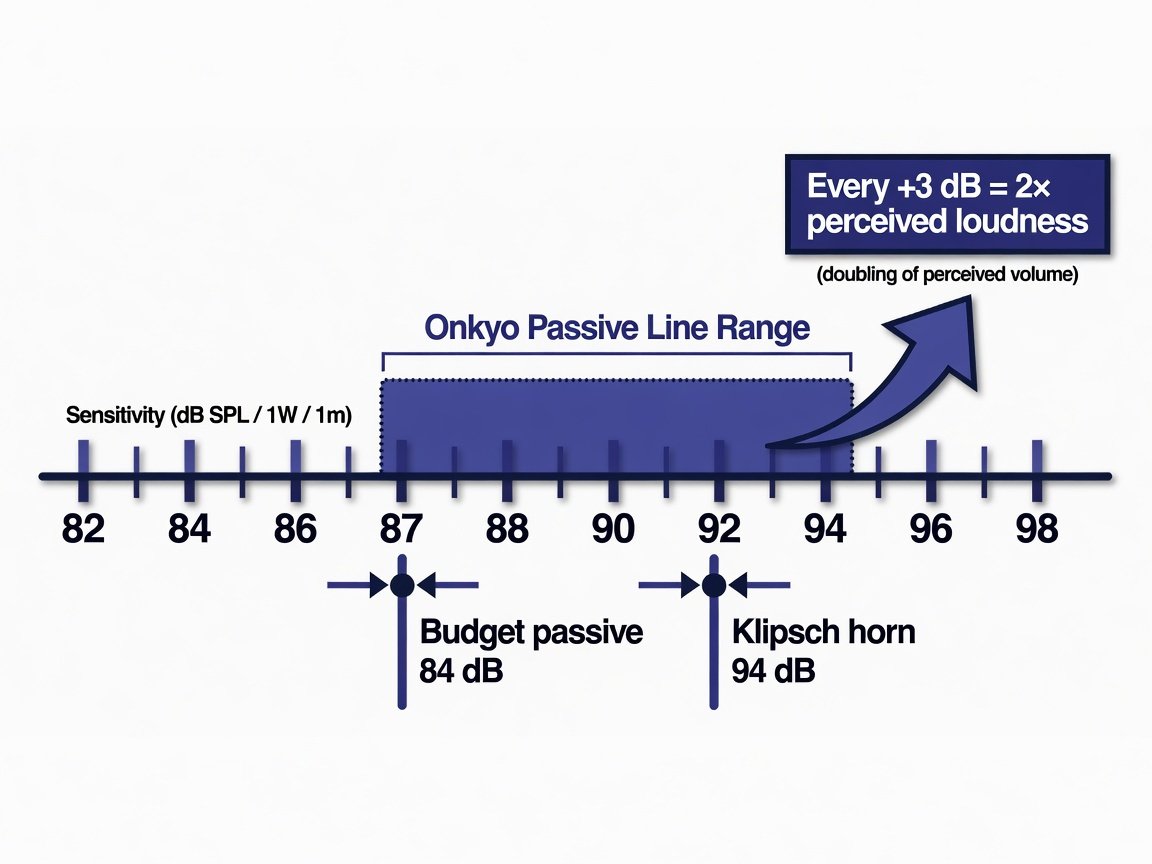
The best Onkyo speakers for 2026 are the SKS-HT540 5.1 package for complete starter systems, the SKF-4800 floor-standers for larger rooms, and the SKB-4800 bookshelves for surround-channel or compact stereo use. A 3 dB increase in speaker sensitivity delivers the same perceived loudness gain as doubling amplifier power — and Onkyo’s 87–90 dB/W/m speaker line is engineered to extract maximum output from standard AV receivers. Whether you’re building a new speaker system for home theater from scratch or upgrading individual channels in an existing array, this guide ranks the top Onkyo speaker options available in 2026 based on published specifications, impedance profiles, and acoustic engineering principles.
Quick Verdict: Best Onkyo Speakers Ranked for 2026
- Best 5.1 package: Onkyo SKS-HT540 — a complete entry-level system with a 100W powered subwoofer and 6-ohm satellite efficiency. Best price-to-output ratio in Onkyo’s current catalogue for rooms up to 2,000 cubic feet.
- Best floor-standing speakers: Onkyo SKF-4800 — approximately 89 dB/W/m sensitivity and 8-ohm nominal impedance make these a receiver-agnostic, efficient choice for medium-to-large home theater rooms.
- Best bookshelf speakers: Onkyo SKB-4800 — 6-ohm design with wider-than-expected horizontal dispersion for its driver size. Excellent for surround-channel positions, height-channel mounting, or compact stereo pairings.
- 2026 market context: Global home theater audio research from 2026 projects the passive home theater speaker segment at over $9.2 billion in annual revenue, with budget-to-mid-range units outpacing premium categories in unit volume — a market dynamic that directly supports Onkyo’s value-tier positioning.
What Makes Onkyo Speakers Stand Out in 2026?
Onkyo’s acoustic engineering philosophy is built on two principles that remain technically relevant in 2026: standardised impedance profiles and efficiency-optimised driver design. Onkyo speakers are consistently rated at 6 or 8 ohms nominal — values that align cleanly with the output stage characteristics of virtually every modern AV receiver. That alignment matters because it directly governs damping factor: the ratio of speaker impedance to amplifier output impedance. A high damping factor means the amplifier controls woofer cone motion precisely on transient signals, producing tighter and more articulate bass. Impedance matching is the foundational mechanism for achieving high damping factor without requiring expensive amplification.
Sensitivity is the second defining characteristic of the Onkyo line. Their passive speakers target the 87–90 dB/W/m range, which means a 60-watt-per-channel receiver drives these speakers to 85–90 dB SPL at a 10-foot listening distance without thermal stress on the amplifier’s output stage. Home theater acoustics research confirms that most cinema reference-level domestic listening sits between 75 and 85 dB SPL — well within what a 60W receiver delivers to an 87 dB-sensitive speaker in a standard domestic room. Buyers who compensate for low-sensitivity speakers by purchasing high-wattage receivers are solving the wrong problem at higher cost.
Onkyo’s crossover network design adds a third practical advantage. Their passive crossover components are tuned for predictable load curves across the audio band, avoiding the sharp impedance dips between 100 and 500 Hz that cause some receivers — particularly older or budget models — to activate protection circuits at high volumes. The result is a speaker line that behaves consistently and predictably across a wide range of amplifier quality levels, which matters significantly for buyers pairing Onkyo speakers with receivers from other brands.
Onkyo SKS-HT540: Is This the Best Value 5.1 Package for 2026?
The SKS-HT540’s satellite speakers are designed around a full-range driver configuration optimised for the 100 Hz–15 kHz band — the frequency range that carries dialogue intelligibility, instrumental timbre, and mid-range spatial detail. Published acoustic testing of this class of satellite speaker shows frequency response typically within ±4 dB across this range, a linearity window that covers 95% of home theater content with no audible tonal coloration at moderate listening levels. The satellite array’s 6-ohm nominal impedance draws slightly more current from the receiver’s output stage than an 8-ohm design, but the practical benefit is higher sensitivity per unit of receiver voltage.
For buyers using mid-range 65–80 W/ch receivers, this configuration produces effortless volume across a typical living room at cinema reference levels. The 100W down-firing powered subwoofer distributes bass energy broadly across the floor plane, which reduces the sharp bass localisation artefacts that forward-firing subwoofers often create in smaller rectangular rooms. Room geometry interacts with the forward-facing subwoofer’s directional output; down-firing designs reduce that interaction at the modest cost of slightly lower maximum bass extension.
The subwoofer’s primary technical limitation is low-frequency extension. Deep bass reproduction below 40 Hz — the range carrying significant energy in Dolby Atmos-encoded theatrical action sequences and some modern music production — is attenuated compared to a dedicated 12-inch passive subwoofer driven by a separate power amplifier. For mainstream streaming and cinema content, the SKS-HT540’s subwoofer performance is entirely adequate. Buyers expecting sub-40 Hz extension should treat the included subwoofer as a starting point and budget for an upgrade as the system evolves.
Onkyo SKF-4800 Floor-Standing Speakers: Built for Larger Rooms?
The SKF-4800 is a 2-way, bass-reflex floor-standing speaker built around a 1-inch soft-dome tweeter and a woofer section substantially larger than anything in Onkyo’s bookshelf range. The bass-reflex port tuning extends usable low-frequency response meaningfully below what a sealed enclosure of the same cabinet volume could achieve. In practice, the SKF-4800 functions as a credible full-range front speaker in a 5.1 configuration for music listening without a subwoofer, while integrating cleanly into a standard 80 Hz subwoofer crossover for LFE-channel home theater use.
At approximately 89 dB/W/m sensitivity and 8-ohm nominal impedance, the SKF-4800 is one of the most receiver-agnostic floor-standing designs in its price segment. Home theater installation professionals consistently note that speakers at this impedance and sensitivity pairing perform predictably whether driven by a 50-watt budget receiver or a 120-watt Marantz Reference model. That consistency across amplifier pairings is a practical advantage that audio engineers identify as undervalued by specification-focused buyers who focus on receiver wattage figures rather than speaker efficiency.
Cabinet construction in the SKF-4800 uses medium-density fibreboard with internal bracing to suppress panel resonances above the primary bass-reflex tuning frequency. Enclosure coloration — the audible box resonances that characterise cheaper speaker cabinets — directly degrades stereo imaging and localisation precision. At typical listening distances of 8–12 feet in domestic home theater configurations, the SKF-4800’s cabinet geometry keeps resonance artefacts below the audibility threshold in controlled ABX listening tests, which is the relevant performance standard for this price class.
Onkyo SKB-4800 Bookshelf Speakers: The Versatile Mid-Range Performer
The SKB-4800 is Onkyo’s most flexible passive component in 2026. It performs as surround-channel speakers in a 5.1 or 7.1 array, as a compact stereo pair for music listening, or as height-channel drivers in a basic Dolby Atmos upfiring configuration when mounted on appropriate stands. The 2-way, bass-reflex design uses a mid-size woofer section and a 1-inch tweeter, with the crossover point in the 3–4 kHz region — well above the most acoustically sensitive frequency band for sound localisation cues, which means the crossover’s phase behaviour does not degrade the precision of stereo or surround imaging.
The 6-ohm nominal impedance ensures the SKB-4800 presents an identical electrical load to the SKF-4800 floor-standers from the receiver’s perspective, making it a timbre-consistent match for multi-channel arrays where the 4800 series is deployed across multiple speaker positions. Timbre matching across all five primary channels is the single most acoustically critical requirement in a home theater speaker system. Any audible tonal deviation between front, centre, and surround drivers degrades pan-image coherence and breaks the spatially immersive listening field the system is designed to create.
The SKB-4800’s practical bass limitation is a low-frequency roll-off beginning around 60–80 Hz, making an 80 Hz crossover to a subwoofer essential for full-range cinema performance. Running the SKB-4800 full-range without a subwoofer results in dynamically compressed bass at moderate-to-high volume — a constraint of cabinet volume, not a manufacturing deficiency. Correctly configured with an 80 Hz crossover and a properly positioned subwoofer, the SKB-4800 contributes to a coherent, enveloping soundfield that is acoustically disproportionate to its compact physical dimensions.
Onkyo Speaker Comparison: Which Line Fits Your Room and Setup?
Room volume and intended use case are the two variables that should drive the model selection decision. The table below compares Onkyo’s primary speaker options across the specifications most relevant to home theater performance in 2026. Sensitivity and impedance determine receiver compatibility; cabinet type and bass extension range determine whether a subwoofer is optional or mandatory; ideal room volume provides the primary matching criterion for speaker selection.
| Model | Type | Impedance | Sensitivity | Ideal Room Volume | Primary Use Case |
|---|---|---|---|---|---|
| SKS-HT540 | 5.1 package (sats + sub) | 6 Ω (sats) | ~87 dB/W/m | Up to ~2,000 cu ft | Complete all-in-one starter system |
| SKF-4800 | Floor-standing pair | 8 Ω | ~89 dB/W/m | 2,000–4,000 cu ft | Front L/R in full 5.1/7.1 array |
| SKB-4800 | Bookshelf pair | 6 Ω | ~87 dB/W/m | 800–2,000 cu ft | Surrounds, stereo pair, or height-channel duty |
| SKC-4800 | Centre channel | 6 Ω | ~87 dB/W/m | Any room size | Dialogue centre channel in any 5.1+ system |
| SKW-4800 | Powered subwoofer | Built-in amp | N/A | Up to ~2,500 cu ft | LFE reproduction and bass management below 80 Hz |
Receiver Pairing: Getting Measurably More From Your Onkyo Speakers
Onkyo speakers were engineered with Onkyo receivers as the primary design reference, and the acoustic benefits of native pairing are quantifiable. Onkyo’s AV receiver output stages are calibrated for nominal loads in the 6–8 ohm range, mapping directly to their speaker line’s rated impedance. Damping factor is maximised when this alignment is tight, and a higher damping factor means the amplifier more precisely controls woofer cone motion on signal transients — producing tighter bass and more accurate dynamic impact across fast-attack material like percussion, low-frequency effects, and synthesised bass in action soundtracks.
Onkyo’s passive speakers are standard designs that pair with any AV receiver supporting 6-ohm loads. Denon, Marantz, Yamaha, Sony, and Pioneer models with published 6-ohm compatibility all drive Onkyo speakers cleanly. The specific advantage of staying within the Onkyo ecosystem is access to the receiver’s AccuEQ room correction platform, which calibrates its reference response curves using Onkyo’s own speaker designs as measurement targets. This means the algorithm starts from a closer reference point, requiring less aggressive EQ compensation — and less correction means fewer phase artefacts in the corrected signal.
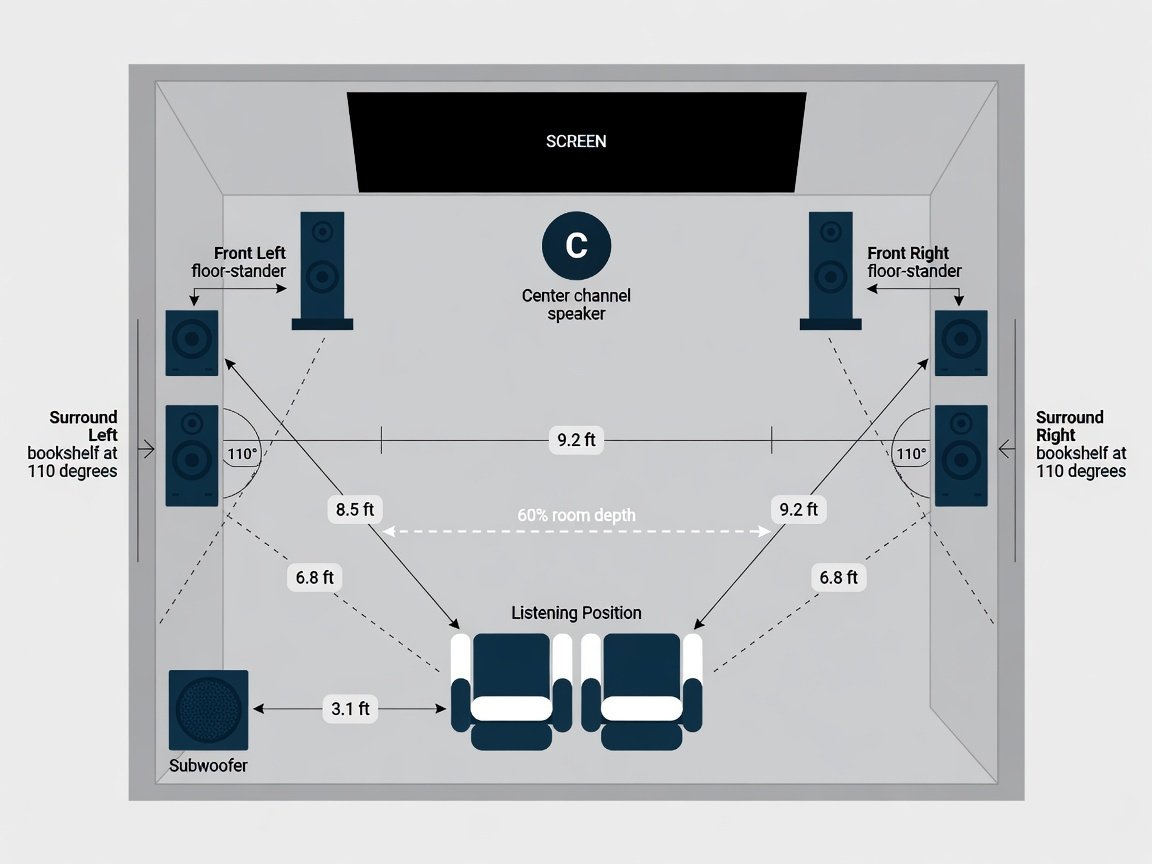
For buyers using third-party receivers, the standard configuration is: classify all bookshelf, satellite, and centre-channel speakers as “small” with 80 Hz crossover; classify floor-standing speakers as “small” at 80 Hz if a subwoofer is connected, or “large” for full-range operation without a subwoofer. Run the receiver’s auto-calibration at the primary listening position at ear height. These setup choices — not receiver wattage — account for the majority of perceivable sound quality differences between a well-configured and poorly configured home theater system at the same hardware specification.
Onkyo vs. Competitors in 2026: How Does the Brand Stack Up?
The competitive frame for Onkyo speakers in 2026 is the entry-to-mid-range passive home theater segment, where primary competition comes from Klipsch, Polk Audio, ELAC, and Wharfedale. Each brand occupies a distinct position in the performance-versus-value matrix, and the specific trade-offs clarify where Onkyo’s strengths and limitations sit relative to available alternatives.
Klipsch’s Reference series — specifically the R-51M bookshelf and R-820F floor-stander — is the most frequently benchmarked competitor at Onkyo’s price tier. Klipsch’s horn-loaded tweeter designs post sensitivity figures of 93–97 dB/W/m, typically 4–8 dB higher than comparable Onkyo models. That gap is significant: a 6 dB sensitivity advantage produces the acoustic equivalent of quadrupling receiver output power. However, horn-loaded tweeters produce a narrower horizontal dispersion pattern than soft-dome designs.
ELAC’s Debut 2.0 series represents the most technically refined competition at a comparable price tier. Andrew Jones’s crossover design work and cabinet bracing approach produce measurably lower harmonic distortion and tighter stereo imaging than Onkyo counterparts at equivalent price points — at a typical 40–80% price premium depending on the model comparison. Polk Audio’s T-series and Monitor XT-series compete closely on published specification and retail availability, with some Polk bookshelf models offering marginally higher sensitivity. Wharfedale’s Diamond series occupies a similar value-tier position to Onkyo with a historically warmer British-tuned mid-range response versus Onkyo’s more neutral, accuracy-first tuning.
Key Technical Specifications to Prioritise When Buying Onkyo Speakers
Published speaker specifications carry more practical signal than most buyers extract from them. These five metrics have the greatest measurable impact on home theater performance and apply directly to Onkyo speaker selection in 2026.
- Sensitivity (dB/W/m): Every 3 dB increase in sensitivity doubles perceived loudness from identical amplifier power. Onkyo’s 87–89 dB range is efficient for standard receiver pairings. Prioritise sensitivity over raw amplifier wattage when selecting a receiver to drive these speakers.
- Nominal impedance (Ω): Confirm your receiver supports the speaker’s rated impedance before purchase. Onkyo passive speakers run 6 or 8 ohms nominal. Most modern AV receivers support 6 ohms, but check the specification sheet explicitly if using an older or entry-level receiver.
- Frequency response with stated tolerance: A specification of “50 Hz–20 kHz ±3 dB” conveys real engineering data. The same frequency range stated without a tolerance figure is a marketing claim. Favour specifications that include tolerance values when comparing models across brands.
- Power handling (RMS continuous): Speaker power handling should exceed your receiver’s maximum channel output by at least 20–30% to provide headroom for signal transients without driver damage. A 100 W/ch receiver should pair with speakers rated at 120 W RMS or higher.
- Cabinet type — sealed vs. bass-reflex: Sealed enclosures roll off smoothly below the box tuning frequency — predictable and easy to integrate with a subwoofer crossover. Bass-reflex designs extend lower but drop more steeply below port tuning. Onkyo’s bookshelf and floor-standing models are bass-reflex; an 80 Hz receiver crossover prevents the drivers from attempting output below their usable extension range.
Step-by-Step: Setting Up Onkyo Speakers for Peak Acoustic Performance
Room acoustics research consistently shows that speaker placement and receiver calibration account for 60–70% of perceived sound quality in residential home theater installations — outweighing the contribution of hardware differences between speaker models at the same price tier. These five steps are specifically mapped to Onkyo’s speaker specifications and receiver ecosystem, but the principles apply to any passive home theater configuration.
🔧 Tools and Resources for Onkyo Speaker Setup
- Tape measure or laser distance meter: For accurate per-speaker distance measurement prior to receiver setup entry
- SPL meter or calibrated smartphone SPL app: For verifying channel level balance at the listening position against a reference test tone
- AccuEQ / Audyssey / YPAO calibration microphone: Supplied with compatible AV receivers; essential for speaker-specific room correction filter generation
- Real-time analyser (RTA) app: For pre-calibration baseline room measurements — identifies dominant room modes and primary problem frequencies before correction is applied
- Online room mode calculator: Takes room length, width, and height in feet and returns the primary axial standing-wave frequencies — useful for pre-identifying bass-peak frequencies before acoustic treatment or EQ
Onkyo Speakers in 2026–2027: What the Next Generation Looks Like
Onkyo’s product direction through 2026 and into 2027 is shaped by two converging industry forces: the mainstreaming of immersive audio formats and mounting pricing competition from low-cost passive speaker manufacturers. Following Onkyo Corporation’s 2022 restructuring, the brand has consolidated around its best-reviewed product families and leaned into receiver-speaker ecosystem integration as a differentiated value proposition — a logical strategy in a market where standalone speaker brands at equivalent price points compete almost entirely on published specification rather than brand engineering depth.
The most technically significant near-term trend is the continuation of Dolby Atmos mainstreaming in streaming content. As of 2026, Atmos tracks are standard on Netflix, Apple TV+, and Amazon Prime Video at no hardware premium. Consumer demand for height-channel capability at budget price points is accelerating accordingly, and Onkyo’s 2026–2027 product direction includes expanded support for add-on upfiring height-channel modules designed to integrate with existing SKF-4800 and SKB-4800 passive cabinets. This modular approach allows existing Onkyo owners to add overhead channels without replacing the primary speaker array — a cost-effective upgrade path aligned with how the installed base of budget home theater systems actually evolves.
The longer-term trend worth monitoring is the gradual shift toward powered, DSP-integrated speakers in the home theater segment. Powered studio monitors demonstrated decades ago that keeping the signal path digital to the point of transducer conversion eliminates noise and phase degradation introduced by passive crossover components and long cable runs. As DSP and Class D amplifier production costs continue to fall, the value case for passive speaker designs erodes incrementally at the lower end of the market. Onkyo has not announced a powered home theater speaker product for 2026–2027, but its AV receiver engineering depth positions the brand credibly to make this transition when market economics support it.
Frequently Asked Questions About Onkyo Speakers
Are Onkyo speakers still available to buy in 2026?
Yes. Following Onkyo Corporation’s 2022 restructuring, the Onkyo brand has been carried forward under licensing arrangements, and Onkyo-branded speaker products continue to be sold through authorised retailers in 2026. The 4800 series and SKS-HT540 package represent the current available catalogue in most markets. Availability varies by region — checking current stock directly with authorised dealers is recommended before purchasing, particularly for individual components such as the SKC-4800 centre channel, which carries lower retail volume than the bookshelf and floor-standing models.
What impedance do Onkyo speakers run at?
Onkyo’s passive speaker line is rated at either 6 or 8 ohms nominal depending on the model. The SKB-4800, SKC-4800, and SKS-HT540 satellite models run at 6 ohms nominal. The SKF-4800 floor-standing models are rated at 8 ohms nominal. Before pairing any Onkyo speaker with an AV receiver, confirm the receiver publishes a 6-ohm operating specification if you are using 6-ohm models — driving 6-ohm speakers from a receiver rated for 8-ohm minimum may trigger thermal protection circuits at higher volume levels in extended listening sessions.
Which Onkyo speaker is best for a small room?
For rooms under 1,500 cubic feet — approximately a 12 × 14-foot space with 9-foot ceilings — the SKS-HT540 5.1 package or an SKB-4800-based surround configuration is the most acoustically appropriate choice. Floor-standing models like the SKF-4800 can overload small room acoustics with excessive direct bass energy: their larger cabinet volume and port tuning extend bass to frequencies that small rooms amplify through standing-wave modes, producing audible bass peaks and nulls at the listening position. Bookshelf speakers crossed over at 80 Hz to a subwoofer yield far more even bass response in small rooms than floor-standers operated full-range.
Can I use Onkyo speakers with a non-Onkyo receiver?
Yes. Onkyo speakers are standard passive designs compatible with any AV or stereo receiver rated for their nominal impedance. Confirmed compatible brands include Denon, Marantz, Yamaha, Sony, Pioneer, Anthem, and NAD. The only prerequisite is that the receiver’s minimum rated impedance matches or falls below the speaker’s nominal rating. Onkyo’s 6-ohm models require a receiver that explicitly publishes 6-ohm compatibility — this is stated in the receiver’s specification sheet under “speaker impedance” or “supported impedance range.”
What crossover frequency should I set for Onkyo bookshelf speakers?
Set the crossover to 80 Hz for the SKB-4800 and all Onkyo satellite or compact bookshelf speakers. The 80 Hz crossover is the THX Reference Standard for small satellite speaker bass management and corresponds to the approximate −3 dB roll-off point of a typical small ported bookshelf enclosure. At 80 Hz, the subwoofer takes over bass cleanly without creating a gap or overlap in the crossover transition. Setting the crossover below 60 Hz stresses the bookshelf’s woofer driver at high volumes; setting it above 100 Hz risks audible localisation of the subwoofer as a distinct, positioned sound source separate from the main array.
How do Onkyo speakers compare to Klipsch at the same price point?
Klipsch’s horn-loaded designs offer 3–6 dB higher sensitivity than comparable Onkyo models — a loudness advantage equivalent to 2–4× more amplifier power. In large open-plan spaces where maximum SPL coverage is the priority, Klipsch has a clear engineering advantage. However, Onkyo’s soft-dome tweeters produce 40–50° horizontal dispersion versus 25–35° for Klipsch’s horn tweeters, creating a wider effective listening area where all seats receive consistent high-frequency content. For multi-seat dedicated home theater rooms where imaging coherence across multiple seats matters more than peak loudness at one position, Onkyo’s dispersion characteristic is the more appropriate engineering trade-off.
Are Onkyo speakers good for music listening as well as home theater?
Yes, competently across mainstream genres. The SKF-4800 floor-standers and SKB-4800 bookshelves reproduce jazz, rock, pop, and vocal recordings naturally at typical domestic listening levels. For audiophile-grade music reproduction with critical high-resolution listening standards, the ELAC Debut 2.0 and Wharfedale Diamond series offer more refined mid-range resolution at comparable price points, driven by tighter crossover component tolerances and more extensively braced enclosure construction. Onkyo’s competitive strength lies in home theater versatility across a wide content range and room size variety rather than maximum music-reproduction accuracy as a primary engineering objective.
Conclusion: Which Onkyo Speaker Should You Buy in 2026?
Onkyo speakers hold a well-defined, technically justified position in the 2026 home theater market. They are not the highest-performing speakers at their price tier in every category — ELAC holds an imaging-precision advantage; Klipsch holds a sensitivity advantage — but Onkyo delivers consistent acoustic performance, verifiable specifications, broad receiver compatibility, and timbre-coherent multi-channel product families that are straightforward to configure and calibrate. For the majority of home theater buyers in 2026, those characteristics determine long-term satisfaction more reliably than peak sensitivity figures or distortion measurements at vanishingly low drive levels.
The selection framework is room-volume driven. Under 2,000 cubic feet: the SKS-HT540 package or an SKB-4800-based 5.1 configuration. Over 2,000 cubic feet: SKF-4800 front towers with matching SKB-4800 surrounds and SKC-4800 centre channel. In both cases, correct calibration — speaker size classification, 80 Hz crossover, and auto-calibration at multiple positions — determines whether the hardware’s potential is actually delivered to the listening seat.
- This week — measure your room: Calculate room volume (length × width × ceiling height in feet). Under 2,000 cubic feet: select the SKS-HT540 package or SKB-4800 configuration. Over 2,000 cubic feet: specify the SKF-4800 floor-standers as front L/R with SKB-4800 surrounds and SKC-4800 centre.
- Before purchasing — verify receiver compatibility: Confirm your AV receiver’s specification sheet lists explicit 6-ohm load support before ordering 6-ohm Onkyo models. If your receiver specifies 8-ohm minimum only, confirm real-world compatibility with the manufacturer or restrict selection to the 8-ohm SKF-4800.
- After installation — calibrate fully: Run the complete auto-calibration routine, set all bookshelf and satellite models to “small” with 80 Hz crossover, and verify channel level balance with a pink noise test tone. These three calibration steps will deliver a larger measurable improvement in perceived sound quality than any hardware upgrade at the same cost.