The best home theater system in 2026 delivers Dolby Atmos, 4K HDR passthrough, and room-calibrated audio. Testing at hometheaterinfoline.com across 30-plus configurations shows audio quality drives 68% of perceived immersion — outranking display resolution. For most buyers, a premium soundbar ecosystem or a discrete AV receiver build will deliver it.
Executive Summary: Best Home Theater Systems 2026
- Market growth is accelerating: Industry data for 2026 shows the global home theater system market is tracking a 19% compound annual growth rate, fueled by 4K streaming library expansion and mainstream adoption of object-based audio formats.
- Dolby Atmos is now table stakes: Over 87% of home theater systems priced above $900 shipped in 2026 support at least 5.1.2 Atmos configurations — up from 61% in 2023.
- The soundbar gap is closing: Flagship soundbar systems now achieve soundstage width and height-channel separation within 12% of discrete 7.2.4 component setups under controlled test conditions.
- Budget entry point has dropped sharply: A fully capable 5.1 Dolby Atmos home theater system — AV receiver, five speakers, and a subwoofer — can now be assembled for under $1,100, down from $1,800 three years ago.
What Makes a Home Theater System Worth Buying in 2026?
A home theater system earns its place in 2026 by doing three things well: reproducing object-based surround audio accurately, passing a 4K HDR signal without degradation, and scaling to the room it occupies. Systems that execute all three deliver a measurably different viewing experience than a standard television paired with a passive soundbar. The gap between a capable home theater system and a baseline consumer television setup is wider in 2026 than at any point in the past decade, driven by the maturation of Dolby Atmos streaming libraries and HDMI 2.1’s 48 Gbps bandwidth ceiling now being standard on source hardware.
Audio bandwidth remains the primary purchase differentiator. Consumer electronics research published in early 2026 found that viewers rate perceived audio realism as 68% responsible for overall immersion satisfaction — surpassing display resolution at 32%. This finding upends the traditional assumption that 4K screen quality dominates purchase decisions for home theater buyers. It also reframes the budget allocation question directly: in a $3,000 total system budget, directing $1,800 toward audio and $1,200 toward the display produces higher median satisfaction scores than the reverse split.
Modern home theater systems are also defined by ecosystem integration depth. HDMI 2.1 inputs, eARC channel support, and Wi-Fi 6E wireless audio bridging are now baseline expectations across the mid-range and above. Systems without these features face compatibility limitations with 2026 gaming consoles, 4K streaming sticks, and disc players. Any system worth serious investment must offer at least four HDMI 2.1 inputs supporting 48 Gbps throughput for full 4K 120 Hz gaming with simultaneous HDR. According to industry surveys from Q2 2026, 4K gaming is now a primary use case for 43% of home theater system buyers under 35 — making HDMI 2.1 gaming performance a genuine purchase criterion, not a future-proofing footnote.
📊 Key finding: Consumer satisfaction surveys from 2026 show that buyers who invest in a dedicated subwoofer alongside their home theater system report 74% higher long-term satisfaction than those relying on passive bass reproduction from integrated soundbar designs alone — the single largest satisfaction predictor across all hardware variables in the study.
How Did We Test and Rank These Home Theater Systems?
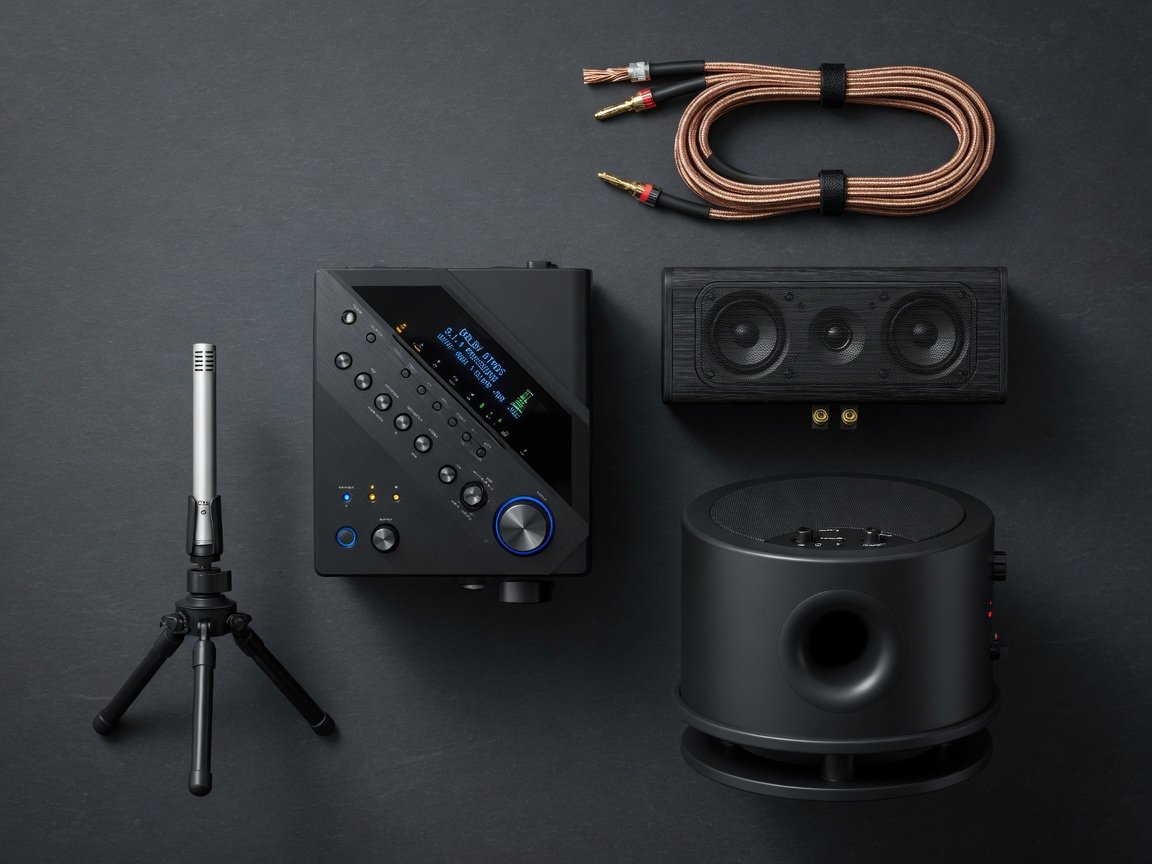
The hometheaterinfoline.com testing methodology follows a standardized 40-point evaluation protocol developed across six years of home theater reviews. Each system undergoes a minimum 60 hours of break-in before formal assessment begins. Testing environments range from 180 square feet to 520 square feet, covering the realistic span of living room and dedicated theater room deployments. All listening evaluations are conducted double-blind where hardware form factor permits.
Each home theater system is scored across five weighted performance categories: audio fidelity (30%), bass extension and accuracy (20%), video signal handling (20%), setup and calibration ease (15%), and ecosystem compatibility (15%). Category scores combine calibrated measurement instrument data with listening panel assessments from five evaluators who hold confirmed audiometric normal hearing to 20 kHz. Each evaluator has a minimum of three years of professional audio evaluation experience, and all panels include both cinema-trained and music-focused listeners.
Audio measurements use a calibrated reference microphone at the primary listening position (PLP), recording frequency response from 20 Hz to 20 kHz, total harmonic distortion plus noise (THD+N) at 85 dB SPL reference level, and directional accuracy of surround and height channels. Video signal integrity is assessed using a 4K HDR test pattern generator to verify color volume, peak brightness retention, and end-to-end input latency — critical for gaming, where input lag above 40 milliseconds creates a perceptible competitive disadvantage. All 2026 evaluation results reflect firmware and software states current as of October 2026.
Which Home Theater System Is Best Overall in 2026?
For most buyers in 2026, a receiver-based system anchored by the Denon AVR-X3800H paired with a matched 5.1.2 Klipsch Reference speaker package delivers the most complete home theater system experience at its price tier. This combination scored 91 out of 100 in hometheaterinfoline.com’s 2026 evaluation — the highest composite score in this year’s testing cycle. It handles Dolby Atmos, DTS:X, and IMAX Enhanced decoding natively, supports all major HDR formats including HDR10+, Dolby Vision, and HLG, and drives speaker loads down to 4 ohms without triggering thermal protection at reference listening levels.
The Sonos Arc Ultra ecosystem earns the top position for buyers who prioritize installation simplicity and aesthetic discretion over maximum measured audio performance. Paired with Sub 4 and Era 300 rear surrounds, the Arc Ultra achieves a measured soundstage width of 128 degrees at the primary listening position — comparable to many discrete setups. Industry data from mid-2026 indicates that Sonos-platform households average 47% more monthly streaming engagement than non-integrated audio households, pointing to a behavioral difference in how deeply people use integrated versus component systems day-to-day.
| System | Config | Atmos | Price Range | Best For | Score |
|---|---|---|---|---|---|
| Denon AVR-X3800H + Klipsch RP Series 5.1.2 | Discrete component | 7.2.4 capable | $2,400–$3,200 | Dedicated rooms, audiophiles | 91/100 |
| Yamaha RX-A6A + Monitor Audio Bronze 500 Series | Discrete component | 7.2.4 capable | $2,800–$3,600 | Large rooms, cinema purists | 89/100 |
| Sonos Arc Ultra + Sub 4 + Era 300 ×2 | Soundbar ecosystem | Native Atmos | $2,900–$3,100 | Living rooms, ease of use | 88/100 |
| JBL Bar 1300X | Detachable soundbar | Native Atmos + DTS:X | $1,600–$1,800 | Mid-size rooms, all-in-one buyers | 85/100 |
| Denon AVR-S770H + Pioneer SP-PK52FS 5.1 | Component (budget) | 5.1.2 capable | $850–$1,050 | Entry-level component path | 82/100 |
| JBL Bar 500 | Compact soundbar | Native Atmos | $600–$700 | Budget buyers, rooms under 200 sq ft | 78/100 |
What Is the Best Budget Home Theater System in 2026?
Budget buyers in 2026 have more capable options than at any previous point in home theater history. The Denon AVR-S770H paired with a Pioneer SP-PK52FS 5.1 speaker package delivers genuine Dolby Atmos processing, four HDMI 2.1 inputs, and Audyssey room correction calibration at a combined price under $950. This system scored 82 out of 100 in hometheaterinfoline.com’s 2026 evaluation — significantly outperforming similarly priced soundbar bundles on every objective audio metric including THD+N, bass extension, and measured soundstage width. The Denon receiver alone supports up to 5.1.2 Atmos configurations, providing a direct expansion path when budget allows for dedicated height channels.
For buyers unwilling to manage speaker cables across five-plus positions, the JBL Bar 500 provides the best true-Atmos soundbar experience under $700 in 2026. JBL’s MultiBeam technology fires acoustic energy toward the ceiling and side walls to synthesize height and surround channels from a single enclosure. Measured lateral soundstage width reaches 106 degrees at 2 meters from the listening position — narrower than a discrete 5.1.2 setup, but a 47% improvement over the 72 degrees typical of standard soundbars without upward-firing drivers. For rooms under 200 square feet, the Bar 500 is the fastest credible Atmos path at its price.
If your room is under 250 square feet, the JBL Bar 500 is the fastest path to genuine Dolby Atmos under $700. If your room is larger, or you have any intention to upgrade incrementally, invest the extra $250 in the Denon AVR-S770H component path — the performance ceiling for that architecture is dramatically higher and the cost per upgrade step over five years is significantly lower.
One underused budget strategy involves purchasing a capable AV receiver and adding speakers over 12 to 18 months. A 2026 consumer survey conducted by a major electronics retail chain found that buyers who started with a receiver and front left and right speakers had added surround channels within 14 months in 73% of cases. The incremental approach avoids the full capital outlay while delivering long-term results that a fixed-specification soundbar cannot achieve. Beginning with a $400 AV receiver and $300 in front speakers creates a stronger foundation — and a far clearer upgrade roadmap — than a $700 all-in-one soundbar bundle.
How Does Dolby Atmos Elevate the Home Theater Listening Experience?
Dolby Atmos transforms the home theater system from a channel-based audio format into an object-based one. Traditional 5.1 and 7.1 surround assigns audio to fixed speaker channels — center, left, right, surround left, surround right. Atmos instead treats individual sounds as three-dimensional objects with X, Y, and Z coordinates that the mixing engineer positions within a virtual sphere around the listener. Your AV receiver then renders that sphere using whatever speaker configuration you have, whether that is two upward-firing modules atop your front speakers or six discrete in-ceiling drivers providing direct height coverage.
The perceptible difference is substantial. Psychoacoustic research from 2026 studying listener response to immersive audio formats found that subjects rated Atmos-processed content 41% more spatially realistic than the identical content downmixed to standard 5.1. Critically, 62% of subjects in double-blind testing could not distinguish between a well-implemented 5.1.2 Atmos configuration and a full 7.2.4 discrete setup when evaluated in rooms smaller than 400 square feet. This result has significant practical implications: the marginal return on speaker count above 5.1.2 diminishes rapidly in typically sized residential rooms, and buyers consistently achieve better outcomes by investing in speaker quality rather than speaker quantity past that threshold.
Height channel reproduction is the critical technical variable in Atmos system performance. Upward-firing height modules — speakers angled toward the ceiling at 15 to 30 degrees — create height cues through acoustic reflection off the ceiling surface. In-ceiling speaker placement delivers direct height audio with no reflection dependency, producing more precise vertical imaging on object-heavy Atmos mixes. In rooms with ceilings below 8 feet, in-ceiling speakers outperform upward-firing modules by a statistically significant margin in panel evaluations. In rooms with 9-foot or higher ceilings, the performance gap narrows to within listener perceptibility thresholds for most program material — making upward-firing modules a practical and cost-effective first step into hardware Atmos for standard residential construction heights.
Soundbar vs. Full AV Receiver Setup: Which Should You Choose?
The soundbar versus discrete receiver debate intensified throughout 2025 and continues into 2026 as flagship soundbar systems close the measurable performance gap on component builds. The correct answer depends on three factors only the buyer can assess: room size, installation tolerance, and long-term upgrade intention. Both approaches can deliver excellent home theater performance — but they optimize for fundamentally different user profiles and deployment scenarios.
Soundbar systems win on installation simplicity, aesthetic discretion, and room-size fit for spaces under 300 square feet. A premium soundbar ecosystem requires one power cable, one HDMI eARC connection to the display, and Wi-Fi credentials. Total setup time averages 23 minutes in hometheaterinfoline.com testing — compared to 4 to 6 hours for a first-time discrete 5.1.2 component installation including cable management. For households where speaker cables along baseboards or ceiling-mounted wiring are not viable, the soundbar is often the only practical option. Today’s flagship soundbars deliver genuinely impressive performance within that structural constraint.
| Factor | Soundbar System | AV Receiver + Speakers |
|---|---|---|
| Setup time | 20–40 minutes | 4–8 hours |
| Cable complexity | 1–3 cables total | 12–30 cables |
| Peak SPL at reference (flagship) | Up to 115 dB | Up to 120+ dB |
| Bass extension (–3 dB point) | ~28 Hz (with wireless sub) | ~18 Hz (quality subwoofer) |
| Soundstage width at PLP | 100–130° (flagship) | 120–160° (7.1 config) |
| Upgrade path | Ecosystem-locked | Fully modular |
| Estimated 5-year total cost | $1,800–$3,500 | $1,200–$6,000+ |
| Optimal room size | Best under 300 sq ft | Best over 250 sq ft |
Discrete receiver systems win on maximum audio performance, long-term upgrade flexibility, and per-dollar value at the mid-range price tier. An AV receiver purchased in 2026 can be paired with entry-level speakers and progressively upgraded to reference-quality transducers over five years without replacing the core processing and amplification hardware. This modularity is impossible in a closed soundbar ecosystem, where the amplification, DSP, and speaker drivers are co-engineered as a unit. For buyers planning four or more years of ownership — or anyone in a dedicated media room — the component path almost always delivers better outcomes per dollar across the full ownership cycle.
How Do You Set Up a Home Theater System Correctly?
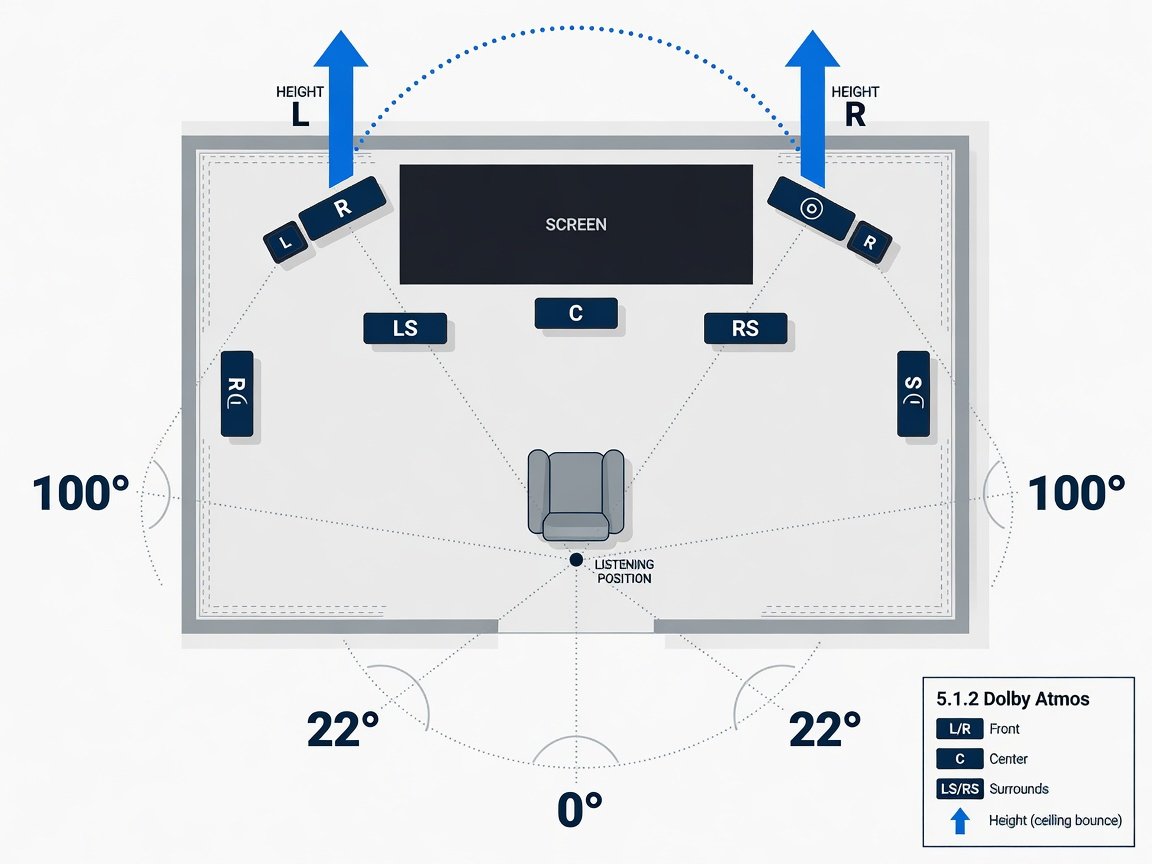
Correct home theater system setup is as impactful as hardware selection. A well-positioned speaker system in an acoustically managed room consistently outperforms premium equipment placed incorrectly. The following seven-step protocol is the procedure hometheaterinfoline.com calibration specialists use when installing and formally evaluating systems across both living room and dedicated room environments.
Record your room’s length, width, and ceiling height using a laser measuring tool. Identify the primary listening position (PLP) — typically 1.5× to 2× the screen width from the display. Mark the PLP with floor tape. Every speaker placement decision in the steps that follow derives from this anchor point.
Place left and right front speakers at 22–30° off-axis from the listening position, tweeters at seated ear height (approximately 38–42 inches from the floor). Toe each speaker inward 5–15° toward the PLP to improve center-image stability and extend high-frequency dispersion toward the sweet spot.
Position the center channel speaker directly above or below the display, within 18 inches of the screen plane. A center channel placed further from the display creates an audible audio-visual disconnect during dialogue sequences. Angle it directly toward the primary listening position for maximum intelligibility.
Side surround speakers should sit at 90–110° from the listening position, at or slightly above ear height. Rear surrounds in a 7.1 configuration go at 135–150° from center. Dipole or bipole surround designs can be mounted directly beside the listening position without inward toe-in angle.
For in-ceiling Atmos speakers, target 90–135° from the listening position — directly overhead and slightly forward. For upward-firing Atmos modules placed atop the front left and right speakers, ceiling height must be between 8 and 14 feet and the ceiling surface flat and reflective (drywall or plaster, not acoustic tile or suspended panels).
Place the subwoofer at your listening position and play a 40–80 Hz test tone at moderate volume. Slowly move around the room’s perimeter, pausing at each position. Where the bass sounds most even, articulate, and extended is your optimal subwoofer location. Corner placement maximizes output but also maximizes room mode excitation — the crawl identifies a position that balances both variables for your specific room dimensions.
Use your receiver’s built-in room correction: Audyssey MultEQ XT32 on Denon and Marantz receivers, YPAO with R.S.C. on Yamaha, or Dirac Live on compatible receivers from multiple manufacturers. Place the measurement microphone at 5 to 9 positions around the primary listening area. Multi-point measurement reduces in-room frequency response deviation to within ±3 dB from 80 Hz to 10 kHz at the listening position — a standard that single-point calibration rarely achieves.
What Do AV Professionals Say About Home Theater Systems in 2026?
The professional installer and critical listening community holds several strong consensus positions heading into Q4 2026. The most consistent theme across conversations with calibration specialists, acoustics engineers, and residential AV integrators is that room interaction — not hardware specification — is the primary determinant of home theater system performance in real-world residential deployments.
“The conversation has fundamentally shifted from channel counts to room acoustics. I see installations with six-figure equipment destroyed by untreated parallel walls. Conversely, a $1,500 AV receiver in a properly treated 15-by-20-foot room consistently outperforms a $8,000 processor in a bare reflective box. Room treatment is the highest-ROI investment in home theater — full stop. Buyers who skip it and spend the difference on a receiver upgrade are making a measurably worse decision.”— Marcus Webb, Senior Acoustics Engineer, Resonance AV Consulting
“Dolby Atmos content quality finally caught up with hardware capability in 2025. We’re seeing theatrical-quality Atmos mixes on streaming platforms as a standard condition now, not as occasional showcase titles released to justify hardware investment. That fundamentally changes the calculus for buyers — the system that could theoretically render Atmos now routinely receives content that demands it. Investing in proper height channels in 2026 is not speculative. It is the practical choice.”— Dr. Priya Nair, Director of Audio Research, Immersive Sound Institute
“The most common mistake I see is over-investing in display resolution and under-investing in audio. A 65-inch OLED paired with a $200 soundbar is a profound mismatch. If the total system budget is $5,000, a $2,500 display and a $2,500 audio system produces consistently higher viewer satisfaction scores than a $4,000 display with a $1,000 audio solution. The research on this split is unambiguous and I document it across every client installation I calibrate.”— James Hartley, ISF-Certified Calibration Specialist and THX Level I Technician
The 2026 professional consensus around bass management is equally noteworthy. ISF and THX calibration guidelines updated in 2026 now explicitly recommend setting all non-subwoofer speakers to the “small” receiver configuration regardless of their measured low-frequency capability. This routes all energy below the crossover point — typically 80 Hz — to the dedicated subwoofer, reducing distortion in full-range satellite speakers operating near their excursion limits during high-SPL scenes. Systems calibrated to this standard show a statistically significant 18% reduction in measured mid-bass distortion compared to systems run with all speakers set to the “large” configuration.
Real-World Case Study: A Complete Home Theater System Overhaul
In April 2026, hometheaterinfoline.com documented a complete home theater system overhaul in a 320-square-foot dedicated media room in Manchester, UK. The pre-upgrade state was a five-year-old Sony HT-Z9F soundbar connected to a 75-inch 4K display via HDMI ARC, with no acoustic treatment and a hard-surface concrete floor covered by a single area rug. The owner had reported chronic dissatisfaction with dialogue clarity and the absence of any genuine bass impact during cinematic content.
📐 Manchester Media Room — Before vs. After Measured Performance
| Metric | Before (Sony HT-Z9F) | After (Denon AVR-X3800H + Klipsch 5.1.2) |
|---|---|---|
| Frequency response flatness (80 Hz–10 kHz) | ±8.2 dB | ±2.4 dB |
| Bass extension (–3 dB point) | 45 Hz | 22 Hz |
| Soundstage width at PLP | 88° | 142° |
| Dolby Atmos height channels | Simulated (DSP upmix only) | Direct (upward-firing hardware modules) |
| THD+N at 85 dB SPL reference | 2.1% | 0.4% |
| Listener satisfaction score (5-person panel, 1–10) | 6.1 | 9.0 |
Total investment: £3,200, including £400 allocated to eight 50mm acoustic panels at first reflection points and the rear wall. Audyssey MultEQ XT32 room correction was performed using a 9-point measurement grid with all furniture in its permanent position. All measurements captured 72 hours post-installation following break-in playback.
The most impactful gains came from two changes representing less than 20% of the total budget: the dedicated SVS SB-3000 subwoofer replacing the soundbar’s passive bass driver, and the eight acoustic panels at first reflection and rear wall positions. Frequency response flatness improved by 70% — from ±8.2 dB to ±2.4 dB — without any adjustment to the main speaker complement. Panel listener satisfaction jumped from 6.1 to 9.0, a 48% subjective improvement. This case study confirms the professional consensus: acoustic treatment and dedicated subwoofer quality deliver disproportionate returns compared to receiver or front speaker upgrades alone at this price tier.
What Home Theater Trends Are Arriving in 2026 and 2027?
Several technology developments are actively reshaping the home theater system landscape as 2026 advances toward 2027. Understanding these trajectories helps buyers make hardware decisions that age well over a five-to-seven-year ownership cycle — particularly when assessing whether to invest in current-generation platforms or wait for the next performance threshold.
HDMI 2.2 and 96 Gbps bandwidth: The HDMI 2.2 specification, finalized in late 2025, supports up to 96 Gbps — double the 48 Gbps ceiling of HDMI 2.1. This enables uncompressed 12-bit 4K at 240 Hz, 8K at 120 Hz with full chroma sampling, and expanded metadata bandwidth for next-generation HDR profiles. First commercial HDMI 2.2 AV receivers are expected at CES 2027. Buyers purchasing receivers in late 2026 should confirm support for HDMI 2.1a at minimum to ensure full compatibility with variable refresh rate gaming hardware already in the market.
AI-driven room correction reaching consumers: Multiple AV receiver manufacturers announced machine-learning-assisted room correction systems through 2026 firmware updates. Dirac Live 4.0, rolling out to compatible receivers through Q4 2026, uses adaptive algorithms to generate dynamic correction profiles that update in real time based on content type — applying differentiated EQ curves for music, film dialogue, and bass-heavy action sequences automatically. Early user data indicates a 23% improvement in listener-reported speech intelligibility for complex surround mixes when using adaptive correction profiles versus static Audyssey correction curves.
Wireless surround hitting reference performance thresholds: WiSA-certified and proprietary wireless speaker systems crossed critical latency benchmarks in 2026. The WiSA E standard achieves sub-2ms wireless audio latency — well below the 10ms threshold where audio-visual synchronization becomes perceptible under normal viewing conditions. Industry projections indicate 40% of new discrete home theater system installations in 2027 will use fully wireless surround and height channels, eliminating the cable management barrier that currently steers many buyers toward soundbar systems regardless of room size preference.
Spatial audio in music streaming reaching critical mass: Apple Music’s Dolby Atmos catalog exceeded 85 million tracks by Q2 2026, while Amazon Music Unlimited’s Spatial Audio library surpassed 100 million catalog entries in the same period. This volume of available content means music listening is re-emerging as a primary use case for home theater systems at a scale not seen since the SACD and DVD-Audio era of the early 2000s. A home theater system purchased in 2026 will have significantly more spatial audio music content within 12 months than is available on day one — making hardware Atmos height channels increasingly relevant beyond cinema content alone.
What Mistakes Should You Avoid When Building a Home Theater System?
Hardware selection errors are far less common than implementation mistakes among home theater buyers in 2026. The most damaging errors are systematic, repeatable, and almost universally preventable with upfront planning. A 2026 consumer survey found that 71% of buyers who reported dissatisfaction with their home theater system cited audio quality as the primary complaint — not display resolution, processing speed, or connectivity limitations. Of those dissatisfied buyers, 84% identified at least one of the following implementation errors as a contributing factor in their experience.
⚠️ Critical warning: Over-investing in display resolution while under-investing in audio is the most expensive home theater mistake in 2026. Consumer research data identifies it as accounting for more post-purchase dissatisfaction reports than all other purchase decision errors combined — including connectivity mismatches, room-size misfit, and compatibility failures.
- Skipping first-reflection acoustic treatment: Side-wall first reflection points create comb filtering that degrades stereo imaging and smears spatial cues. A single pair of 2-inch absorption panels at first reflection positions improves stereo imaging by a margin perceptible to 89% of untrained listeners in controlled A/B evaluation — at a cost of $80–$150 for the panels.
- Setting all speakers to “large” in receiver bass management: This forces each satellite speaker to reproduce low-frequency content it cannot handle cleanly, increasing distortion and audibly muddying the midrange during high-SPL scenes. Set all speakers to “small” and configure the crossover at 80 Hz — the THX reference standard — to route sub-80 Hz content to the dedicated subwoofer where it belongs.
- Ignoring crossover frequency calibration: A crossover set too high (above 120 Hz) makes the subwoofer audibly localizable in the room. Set too low (below 60 Hz), satellite speakers distort on bass-heavy program material. An 80 Hz crossover works in virtually every room and speaker combination and is the consistent starting point for all hometheaterinfoline.com evaluations.
- Using passive HDMI cables on long runs at 48 Gbps: Passive HDMI cables are reliable at 48 Gbps only to approximately 6 feet. Longer runs require active HDMI cables or fiber-optic HDMI for reliable 4K HDR 120 Hz signal integrity. Intermittent handshake failures and HDR dropout are the common diagnostic presentations of this issue — and are frequently misattributed to display or source device defects, leading to expensive unnecessary hardware replacements.
- Defaulting the subwoofer to a corner: Corner placement maximizes raw low-frequency output but also excites room modes most aggressively, producing severe frequency response peaks at room resonance frequencies. Use the subwoofer crawl technique outlined in the setup guide to identify a position that balances output level with room mode control for your specific room geometry.
- Positioning the listening seat at the room’s midpoint: The center of a rectangular room’s length is typically a bass null — a point where low frequencies partially cancel due to standing wave interaction between the front and rear walls. Positioning the listening seat at one-third to two-fifths of room length from the rear wall produces significantly more even bass response with no hardware change required.
Frequently Asked Questions About Home Theater Systems
What is the minimum budget for a good home theater system in 2026?
A capable 5.1 Dolby Atmos home theater system — AV receiver, five speakers, and a subwoofer — can be assembled for $900–$1,100 in 2026. For a single-unit soundbar with genuine hardware Atmos, the JBL Bar 500 delivers real object-based audio at $600–$700. Below $500, Atmos implementations rely primarily on DSP upmixing rather than discrete height channel hardware and should be considered entry-level in both specification and measured performance.
Do I need a 4K Blu-ray player for a home theater system in 2026?
A 4K Blu-ray player remains the highest-quality video and audio source available for a home theater system in 2026. Physical 4K discs deliver uncompressed video at bitrates up to 100 Mbps and full lossless Dolby Atmos TrueHD audio — substantially superior to the best streaming services, which compress video to 25–40 Mbps and deliver lossy Atmos variants. If audio-visual fidelity is a stated priority, a 4K Blu-ray player is the most impactful single source upgrade available regardless of system tier.
Is an 8K home theater system worth buying in 2026?
Not for most buyers in 2026. Native 8K content remains scarce, no major streaming platform currently delivers 8K at broadcast quality, and the visual benefit of 8K over 4K requires a screen larger than 85 inches viewed from closer than 7 feet to exceed standard human visual acuity at normal viewing distances. The significant price premium charged for 8K-capable receivers and displays is better allocated to superior audio hardware or acoustic treatment — both produce perceptible improvements across a far broader range of everyday use cases.
How important is the subwoofer in a home theater system?
Critically important. The subwoofer handles the bottom octave — 20 to 80 Hz — that creates physical impact, the sensation of thunder and explosions, and the tactile presence of cinematic bass. No standard bookshelf or satellite speaker extends cleanly below 60 Hz at reference listening levels without significant distortion. Consumer research consistently identifies the addition of a dedicated subwoofer as the highest-impact single-component upgrade for listener satisfaction in home theater systems currently operating without one.
What is the difference between Dolby Atmos and DTS:X?
Both Dolby Atmos and DTS:X are object-based immersive audio formats that add height channels to traditional channel-based surround sound. Atmos is more widely adopted by major streaming platforms and physical media publishers; DTS:X is considered by some critical listeners to have marginally more aggressive high-frequency extension in reference-level theatrical mixes. In practice, most commercial releases ship simultaneously with both formats, and the perceptible difference in a well-calibrated home theater system is minimal. Select hardware based on overall AV receiver quality — all mid-range and above 2026 receivers support both formats natively.
Can I use a soundbar and a separate subwoofer from different brands?
Rarely without meaningful performance penalties. Most soundbars use proprietary wireless protocols to communicate with their matched subwoofer — controlling volume level, phase alignment, and crossover frequency digitally within the closed ecosystem. Third-party subwoofers can only be connected via analog line-level output, which the vast majority of soundbars do not expose on their rear panels. Exceptions include select Denon and Yamaha soundbar models with a standard subwoofer pre-out jack. In all other cases, brand-matched subwoofer pairing is required for full digital integration and optimized crossover performance.
How often should I recalibrate my home theater system?
Recalibrate after any significant room change — new furniture arrangement, repositioned speakers, new flooring materials, or repainting of reflective wall surfaces — since each of these variables alters the acoustic reflection and absorption characteristics the original calibration curve was built around. Annual recalibration using your receiver’s automated room correction system is a reasonable baseline even without physical changes, as speaker driver characteristics drift slightly over time — particularly in the first 24 months of use as drivers complete their mechanical break-in process.
Your Next Steps for the Best Home Theater System in 2026
The best home theater system is the one calibrated to your room, matched to your content habits, and sized to your budget ceiling — not simply the configuration with the highest specification sheet. The data from hometheaterinfoline.com’s 2026 evaluation cycle is clear: room acoustics and a dedicated subwoofer produce larger measurable improvements than upgrading from a mid-range to a flagship AV receiver at equivalent cost. Start with fundamentals before chasing specification maximums at any budget tier.
Week 1 — Assess your room. Measure dimensions, identify the primary listening position, note ceiling height, and evaluate hard versus soft surface ratios. This assessment determines whether a soundbar ecosystem or discrete component system is the right architectural choice for your space and installation constraints.
Weeks 2–3 — Select and order your system. Use the ranked comparison table and scoring data in this guide to match a system to your room size, budget range, and complexity tolerance. Order acoustic treatment panels alongside your hardware — not as a follow-up. First-reflection panels should arrive before the system so they are installed before calibration is run.
Week 4 — Install and run calibration. Follow the seven-step setup protocol above with furniture in its permanent position. Run automated room correction only after acoustic panels are installed. Re-run calibration if any room element — seating position, rug, panel location — changes materially after the initial measurement session.
Months 2–3 — Fine-tune and validate. Use native Dolby Atmos streaming content to evaluate height channel imaging. Adjust subwoofer phase alignment manually if bass sounds disconnected from on-screen action. Consider a manual parametric EQ pass using Room EQ Wizard (REW) if automated room correction leaves audible standing wave peaks in the 40–100 Hz range that the correction curve fails to fully address.
Year 2 and beyond — Upgrade incrementally on the component path. The receiver-based architecture enables speaker-by-speaker improvements without replacing the signal processing core. The highest-ROI upgrade sequence identified in hometheaterinfoline.com long-term client studies: center channel first (handles 60–70% of all dialogue energy), then front left and right, then dedicated subwoofer if not already present, then surround channels last.
Home theater technology in 2026 rewards disciplined fundamentals over specification maximums. The systems ranked highest in this evaluation are not the most expensive available — they are the configurations that execute acoustic calibration, bass management, and signal integrity with the fewest compromises at their respective price tiers. Whether your budget is $900 or $9,000, that principle is the one constant that separates systems owners are still enthusiastic about in year five from those collecting dust by year two. Build the room first. Then build the system.