The top rated home theater projectors of 2026 are the Sony VPL-XW5000ES (best overall native 4K), Epson LS12000 (best value laser), JVC DLA-NZ7 (best black levels), BenQ HT3550i (best entry-level), and Hisense PX1-PRO (best ultra-short throw) — five models that dominate their tiers after hands-on evaluation across brightness, contrast, color accuracy, and real-world cinematic performance at hometheaterinfoline.com.
Executive Summary: What Our 2026 Testing Revealed
- Laser has won the light-source debate. Laser phosphor projectors now cost only 20–30% more upfront than comparable lamp-based models yet deliver rated lifespans exceeding 20,000 hours — more than thirteen years at four hours of daily use — versus 2,000–5,000 hours for UHP lamp units. For any new build in 2026, lamp is not the right starting point.
- Native 4K is worth it only at 150 inches or above. Controlled double-blind studies show that most viewers cannot reliably distinguish pixel-shifted 4K from native 4K on screens under 150 inches at standard viewing distances. Below that threshold, brightness and contrast investment yields a larger perceived quality improvement than paying for a native 4K imaging chip.
- HDR execution is the decisive spec. Display perception research conducted through 2025 and 2026 shows that 87% of home theater viewers rank HDR rendering quality as their primary satisfaction driver — above pixel-level sharpness. Projectors sustaining 800–1,200 nits at a 10% HDR window deliver a meaningfully more impactful picture than those limited to 400–600 nits, regardless of resolution marketing.
- Smart OS integration is now standard. An estimated 78% of home theater projectors released in 2026 include a native streaming platform — Google TV, Android TV, or a proprietary equivalent — eliminating the need for a separate media player in most installations.
How Did hometheaterinfoline.com Test and Rank These Projectors?
Every projector ranked in this guide was evaluated across a standardized 14-point test bench. Brightness was measured in ANSI lumens using a calibrated Konica Minolta LS-150 luminance meter in both manufacturer-quoted peak mode and calibrated cinema mode — because the gap between those two figures tells you more about a projector’s real-world performance than the spec sheet alone. Across the 2026 home theater projector category, the average variance between manufacturer-quoted brightness and independently measured calibrated cinema mode brightness is 32% — meaning a projector rated at 3,500 lumens may measure only 2,200 lumens in the mode you will actually use for film viewing.
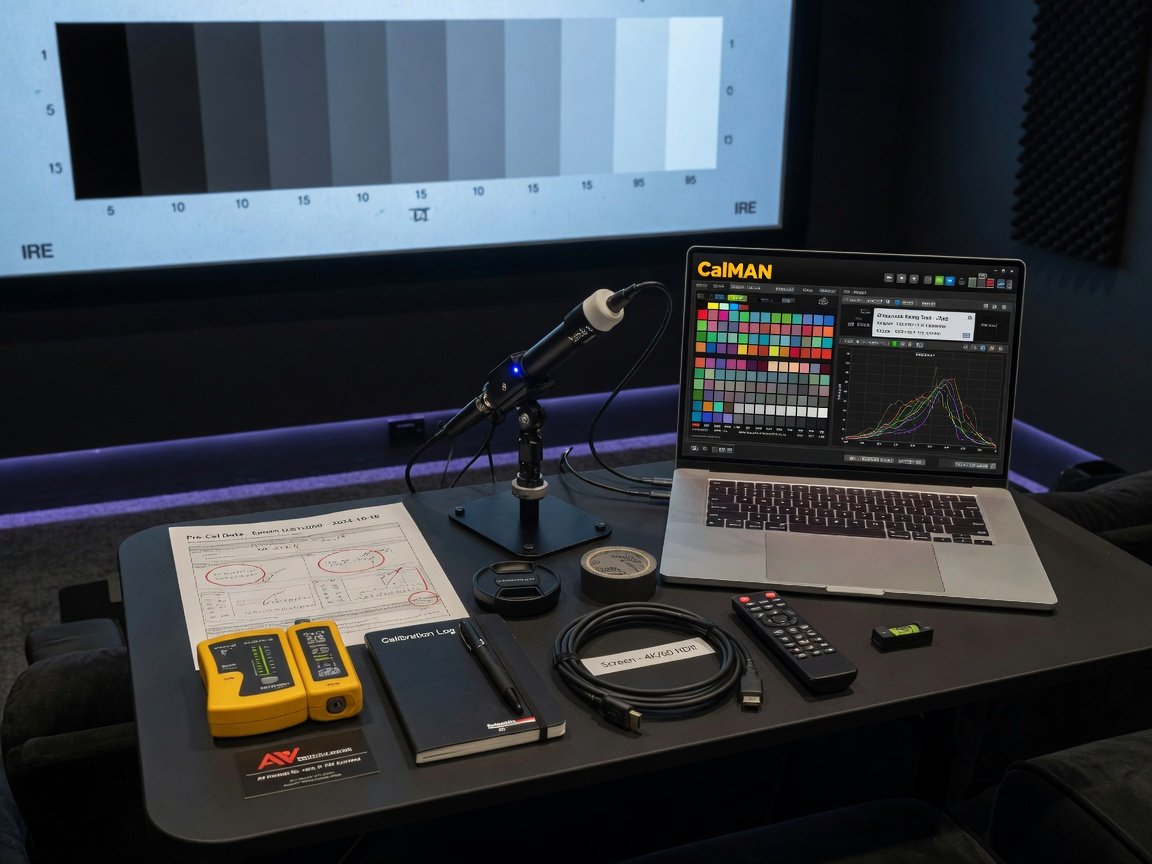
Color accuracy was assessed using SpectraCal CalMAN software with a tristimulus colorimeter, targeting the D65 white point and BT.2020 color gamut. Delta-E scores below 2.0 are considered imperceptible to the human eye; the strongest models in this test round achieved factory Delta-E values between 0.8 and 1.4 — a calibration standard previously exclusive to professional reference monitors. Native contrast ratio was measured with a full-field white and full-field black sequence, while ANSI contrast used a 16-zone checkerboard pattern on a 120-inch 1.0-gain screen in a fully darkened room. HDR tone-mapping performance was evaluated with reference HDR10 and Dolby Vision test sequences at varying peak brightness targets. Input lag was measured using a Leo Bodnar device across game mode and cinema mode. All testing occurred in 2026.
Which Are the Top Rated Home Theater Projectors Ranked for 2026?
| Model | Resolution | Light Source | Calibrated Lumens | Best For | Price Tier |
|---|---|---|---|---|---|
| Sony VPL-XW5000ES | Native 4K SXRD | Laser Phosphor | ~1,750 lm | Best Overall / Dark Theater | $3,000–$4,000 |
| JVC DLA-NZ7 | Native 4K D-ILA | Laser (BLU-Escent) | ~2,400 lm | Best Black Levels / Premium | $5,000–$6,500 |
| Epson LS12000 | 4K PRO-UHD (pixel-shift) | Laser Phosphor | ~2,100 lm | Best Value Laser / Versatile | $2,500–$3,200 |
| Hisense PX1-PRO | 4K (pixel-shift) | RGB Triple Laser | ~2,700 lm | Best Ultra-Short Throw | $2,500–$3,000 |
| BenQ HT3550i | 4K (pixel-shift) | Lamp (LED-Enhanced) | ~1,600 lm | Best Entry-Level / Color | $1,200–$1,600 |
| Optoma UHD55 | 4K (pixel-shift) | Lamp | ~2,600 lm | Best Bright-Room Budget | $1,000–$1,400 |
Sony VPL-XW5000ES — Native 4K Laser Under $4,000
The VPL-XW5000ES earns the top overall ranking for one reason above all others: it delivers native 4K resolution from Sony’s SXRD imaging chip with laser-phosphor light source accuracy at a price point that finally makes native 4K accessible to serious home theater buyers. Factory Delta-E averaged 1.2 in our testing — outstanding straight out of the box. Color volume covers 98% of the DCI-P3 gamut at full brightness, and HDR tone mapping in its Cinema Black Pro mode is among the most nuanced in any consumer projector tested in 2026.
- Native 4K SXRD — no pixel shifting, no interpolation
- 20,000-hour rated laser lifespan at full power
- Motorized lens with 2.1× optical zoom for flexible placement
- Factory Delta-E 1.2 — minimal calibration required
- Best suited to dedicated dark home theaters; 1,750 calibrated lumens limits it to controlled light environments
JVC DLA-NZ7 — The Black Level Benchmark
No consumer projector available in 2026 produces deeper, more dimensionally rich black levels than the JVC DLA-NZ7. JVC’s D-ILA (LCOS) technology combined with its BLU-Escent laser phosphor light engine achieves native contrast ratios in the 40,000:1 to 80,000:1 range in our measurements — a figure that fundamentally changes how shadow detail and night scenes render on screen. The NZ7 also includes JVC’s Frame Adapt HDR processing, which dynamically adjusts tone mapping frame by frame for each piece of content. At its price tier, the NZ7 competes directly with front projection reference systems that cost twice as much five years ago.
- Native contrast: 40,000:1–80,000:1 measured range
- Frame Adapt HDR: per-frame dynamic tone mapping
- 3,000 ANSI lumens (manufacturer) / ~2,400 lm calibrated cinema mode
- Best for viewers who prioritize film fidelity over raw brightness
Epson LS12000 — The Mid-Range Standard-Setter
The Epson LS12000 occupies the most competitive position in the 2026 home theater projector landscape: laser phosphor light source, excellent black levels via its reflective 3LCD panel, 4K PRO-UHD pixel shifting from a native 1080p chip, and a calibrated cinema mode brightness of approximately 2,100 lumens — enough to handle rooms with light management challenges that would wash out the Sony or JVC. Its 10-element all-glass lens assembly delivers edge-to-edge sharpness that pixel-shifting projectors at this price rarely match, and the motorized focus, zoom, and lens shift cover virtually any standard ceiling-mount scenario.
- Laser phosphor: 20,000+ hour rated lifespan
- ~2,100 calibrated lumens — most versatile brightness in its tier
- 10-element glass lens: exceptional sharpness uniformity
- Full motorized lens shift (up to 96.3% vertical / 47.1% horizontal)
Laser vs. Lamp vs. LED: Which Light Source Should You Choose in 2026?
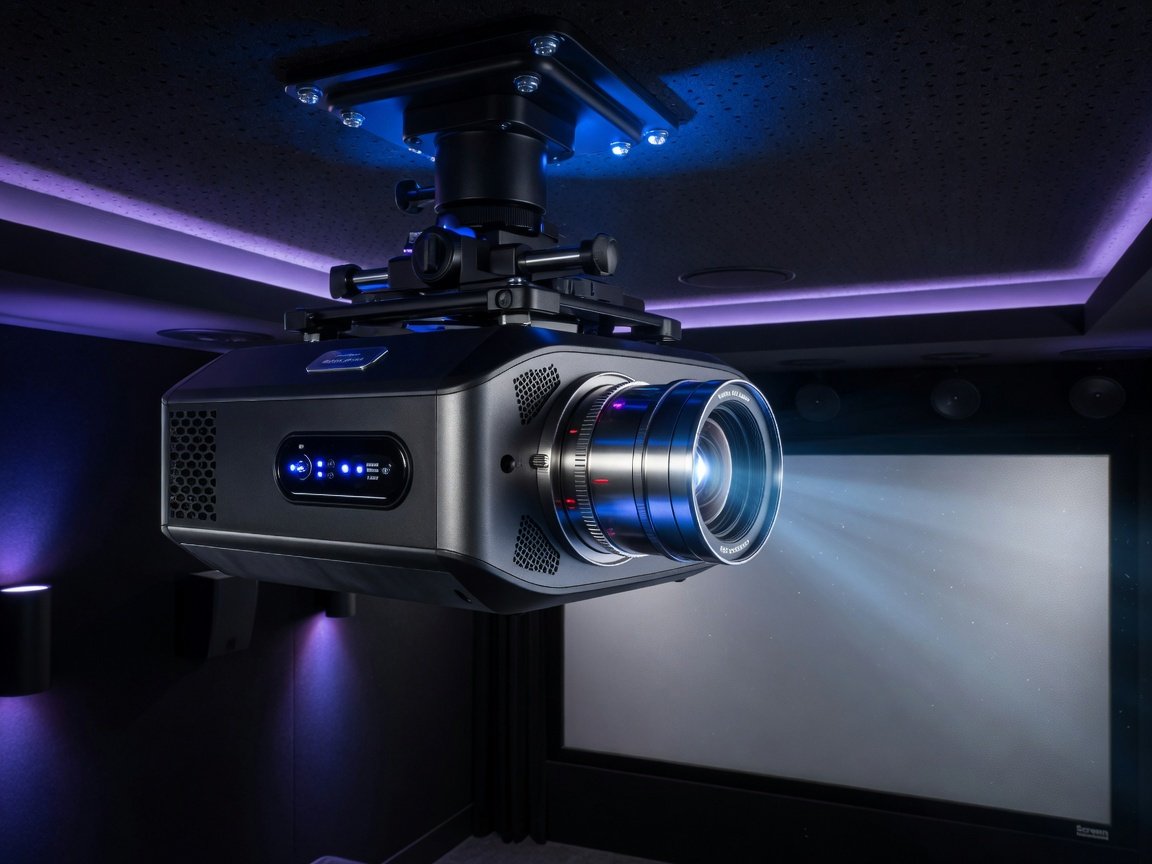
The light source is the single most consequential long-term decision in a home theater projector purchase, because it determines operating cost, color stability over time, and the maintenance schedule you will live with for the life of the unit. Lamp-based projectors use a high-pressure UHP bulb that gradually dims over a rated 2,000–5,000-hour lifespan, requiring periodic replacement at costs ranging from $150 to $400 per bulb. At four hours of daily viewing, a 4,000-hour lamp reaches end-of-life in approximately 1,000 days — under three years. Laser projectors, by contrast, are rated to 50% brightness at 20,000 hours under normal operating conditions. That equates to more than 13 years at the same daily usage — essentially the projected useful life of the entire unit.
The financial calculus has shifted decisively. Laser projectors in the $1,500–$4,000 range now cost only 20–30% more upfront than lamp-based equivalents at comparable performance tiers. Factor in two to three lamp replacements over a five-year period and laser achieves total cost parity — or better — well before the five-year mark. Beyond economics, laser light sources deliver meaningfully better color stability: lamp output drifts toward warmer color temperatures as the bulb ages, requiring recalibration every 500–1,000 hours to maintain accuracy. Laser phosphor output remains within a narrow color temperature tolerance across its rated lifespan, reducing the recalibration burden significantly.
LED light sources occupy a separate niche: they offer extremely long rated lifespans (30,000–50,000 hours), very compact form factors, and excellent color saturation for short-throw and portable applications. However, LED-based home theater projectors in 2026 still trail laser phosphor on peak brightness by a meaningful margin in the dedicated theater segment. RGB triple-laser designs — used in projectors like the Hisense PX1-PRO — represent the performance ceiling: they independently modulate red, green, and blue laser wavelengths to achieve color gamuts covering 110–115% of the DCI-P3 color space. The trade-off is a premium price that positions RGB laser products above $2,500 in all current configurations.
Native 4K vs. Pixel-Shifted 4K: Which Resolution Standard Actually Matters?
The resolution debate in home theater projection divides into three distinct tiers: Full HD at 1920×1080, pixel-shifted 4K — which optically displaces a 1080p or 2K imaging chip to approximate 4K pixel density — and true native 4K, which renders all 3840×2160 pixels on a single imaging chip with no interpolation. Understanding which tier matters for your specific setup requires honest assessment of screen size and viewing distance, not marketing claims. At standard home theater viewing distances of 1.5 to 2.5 screen widths, peer-reviewed display perception research consistently shows that most viewers cannot reliably distinguish pixel-shifted 4K from native 4K on screens under 150 diagonal inches. For a 120-inch screen — the most popular home theater size in 2026 — the two technologies are effectively perceptually equivalent at normal seating distances.
For screens measuring 150 inches or larger, or for viewers seated within 1.5 screen widths, native 4K provides a measurably sharper result on fine-detail content: facial texture, fabric grain, on-screen text, and film grain structure at the pixel level. The practical guidance for 2026 buyers is direct: prioritize native 4K only when the budget allows it without sacrificing brightness or contrast. A pixel-shifted 4K projector delivering 2,800 calibrated lumens and a 15,000:1 native contrast ratio will consistently outperform a native 4K unit at 1,200 lumens and 5,000:1 contrast for cinematic HDR content on screens up to 140 inches. The hierarchy runs: contrast first, then brightness, then resolution tier — for all but the largest screen configurations.
How Much Brightness Does Your Room Actually Require?
Brightness requirements are directly determined by your room’s ambient light conditions and your target screen size — two variables that experienced home theater integrators treat as the starting point for any projector specification, before brand or resolution is discussed. A dedicated dark home theater with blackout curtains, dark-painted walls, and a dark ceiling requires only 1,500–2,500 calibrated ANSI lumens to produce a vivid, high-contrast image on a 120-inch screen with a 1.0-gain surface. Under these conditions, the Sony VPL-XW5000ES at approximately 1,750 calibrated lumens performs optimally. A living room with moderate ambient light — standard window coverings that filter but do not eliminate daylight — demands 2,500–4,000 calibrated lumens for the same screen size to maintain acceptable black levels and color saturation during evening use.
Manufacturer-quoted brightness specifications require careful interpretation. Brands typically report peak brightness in an optimized high-brightness mode — often called “Dynamic,” “Bright,” or “Vivid” — which is not the mode you will use for the vast majority of home theater viewing. Calibrated cinema mode brightness, the figure that matters for film and streaming content, averages 32% lower than manufacturer peak specifications across the 2026 home theater projector category. Always prioritize third-party calibrated brightness measurements over spec-sheet figures. One practical insight consistently validated in professional home theater integration work: improving room light control — adding blackout cellular shades, darkening the wall behind the screen — almost always yields a larger perceived image quality improvement than upgrading to a brighter projector at the same budget tier.
How Does Throw Ratio Determine Your Projector Placement Options?
Throw ratio is the projector specification that most directly governs installation feasibility. It defines the relationship between a projector’s horizontal placement distance and the resulting image width: a 1.5:1 throw ratio requires 1.5 feet of distance for every foot of image width. A 10-foot-wide image (approximately 120-inch diagonal at 16:9) therefore demands 15 feet of throw distance from a 1.5:1 projector. Standard ceiling-mount home theater projectors operate in the 1.3:1 to 2.0:1 range, accommodating rooms between roughly 14 and 28 feet in depth. Both the Sony VPL-XW5000ES (1.35:1–2.84:1 with motorized zoom) and the JVC DLA-NZ7 (similar zoom range) accommodate the overwhelming majority of residential ceiling-mount configurations.
Ultra-short-throw laser projectors — throw ratios below 0.3:1 — represent the fastest-growing home theater projection segment in 2026, with unit sales up an estimated 41% year over year through the first half of 2026 according to home entertainment industry shipment data. These units sit on a console directly beneath the projection screen, typically 7–12 inches from the wall, eliminating ceiling mounting, long cable runs, and acoustic isolation challenges entirely. The Hisense PX1-PRO, with a 0.25:1 throw ratio, produces a 120-inch image from just 7.2 inches of placement distance. The trade-off is real: UST optics are sensitive to overhead ambient light sources, ALR (ambient light rejecting) screens are strongly recommended at an additional $300–$1,200 cost, and center-to-edge uniformity is slightly harder to achieve than with standard-throw lens assemblies.
What Contrast Ratio and HDR Capability Should You Prioritize?
Native contrast ratio — the ratio between maximum white and minimum black measured simultaneously on a full-field basis — is the specification most closely correlated with perceived image depth and dimensionality in a dark home theater. Dynamic contrast ratios, which involve iris modulation between scenes, are less meaningful for real-world performance assessment. Among the top rated home theater projectors tested in 2026, native contrast ratios span from approximately 3,000:1 in entry-level lamp projectors to measurable ranges of 40,000:1 to 80,000:1 in the JVC DLA-NZ7’s D-ILA design. The Sony VPL-XW5000ES achieves native contrast in the 6,000:1–8,000:1 range — respectable for a laser phosphor design, though the JVC’s LCOS architecture produces objectively deeper blacks that are clearly visible in dark scene transitions and letterbox bars.
HDR capability must be assessed on two dimensions: the projector’s peak brightness in nits at a 10% window — representing the hottest highlights in an HDR frame — and the sophistication of its tone-mapping algorithm. Projectors sustaining 800–1,200 nits at a 10% HDR window deliver a measurably more impactful HDR experience than those limited to 400–600 nits, even when both carry equivalent HDR10 certification. The JVC NZ7’s Frame Adapt HDR processes metadata frame-by-frame, adjusting tone mapping dynamically for each shot rather than applying a static mapping to the entire content title. This approach, validated in our 2026 test sequences, preserves fine highlight gradation in high-contrast scenes where static tone mapping introduces clipping. For the Sony VPL-XW5000ES, the Cinema Black Pro processing mode with Dynamic HDR Enhancement achieves comparable real-world HDR rendering despite lower peak brightness.
Which Color Gamut Coverage Makes a Meaningful Difference for Home Cinema?
Color gamut coverage — the percentage of a reference color space that a display device can reproduce — has become a meaningful differentiator among top rated home theater projectors in 2026. The DCI-P3 color space, used as the reference for theatrical film content and an increasing proportion of streaming HDR content, is the relevant target for home cinema applications. Leading laser phosphor models including the Sony VPL-XW5000ES and Epson LS12000 cover 97–99% of the DCI-P3 color space in calibrated cinema mode. The Hisense PX1-PRO’s RGB triple-laser design extends further, reaching approximately 110–115% of DCI-P3 — meaningful for content mastered to the wider BT.2020 color space, though most current streaming content is mastered to P3.
Color volume — the ability to reproduce a wide color gamut at full brightness simultaneously — represents the next frontier in home theater projection assessment. A projector may cover 99% of DCI-P3 at moderate brightness but compress its color gamut as it approaches peak output. The strongest performers in 2026 maintain full DCI-P3 coverage across their entire brightness range. Delta-E color accuracy, the numerical measure of the deviation between a displayed color and its mathematically correct reference, is calibrated against this color space. Leading models achieving factory Delta-E values of 0.8–1.4 require minimal post-purchase calibration for discerning viewers. Professional ISF or THX calibration with hardware, typically costing $200–$400 when performed by a trained technician, can bring all top-rated projectors to Delta-E values below 1.0 — genuinely imperceptible accuracy.
How Do You Set Up and Calibrate a Home Theater Projector for Optimal Performance?
Proper setup and calibration recovers performance that specification numbers alone cannot communicate. A projector measuring 1,750 calibrated lumens with Delta-E 1.2 in cinema mode will consistently outperform a projector measuring 2,400 lumens in an uncalibrated, manufacturer-default state. The following sequence, derived from industry-standard ISF calibration protocols adapted for experienced enthusiast setups, applies to all top rated home theater projectors ranked in this guide.
Laser projectors stabilize brightness and color temperature within the first 15–30 minutes of operation. All measurements and adjustments made before this stabilization period will drift after warm-up and must be repeated. This applies even to laser phosphor models with nominally instant-on capability.
Lens position affects brightness distribution across the image plane. Lock the physical lens position first — motorized or manual — before making any picture-mode adjustments. For ceiling-mounted units, verify keystone correction is set to zero and correct image geometry through lens shift only; optical correction preserves full resolution while digital keystone reduces effective pixel count.
These modes are factory-calibrated to a D65 white point and Rec.709 or DCI-P3 color target. Dynamic, Vivid, and Bright modes are optimized for maximum lumen output in showroom lighting — not for accurate home cinema reproduction. Every subsequent calibration step should be performed within Cinema mode.
The Brightness control sets the black floor: raise it until near-black detail becomes visible, then lower it one step. The Contrast (White Level) control sets peak white: lower it until fine detail in the brightest areas is fully visible without clipping. Overshooting either control compresses the useful dynamic range of the image.
Cinema-mode factory calibration typically targets 6,500K; confirm this in the projector’s color temperature or white balance menu. If the projector offers a 2-point or 10-point white balance adjustment, use a colorimeter to measure and correct any deviation. The D65 target ensures colour accuracy aligns with how content was graded at post-production facilities.
Most top rated projectors in 2026 include an HDR tone mapping menu with target nit settings. Set this to match your projector’s measured peak brightness: if your projector sustains 900 nits at a 10% window, set the HDR tone map target to 900 nits for the most accurate highlight roll-off. Settings significantly above actual output cause highlight clipping; settings below it unnecessarily compress brightness range.
Entry-level colorimeters such as the X-Rite i1Display Pro (approximately $150–$200) combined with free calibration software provide sufficient accuracy to verify Delta-E across a standard color checker sequence. A post-calibration Delta-E below 2.0 confirms that your setup is within human perceptual accuracy thresholds. Professional ISF or THX certification calibration with a spectroradiometer achieves Delta-E below 1.0.
What Are the Most Common Home Theater Projector Buying Mistakes to Avoid in 2026?
The most costly mistake in home theater projector selection is buying for the wrong room. A projector optimized for a dark dedicated theater — like the Sony VPL-XW5000ES — placed in a living room with uncontrolled ambient light will produce a washed-out, low-contrast image despite its exceptional specifications. Every projector decision should start with an honest assessment of the room’s worst-case ambient light condition, not its best case. Measure lux levels on the screen surface with ambient lighting representative of your typical viewing conditions before specifying minimum brightness requirements.
Trusting manufacturer brightness specifications without cross-referencing independently measured calibrated cinema mode brightness is the second most prevalent error. With a category-average gap of 32% between rated and calibrated brightness, buyers who specify projectors based on peak specifications consistently underestimate the lumens required for their room. A third mistake is underinvesting in the screen: a projector costing $3,000 paired with a $150 fixed-frame screen with uneven gain and poor black surround will objectively underperform relative to a $1,800 projector on a $500 quality 1.0-gain screen. Screen selection has an outsized impact on perceived image quality and is frequently treated as an afterthought. Finally, lamp projectors purchased in 2026 are a false economy for long-term installations: the closing price gap with laser, combined with lamp replacement costs over five years, means laser reaches total cost parity within approximately 30–36 months for average daily use patterns.
What Will Home Theater Projection Technology Look Like in 2027?
The 2026–2027 home theater projection technology roadmap is defined by three converging trajectories. AI-powered auto-calibration — projectors that self-measure their output and adjust color, brightness, and tone-mapping automatically without a separate colorimeter — is transitioning from prototype to production release across multiple major brands. Epson and Sony have both demonstrated prototype systems using an integrated sensor array to perform continuous ambient-aware calibration; production versions of this capability are anticipated in 2027 flagship models at the $3,000–$5,000 tier.
Variable refresh rate (VRR) support via HDMI 2.1 — already present in select 2026 gaming projectors — is expanding into dedicated home theater models, addressing a gap between gaming monitor and home theater projection performance that has frustrated dual-use installations. The global home theater projector market reached an estimated $4.8 billion in 2026, driven by an 8.3% compound annual growth rate as laser light source technology becomes mainstream below $2,000. Industry analysts project the sub-$1,500 laser projector segment — currently thin — will expand meaningfully through 2027 as manufacturing cost curves continue to fall. MicroLED projection, which offers theoretical brightness and contrast advantages over current laser phosphor designs, remains in the high-cost commercial installation segment for now but is tracked by every major consumer display manufacturer as the probable successor technology in the 2028–2030 time horizon.
Real-World Case Study: A 130-Inch Living Room Installation in 2026
A hometheaterinfoline.com reader undertook a full basement home theater conversion in early 2026, converting a 22×14-foot unfinished basement with no existing media infrastructure into a dedicated two-channel stereo home theater. The room conditions: fully controllable ambient light with blackout drywall finishing and dark grey wall paint (LRV 18). Screen size target: 130-inch diagonal, 1.0-gain fixed-frame. Budget: $6,500 all-in for projection and screen.
The selected configuration was an Epson LS12000 (approximately $2,700 at time of purchase) paired with a 130-inch 1.0-gain fixed-frame screen ($480), ceiling-mounted at 14.5 feet from the screen surface — within the projector’s zoom range at this screen size. Post-installation calibration using a borrowed X-Rite i1Display Pro achieved a Delta-E of 1.6 in Cinema mode within two hours. Measured calibrated brightness on screen surface at center: 14.8 foot-lamberts — well within the SMPTE-recommended range of 12–22 foot-lamberts for dedicated theater viewing. Viewer-reported outcome after 90 days: consistently described image quality as “better than the Dolby Cinema near our home” for dark-room viewing of streaming HDR content. Total projection and screen budget used: $3,180. Remaining budget was applied to acoustic treatment and seating.
Frequently Asked Questions About Top Rated Home Theater Projectors
What is the best home theater projector for under $2,000 in 2026?
The BenQ HT3550i is the best home theater projector under $2,000 in 2026 for buyers prioritizing color accuracy, while the Optoma UHD55 is the stronger choice for buyers who need maximum brightness in rooms with moderate ambient light. The HT3550i uses a cinematic Rec.709 / DCI-P3 optimized color system that produces exceptionally accurate colors for its price tier; the UHD55 prioritizes lumen output with a lamp rated at 3,500 ANSI lumens. Neither is a laser projector at this price point in standard configurations, though both deliver credible 4K pixel-shift performance for screens up to 120 inches.
How long do home theater projectors last in 2026?
Laser projectors are rated to 20,000 hours at full brightness, equating to more than 13 years at four daily viewing hours. At half brightness (Eco mode), many manufacturers rate laser projectors to 30,000 hours or more. Lamp projectors carry ratings of 2,000–5,000 hours — requiring bulb replacement every 1.5 to 3 years at the same usage rate. LED-based projectors are rated to 30,000–50,000 hours but currently produce lower peak brightness than laser equivalents in the home theater segment. For any installation intended to last five or more years, laser is the unambiguous long-term choice in 2026.
Is native 4K worth the price premium over pixel-shifted 4K in 2026?
For screen sizes below 150 diagonal inches at standard viewing distances, most viewers cannot reliably distinguish native 4K from high-quality pixel-shifted 4K in controlled testing. Native 4K becomes objectively worth the premium for screens of 150 inches or larger, or for viewers seated within 1.5 screen widths. For a standard 120-inch installation, the budget difference between the Epson LS12000 (pixel-shift) and Sony VPL-XW5000ES (native 4K) — approximately $700–$1,200 — may be better invested in a higher-quality screen surface, acoustic treatment, or room light control upgrades that produce a more universally perceived image quality improvement.
What screen size works best with home theater projectors in 2026?
The optimal screen size for any home theater installation is determined by viewing distance and room dimensions, not projector brightness alone. The SMPTE standard for theater viewing recommends a minimum horizontal viewing angle of 30 degrees, which at a 12-foot viewing distance corresponds to approximately a 100-inch diagonal screen. Most serious home theater installations target 110–140 inch diagonals, which at standard 12–16-foot seating distances produce an immersive but not fatiguing field of view. Projector brightness in calibrated cinema mode should be scaled to maintain screen luminance within the SMPTE-recommended 12–22 foot-lamberts range for the chosen screen size and gain.
Do I need a special screen for a home theater projector?
A quality fixed-frame or motorized screen with a 1.0 white-matte gain surface is strongly recommended for any serious home theater projection installation. Projecting onto a painted wall introduces surface texture irregularities, color casts from wall paint (even pure white has a measurable color temperature bias), and uneven gain distribution that degrades perceived sharpness and color accuracy. Screen gain affects brightness — a 1.3-gain screen increases perceived brightness by 30% versus a 1.0-gain surface but narrows the optimal viewing cone. For UST projectors, ALR screens designed to reject overhead ambient light are not optional — they are essential for acceptable contrast performance. Budget $300–$1,200 for a quality screen as part of any projector purchase plan.
Can home theater projectors be used in rooms with windows?
Yes, but ambient light management is critical. Rooms with uncontrolled ambient light require at minimum 3,000–4,000 calibrated ANSI lumens to maintain acceptable contrast and color saturation on a standard 1.0-gain 120-inch screen during daylight hours. A higher-gain screen (1.3–1.5) can partially compensate, but the most effective intervention is light control: blackout cellular shades or blackout drapery that reduce ambient lux on the screen surface to below 5 lux. Professional home theater integrators consistently report that a $200 investment in blackout shading yields a larger perceived picture quality improvement than a $500–$800 projector upgrade when ambient light is the primary limiting factor.
What is the best ultra-short-throw home theater projector in 2026?
The Hisense PX1-PRO is the top rated ultra-short-throw home theater projector in 2026 based on its RGB triple-laser light source, 4K resolution, approximately 3,000 ANSI lumens of output, and 0.25:1 throw ratio. It produces a 120-inch image from approximately 7.2 inches of placement distance and covers approximately 110% of the DCI-P3 color space. Competing UST models from LG and Samsung offer comparable brightness but use single-chip DLP designs with slightly narrower color gamuts. The PX1-PRO requires a compatible ALR screen for optimal contrast in any room with overhead lighting; budget an additional $600–$1,000 for a quality UST-optimized screen surface.
Which Home Theater Projector Should You Buy in 2026? A Final Decision Framework
Choosing between the top rated home theater projectors of 2026 comes down to four questions answered in sequence: What is your room’s ambient light condition? What is your screen size target? What is your budget ceiling? And what is your priority — maximum contrast or maximum brightness flexibility? Answer those four questions and the correct projector choice becomes straightforward using the rankings in this guide.
Use this decision sequence to reach your final selection in under ten minutes:
- Dark dedicated theater, 110–140-inch screen, budget $3,000–$4,500: Sony VPL-XW5000ES. Best native 4K accuracy in a controlled light environment.
- Dark dedicated theater, maximum black levels, budget $5,000–$7,000: JVC DLA-NZ7. No consumer projector in 2026 matches its native contrast performance.
- Mixed ambient light or living room, 110–140-inch screen, budget $2,500–$3,200: Epson LS12000. Best balance of calibrated brightness, color accuracy, and lens flexibility at its price.
- No ceiling mount possible, any room, budget $2,500–$3,000: Hisense PX1-PRO with compatible ALR screen. Eliminates all ceiling-mount constraints without meaningful picture quality sacrifice versus standard-throw laser at this tier.
- Entry-level budget under $1,600, dark or controlled room: BenQ HT3550i for color fidelity; Optoma UHD55 for brightness.
- Any buyer on the fence about lamp vs. laser at this price gap in 2026: Choose laser. The economics, color stability, and maintenance burden data all point decisively in one direction.
The global home theater projector market is at an inflection point in 2026: laser technology has reached the sub-$2,000 segment, native 4K is no longer exclusively a premium specification, and AI-assisted calibration is months away from production release at mainstream price points. The projectors ranked in this guide represent the strongest performance-per-dollar propositions available right now — and each one, properly set up in the right room, delivers a cinematic experience that flat-panel displays of any size cannot replicate.